
Pizza Oven Floor Cracked: Split Tiles, Lifted Bricks, Crumbling Stone
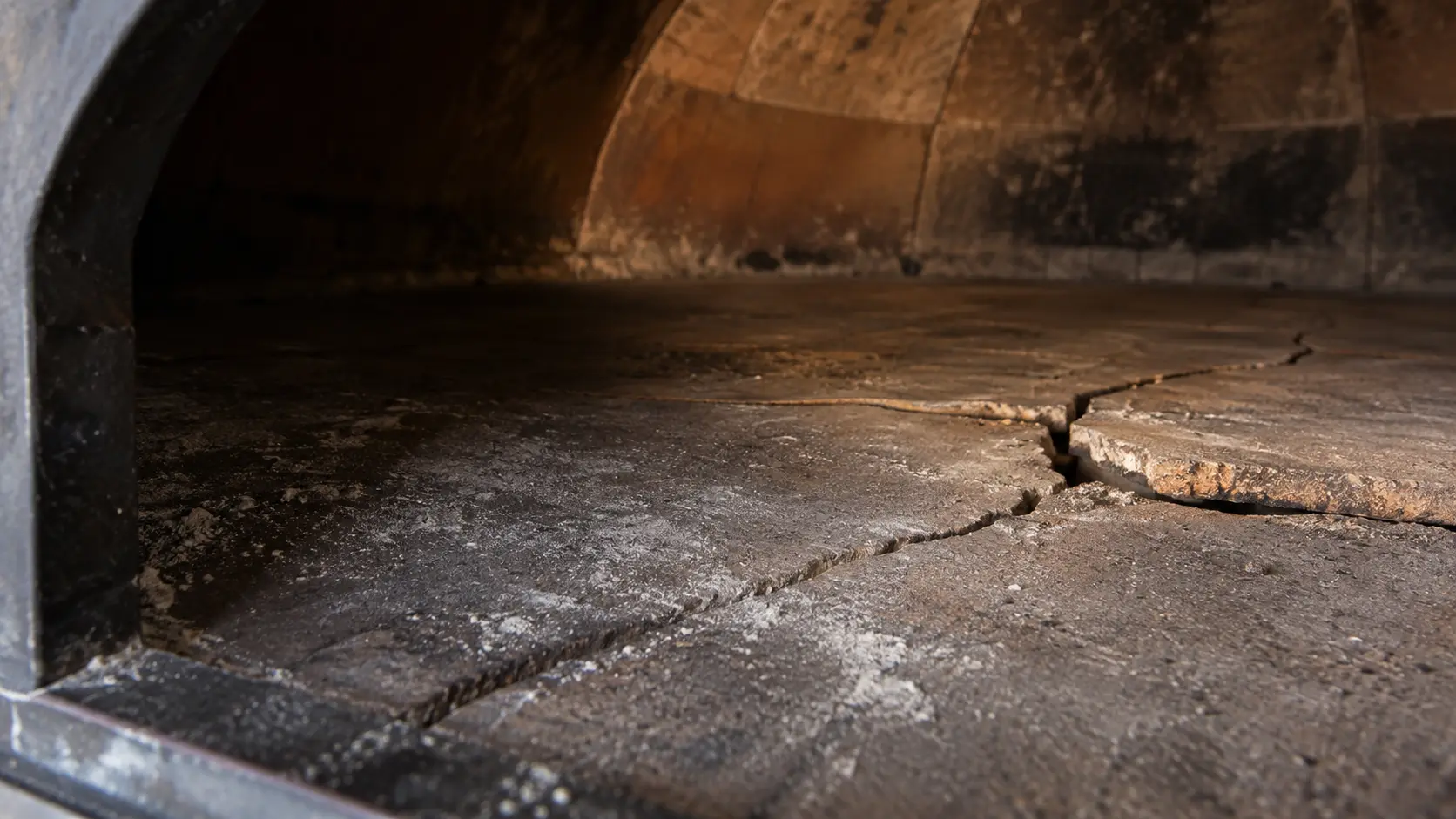
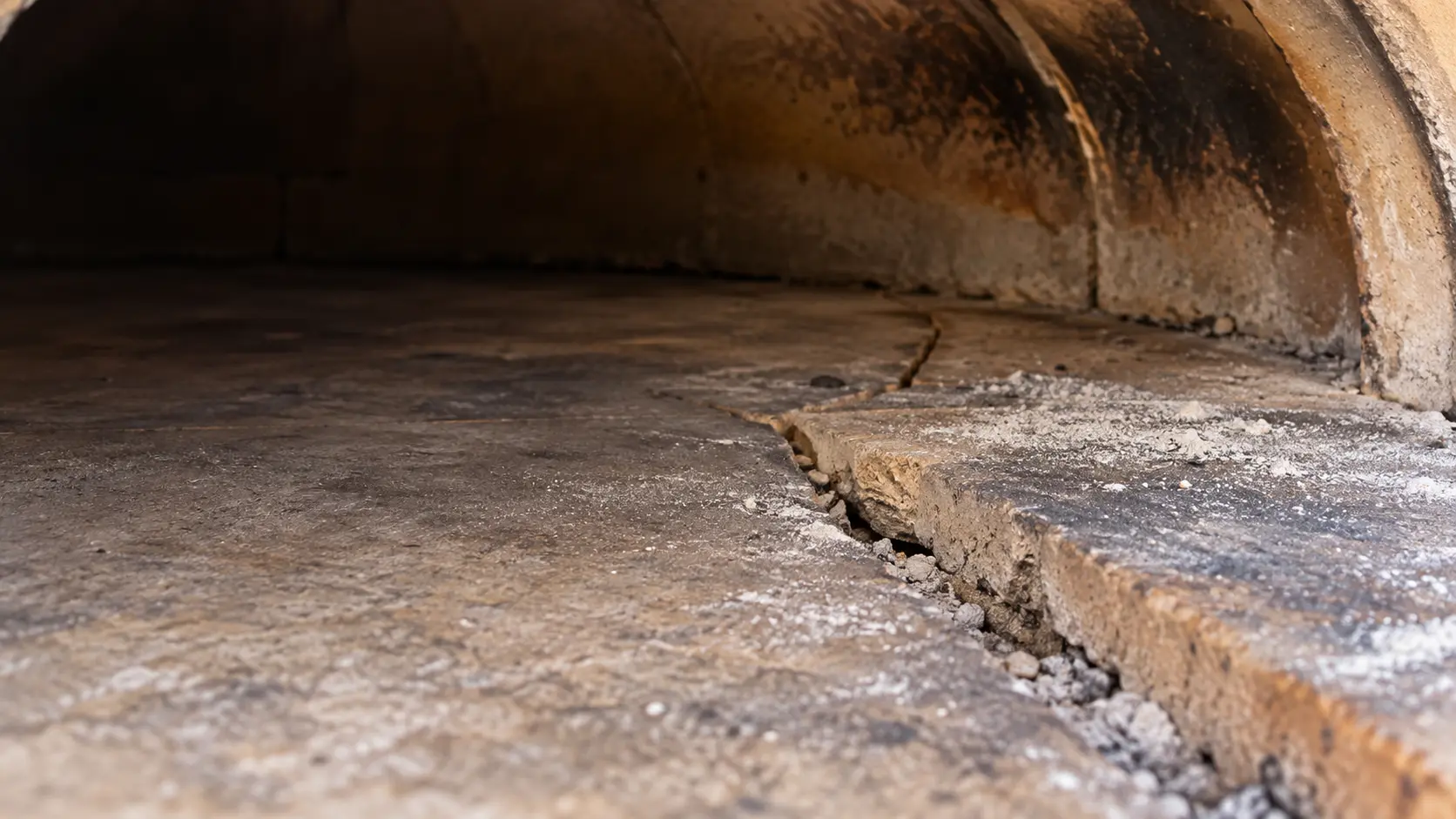
A pizza oven floor cracked into lines across the cooking tiles or a deck stone, with edges that lift and catch the peel, pieces that crumble, or bits of stone sticking to the bottom of the pies.
Mon–Sat, 8am–8pm
- 5 checks before you book
- 5 questions that narrow it
- 6 causes, cheapest first
Book a visit
Three short steps, about a minute.
or call (844) 747-3662
Loading appointment form…
The appointment form couldn’t load. Please try again.
What it
usually means.
The floor of a pizza oven is refractory stone or firebrick laid over insulation, or in a deck oven a thick stone slab resting over the burner or elements. It lives through huge swings of heat, and hairline cracks are common and usually harmless: stone expands and contracts every firing. What matters is whether the crack stays closed and flat. Floors split wide from thermal shock, when something cold meets hot stone: water splashed on to cool it, wet or frozen wood dropped on, snow melt dripping through a door, a pie tray pulled from a cold room. A new oven fired too hot too soon, before curing drove out the water in its mortar and tiles, is the classic cause of broken floors in the first season. Steel tools do their part: a metal peel driven into a raised tile edge, an ash rake dragged hard, heavy logs dropped from height. In a deck oven, a stone cleaned with a wet cloth while hot or dropped during reinstallation cracks the same way. A floor with lifted or loose pieces is swapped before it chips into food.
 The 6 causes, cheapest first
Answer these first
Is it a thin hairline, or a crack you can slide a coin into?
Are the two sides level, or does one lift and catch the peel?
Is the oven new, fired hot in its first weeks?
Was water, snow or wet wood ever put on the hot floor?
Do bits of stone or grit come away on the pies?
Check these
before you book.
Pizza oven floor cracked: 5 checks, and none of them costs anything.
Wait until the oven is fully cold, then run a hand along the crack to feel whether the edges are level.
Keep water, snow and wet wood away from a hot floor, and never cool the oven with water.
Lead the peel in flat and gently, and rake ashes lightly rather than scraping hard.
Also worth checking
- If a piece lifts or crumbles, stop baking on that spot and brush away any grit before the next pie.
- On a new oven, follow the maker's curing schedule of small fires before the first big one.
How soon does it need a visit?
A cracked floor is not urgent. Hairline cracks are normal; a lifted, loose or crumbling piece is booked before it chips into a pie.
The causes,
cheapest first.
6 things pizza oven floor cracked: split tiles, lifted bricks, crumbling stone turns out to be, from hairline expansion cracks to base or stand settling.
The cost guide-
01 no repair
Hairline expansion cracks
Fine lines that stay closed and flat are the stone moving with the heat. They are watched, not repaired, and baked over as normal.
-
02 low to moderate
Tile edges lifted and struck by tools
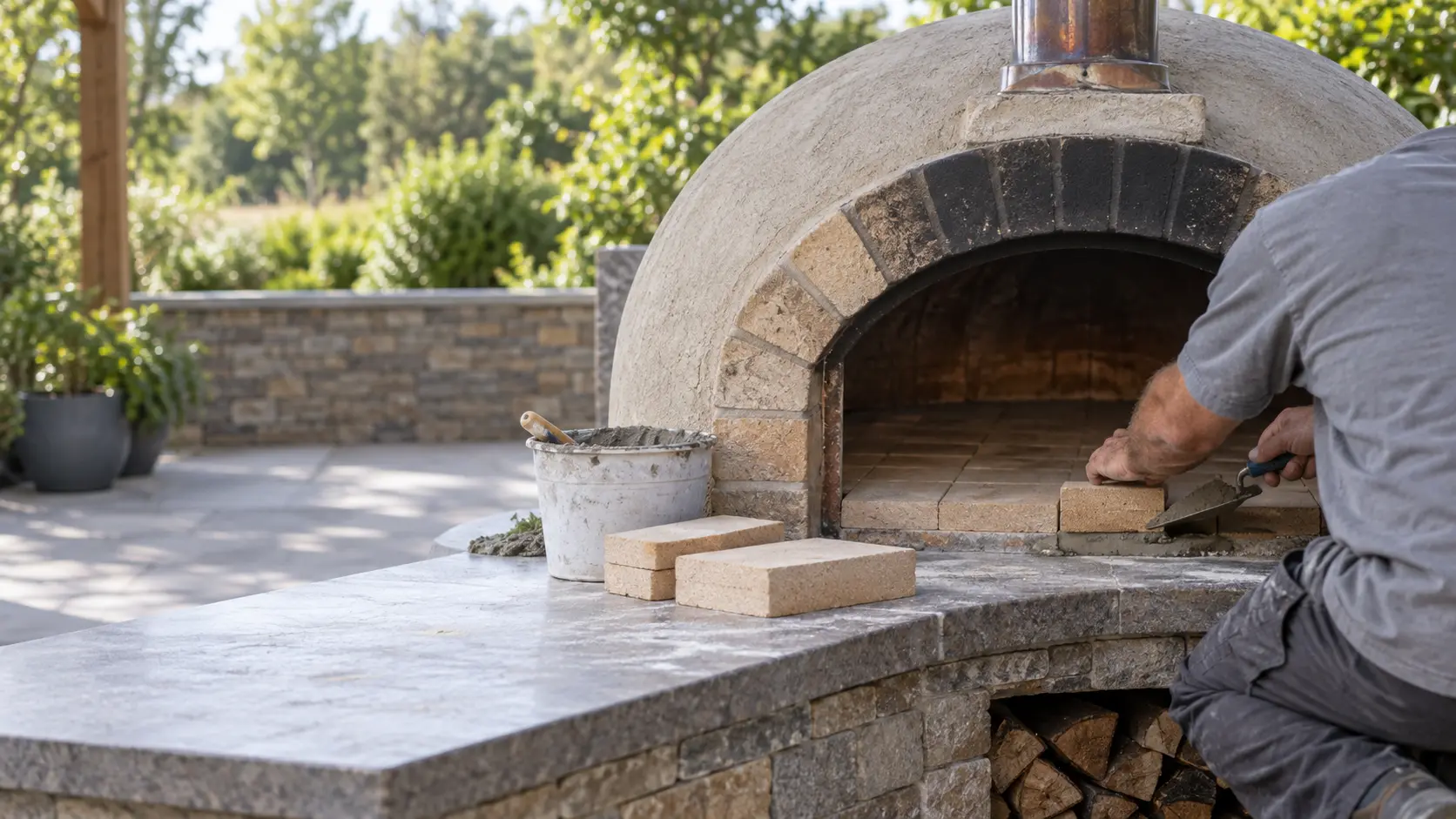
A tile that sits a little high takes every hit from the peel and the rake until its edge breaks. It is reset level, and a chipped one is replaced.
-
03 moderate
A new oven fired hot before it was cured
Water still trapped in fresh tiles and mortar turns to steam under a big fire. The broken tiles are replaced and the oven cured again with small fires over several days.
-
04 moderate
Water or wet wood on a hot floor
Cold water, snow or soaked logs on hot stone split it in seconds. The broken tiles or the deck stone are replaced, and the habit changed.
-
05 moderate
Deck stone cracked in a commercial oven
A stone cleaned wet while hot, or knocked while being lifted, splits through. Deck stones are replaced as a matched set where the maker calls for it.
-
06 moderate to highest
Base or stand settling
A stand or slab that sinks at one corner bends the floor and opens cracks from below. The support is checked and leveled before the floor is repaired.
What else
it could be.
Most often confused with pizza oven dome cracked inside or out after rain or a big fire, then pizza oven uneven bake: burnt edge, raw middle, pale bottom.
All problems

The makes
it happens on.
16 makes on this site; pizza oven floor cracked: split tiles, lifted bricks, crumbling stone can show up on any of them. Each mark opens that make's own page.
All 16 brandsPizza Oven Floor Cracked: Split Tiles, Lifted Bricks, Crumbling Stone,
where we come out.
9 metros, each with its own page.
All service areasTampa BayFL · 31 areas
Miami / South FloridaFL · 47 areas
New York MetroNY · 75 areas
HoustonTX · 36 areas
ChicagoIL · 50 areas
Los AngelesCA · 95 areas
San DiegoCA · 31 areas

Questions about
pizza oven floor cracked: split tiles, lifted bricks, crumbling stone.
Are small cracks in a pizza oven floor normal?
Can one cracked tile be replaced without rebuilding the floor?
Why did the new pizza oven crack after its first big party?
Is a stone that is cracked through still safe to bake on?
Back to your everyday
Still seeing pizza oven floor cracked: split tiles, lifted bricks, crumbling stone?
Book with what you checked above — 5 answers save the technician the first part of the visit.