How do portable and built-in pizza ovens differ?
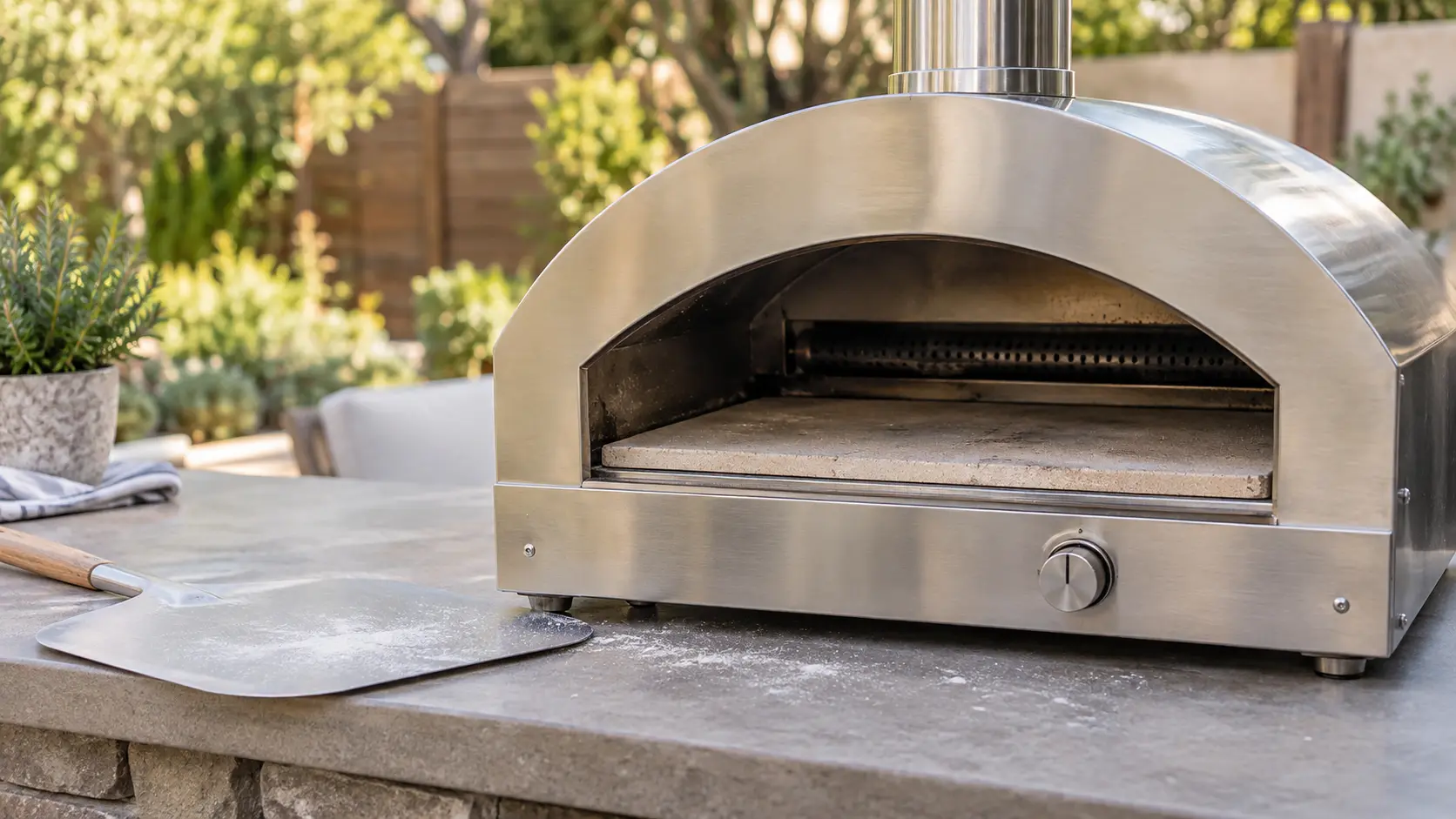
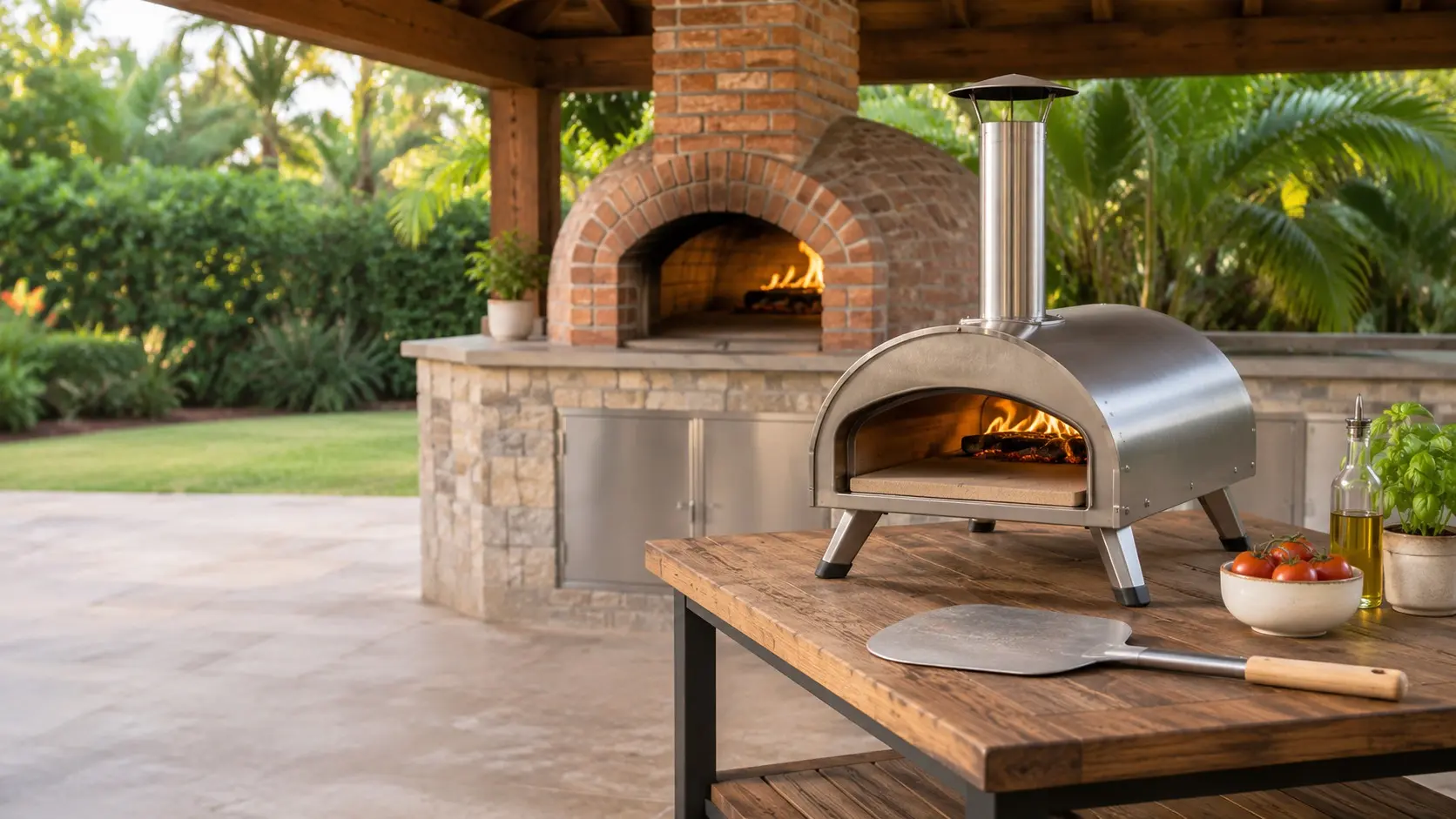
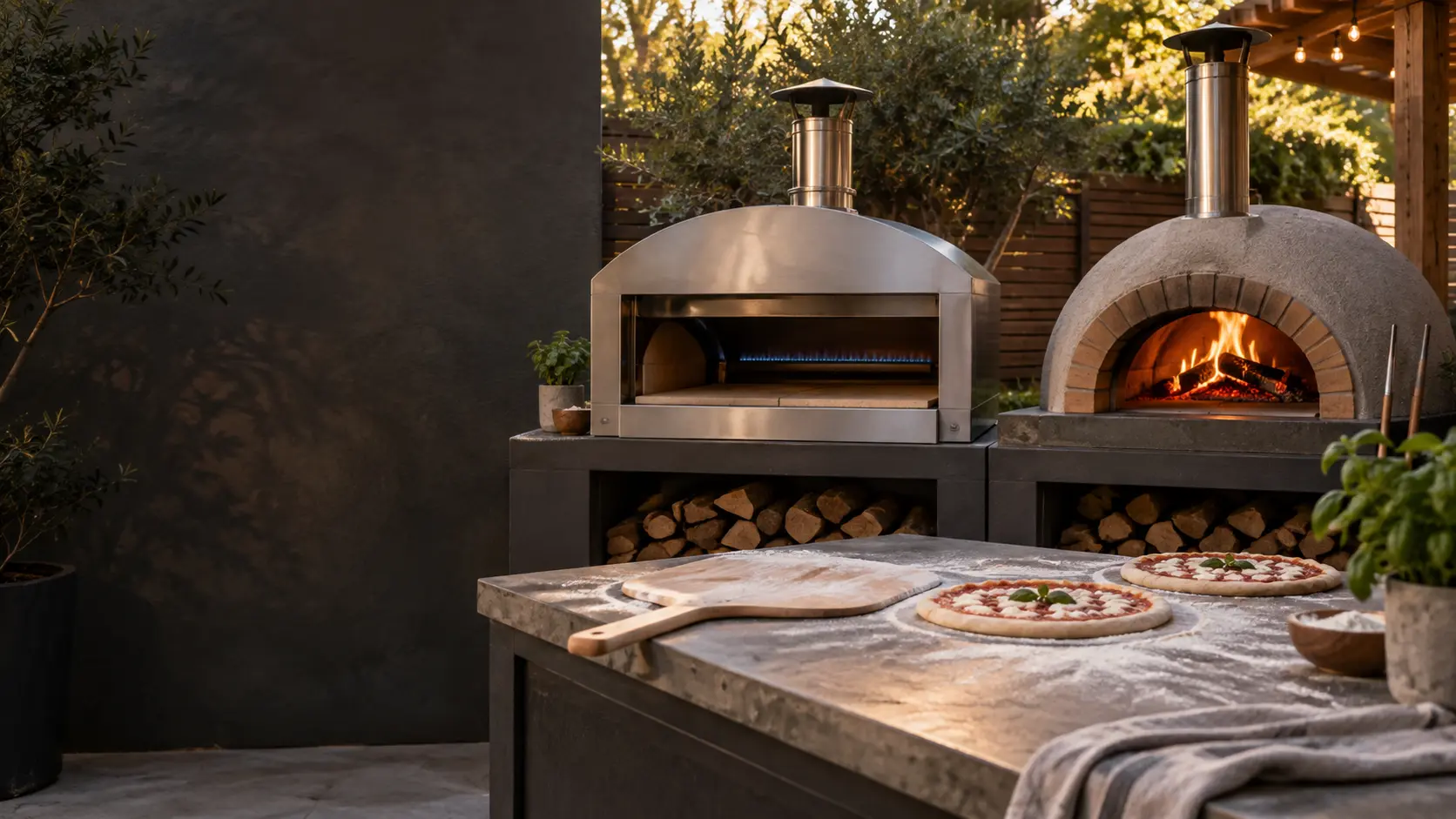
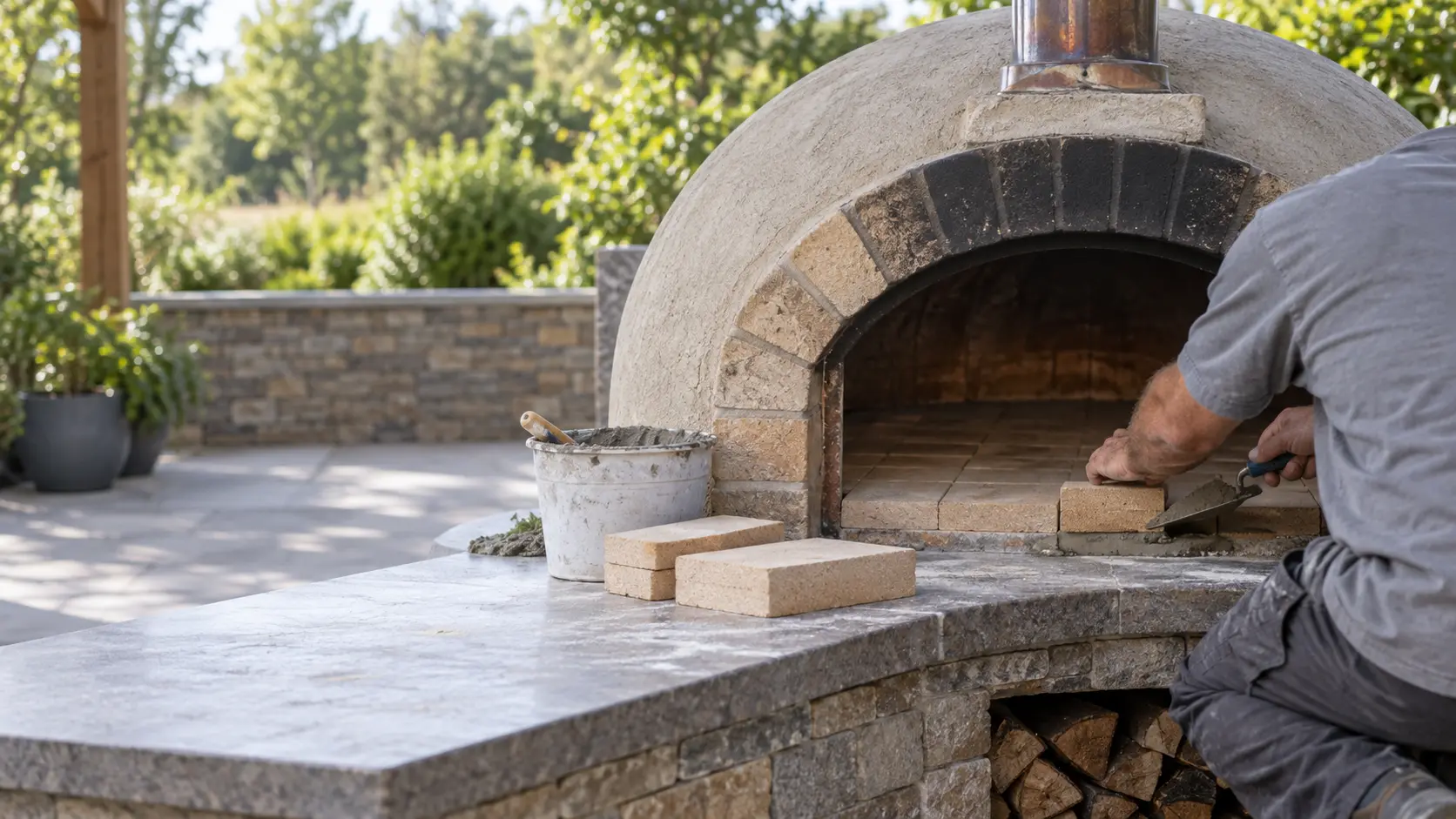
A portable oven is a lightweight, self-contained box, usually steel with a stone or steel floor, that sits on a table and runs on propane, pellets or wood. A built-in is a heavy masonry or modular dome set on a permanent base, often as part of an outdoor kitchen, fired with wood, gas or both.
The practical difference is mass. Light ovens heat quickly and cool quickly. Heavy ovens do the opposite, and almost everything else, from preheat to repair, follows from that.
Where each one tends to live
Portable ovens get packed up and moved under cover for the season. Built-ins stay put, take the weather year-round and rely on a cover, a cap and a sound base to survive it. Our guide on using a pizza oven in winter shows how much that matters.
Which heats up faster, and which holds heat longer?
Portable ovens usually reach cooking temperature in a fraction of the time a built-in needs; a large masonry oven commonly takes an hour or more to soak its floor. Your manual gives the preheat for your model. Once hot, the built-in holds its heat for hours after the fire is out, which is useful for slow cooking after pizza night. A portable oven loses heat the moment you stop feeding it.
Table: Typical behavior of each oven type
| Feature | Portable | Built-in |
|---|---|---|
| Preheat | Short | Long, often an hour or more for masonry |
| Heat held | Falls fast between pies | Stays high for hours |
| Pies in a row | Floor drops after a few | Recovers well on a deep floor |
| Weight | Light enough to carry | Needs a built base |
These are common patterns, not a promise for any model. A thick floor in a portable oven recovers better than a thin plate, and a small modular built-in heats faster than a large brick one. Measure your own oven's floor with an infrared thermometer, as in our guide to pizza oven floor temperature.
Does it matter for a family dinner?
If you bake a few pies at a time, portable is quicker to start. If you bake for a crowd or want one fire to do several jobs, a built-in's stored heat saves fuel and time later in the evening.

What wears out on each type?
Portable ovens wear in the parts that carry the most heat and weather: the burner, the igniter, the regulator and hose, the thin shell and any door. Built-ins wear in the masonry, the chimney and the door, and mostly in the joints and surface rather than the structure.
Typical wear points:
- Portable: igniters that stop sparking, burners clogged by grease or insects, rust at seams and hinges, warped steel floors.
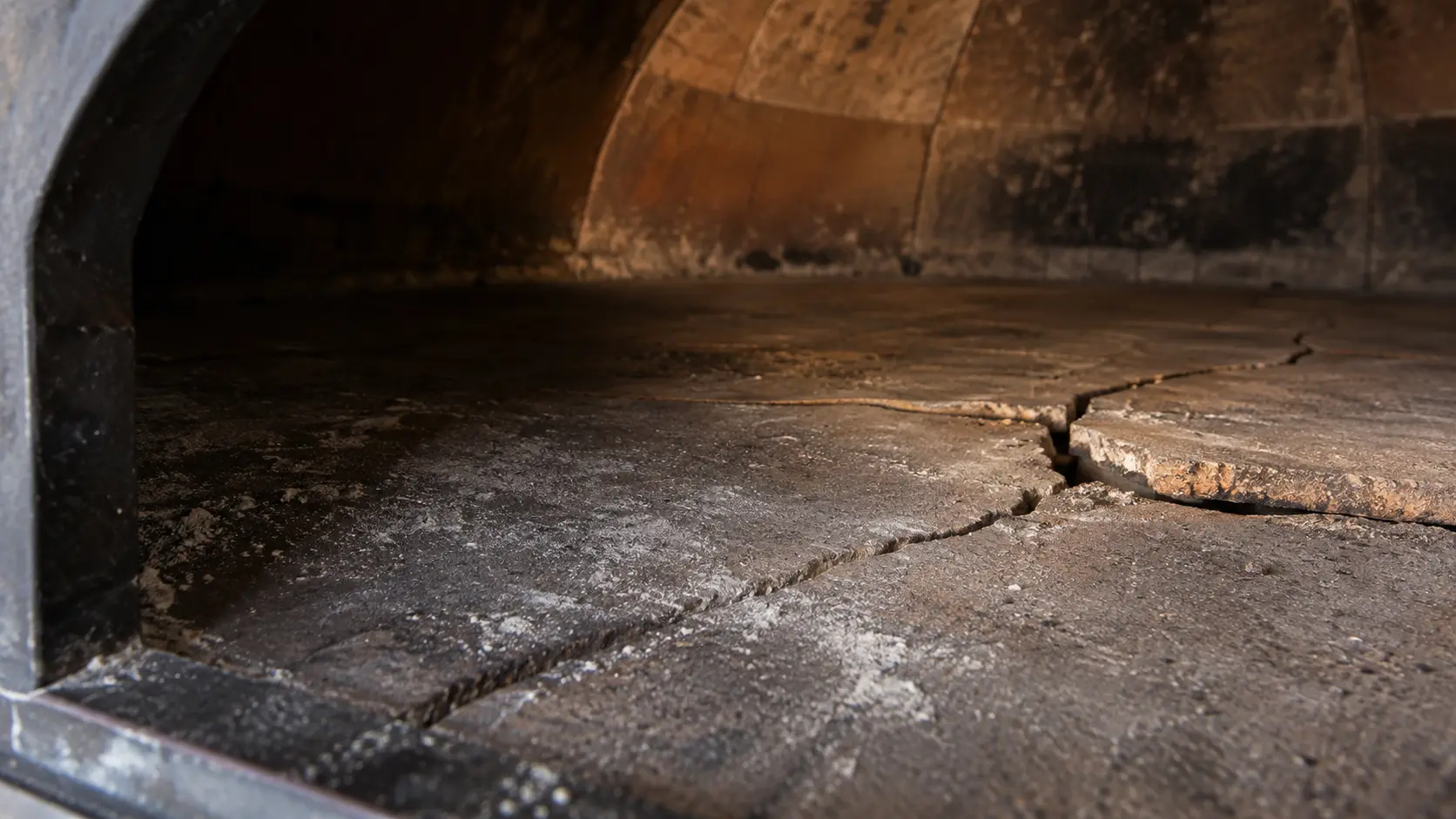
- Built-in masonry: crazing and larger cracks, eroded mortar joints, a loose or warped door, a damaged chimney cap.
- Built-in gas: burners, thermocouples and gas valves, which need a gas-qualified hand.
- Both: cracked stones and worn gaskets.
Our guide on why a dome cracks sorts normal crazing from damage.
What can actually be repaired?
Built-ins are usually repairable in place; many portables are cheaper to replace than to repair once the shell or body is worn. The deciding factor is whether the failed part is a swap or a structure.
A burner, igniter or thermocouple on a portable gas oven is a small, swappable part, and a burner and igniter repair is often worthwhile. A cracked stone or a failing dome on a built-in is a floor and dome repair, which can restore a heavy oven that would be very costly to replace. Our guide on fixing or replacing a pizza oven lays out how to weigh it.
Parts and support
Cheaper portable ovens may have parts that are hard to find, and a fully sealed or welded body limits what can be done. Check whether the maker sells replacement stones, igniters and burners for the model before you buy.
Which should I choose?
Choose portable if you want quick starts, flexibility and low commitment, and you will store it under cover. Choose a built-in if you have a base or outdoor kitchen, cook for groups, and want an oven that can be repaired for years.
Questions to settle first:
- Where will it live, and can the base carry the weight? See clearances and the hearth under an oven for what a base must do.
- How often will you cook, and for how many people?
- Gas, wood or pellets, and can you store the fuel dry?
- Does your property allow what you plan to build?
If you are not sure what a used oven needs, a diagnostic visit can check it before you buy or commit to a repair. Our wood, gas or electric comparison helps with the fuel decision.
What does upkeep look like year to year?
Portable ovens ask for frequent small chores. Brush the stone after each cook, clear grease and ash from burners and vents, check the hose and regulator before the season, and keep the shell dry in storage. These are quick, but skipping them is what shortens the life of the thin parts.
Built-ins ask for fewer, larger checks. Inspect the dome and floor for new cracks each spring, keep the cap and cover in good condition, and watch the base for settling. A cleaning and safety inspection is worth booking before heavy use after a long idle spell.