
Where do I aim an infrared thermometer in a pizza oven?
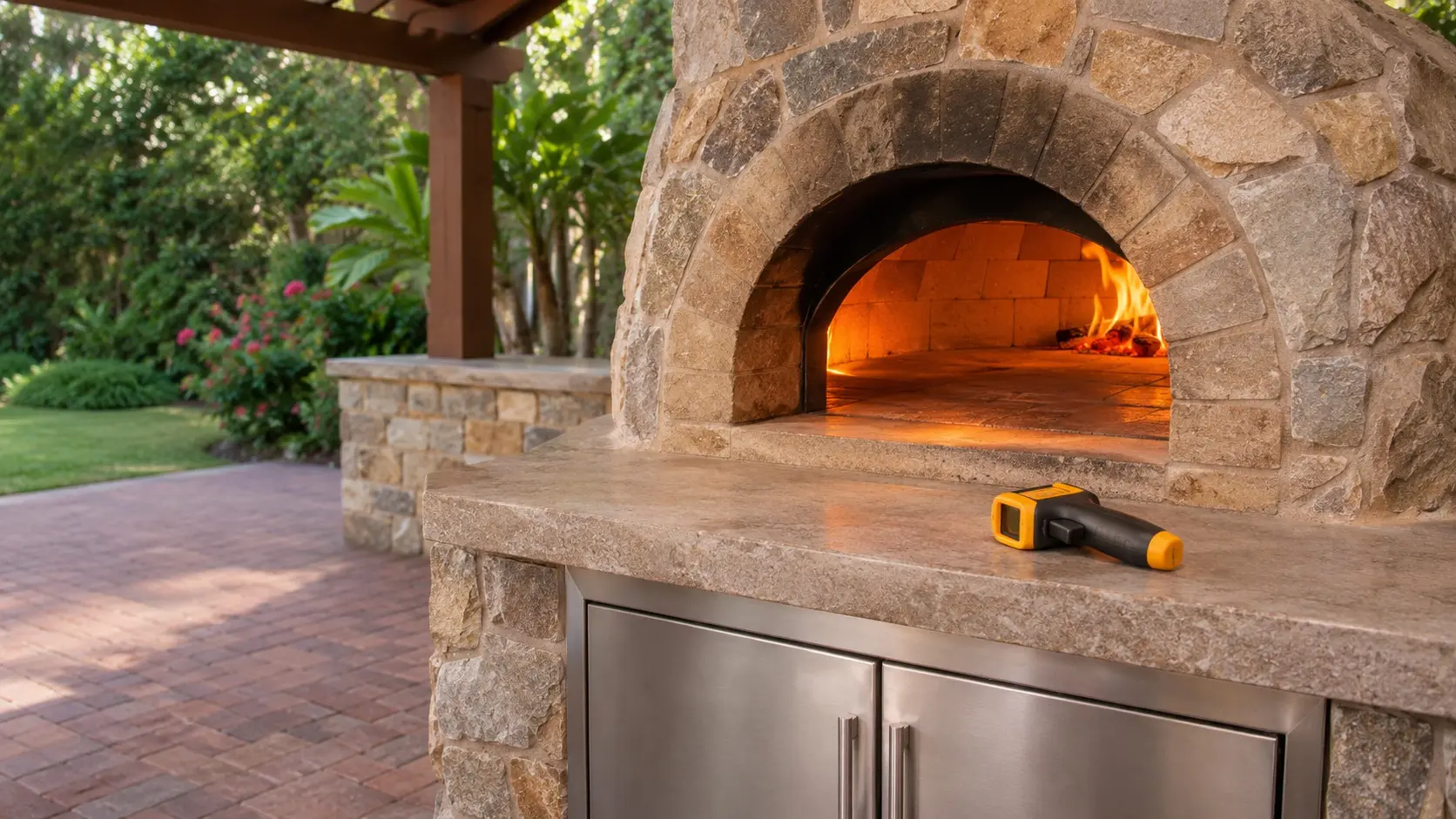
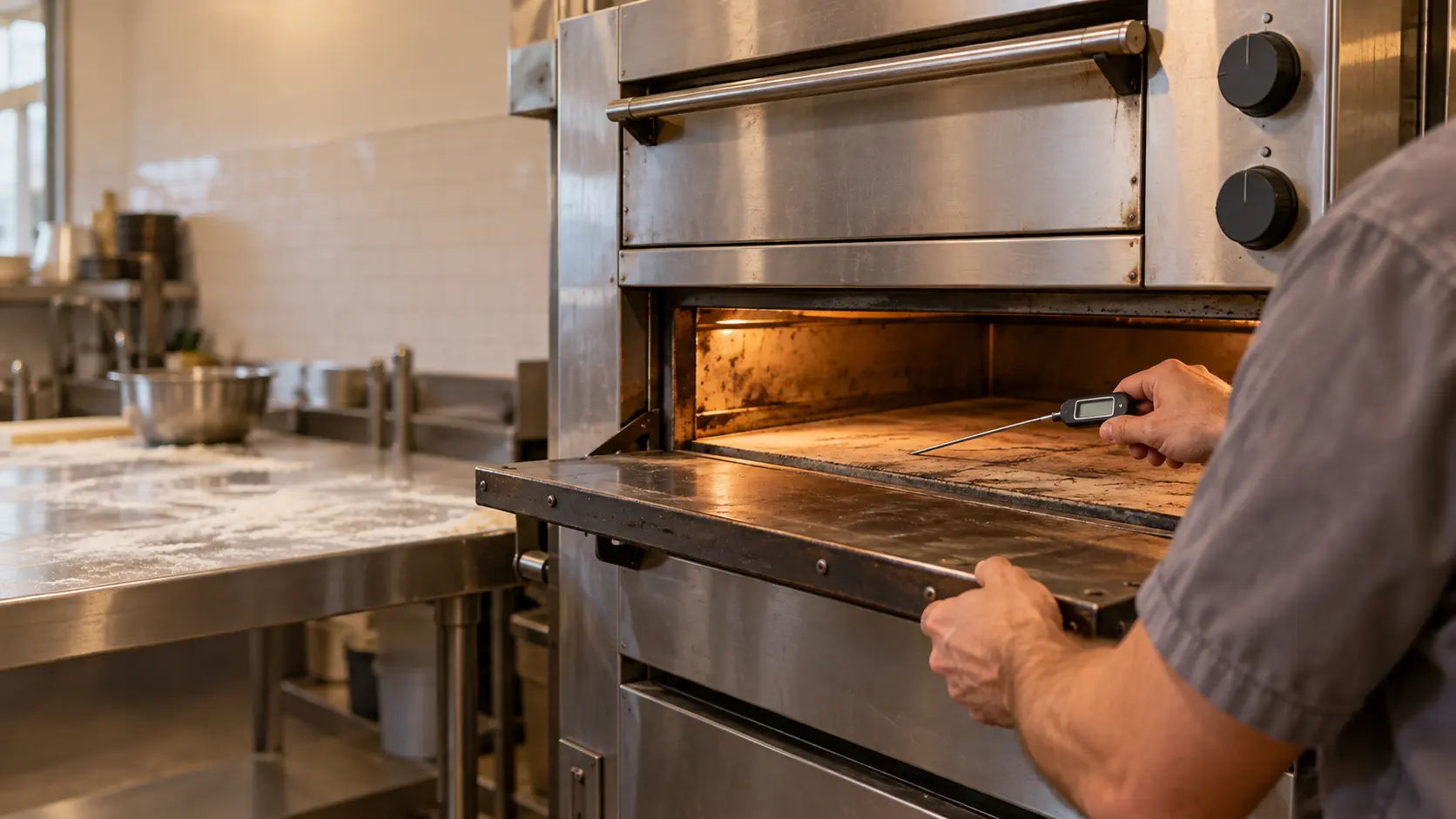
Aim at the bare cooking floor, inside the mouth, from outside the oven. An infrared thermometer reads the surface its dot lands on, so the stone itself is the target, not the flame, the ash or the underside of the dome.
Stand back and keep your arm outside the opening. Many handheld models take a reading from a couple of feet away, and the farther you are the larger the patch they average, so a reading from far back is smoother and one from up close is more precise.
The two spots to read every time
Take one reading a few inches inside the mouth, where cooler outside air touches the floor, and a second near the center, where the stone is hottest. A healthy oven shows the center hotter than the mouth by a modest amount. A very large gap, or a center that is cooler than the edge, is a clue worth writing down.
Floor, dome and the ring in between
The dome reads hotter than the floor in a wood-fired oven, because the flame rolls up and across it. That is normal. Read the dome for a sense of the fire, and the floor for what the pie will experience. A dome that reads far hotter than the floor tells you the stone has not soaked yet, so wait before launching.
What floor temperature should each pizza style have?
Target floor temperature depends on the style. Wood-fired Neapolitan pies bake in a minute or two on a very hot floor, while New York-style and thicker pies want a cooler floor so the center cooks before the crust burns. Many portable gas and electric ovens top out lower than a wood fire, so check the maximum in your manual.
Table: General floor temperature ranges by pizza style
| Style | Typical floor | Bake |
|---|---|---|
| Neapolitan | About 750°F to 850°F | A minute or two |
| New York | About 550°F to 650°F | Several minutes |
| Pan or thick | Lower again | Longest |
These are common pizza-making ranges, not a maker's specification or a rule. Your own owner's manual may state a maximum for your model, and a pie that browns too fast or too slow on your oven matters more than a number from another one.
Why numbers differ between ovens
Stone type and thickness change how fast a floor recovers between pies. A thin steel plate gives a high first reading and drops quickly; a thick refractory floor reads lower at first but holds. Compare readings on your own oven over time, not against a friend's.

Why does my reading look wrong?
Infrared thermometers assume a surface emits heat like a typical matte object. Shiny or reflective surfaces, such as bright steel or a glazed tile, emit less than that, so the gun reads low. A sooty or rough stone reads closer to true.
Common mistakes that skew the number:
- Aiming at flame or glowing embers instead of the stone.
- Reading steel or a shiny tile without adjusting for its low emissivity.
- Standing so far away that the dot averages stone with the cooler sidewall.
- Reading a floor covered with ash, which insulates the stone and reads cooler.
- Trusting a gun whose maximum range is below what the oven reaches.
Check the gun's temperature range before you buy or use one. Many inexpensive models top out below a Neapolitan floor, and a floor above the limit will simply show a maximum or an error. For steel floors, laying a strip of matte high-heat tape and reading on that patch gives a steadier number than the bare metal.
Dome readings are a clue, not a verdict
If the dome reads fine but the floor lags every time, the cause is heat soak rather than the controls. Give the oven a longer, steadier fire. Our winter pizza oven guide explains why a cold, damp oven needs longer. If the floor is slow on a warm day too, move on to the next section.
What does a floor that never catches up mean?
A floor that stays hundreds of degrees below its usual number after a normal preheat points to something upstream: fuel, air or controls. Start with the cheap checks before booking.
- Wood: damp fuel and a smothered fire. See burning the right wood.
- Gas: a low cylinder, a regulator that has tripped, or a clogged burner, which our guide on why a pizza oven will not heat walks through.
- Electric: a failed element or a control that cuts out early.
- Any type: a door left open, a gasket gap or a chimney damper stuck in the wrong position.
When the dial reads one number and the floor reads far lower, the sensor or control may have drifted. See our thermostat guide, or book a thermostat and control repair. If the cause is unclear, a diagnostic visit finds it without guessing. Our not-heating problem page lists the symptoms side by side.
A short routine for a reliable reading
Take the same readings each time and the numbers become comparable. Write them in a notebook or a phone note beside the date and the fuel used.