Where the heat comes from in each pizza oven
A wood-fired dome works like a heat battery. The fire burns on the floor, flame rolls across the ceiling, and the refractory soaks up heat that the pie draws on later. Chicago Brick Oven describes the inner dome turning black from smoke first and then whitish gray once it has stored enough heat, which on its ovens marks about 700°F.
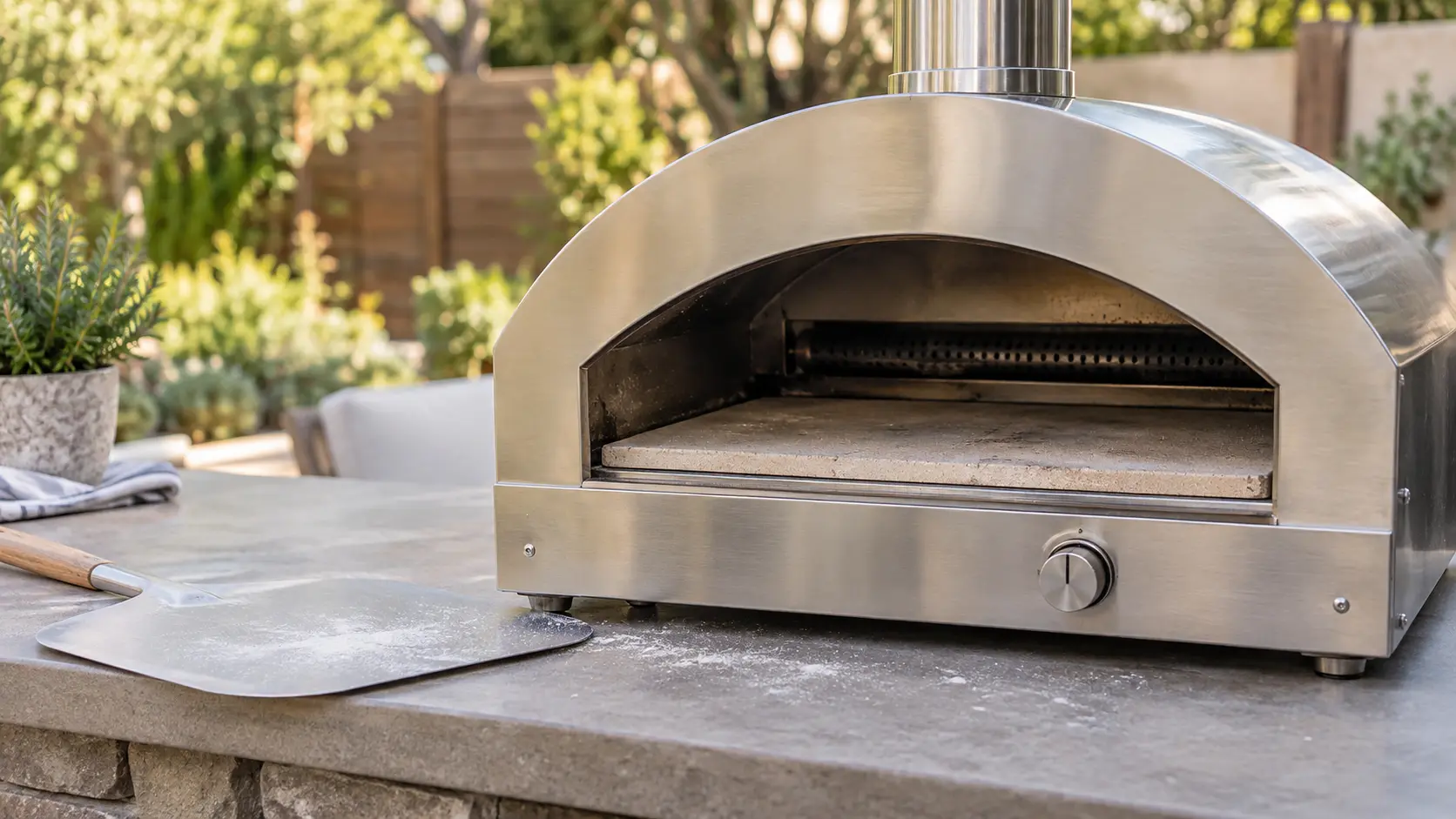
A gas unit swaps the log pile for a burner, usually along one side or across the back of the floor, with a valve, an igniter and a flame sensor or thermocouple standing guard over it. An electric pizza oven, nearly always a commercial deck, hides its heat in the deck itself: Marra Forni's stackable electric models put radiant infrared heaters inside the stone hearth and let the operator set top and bottom heat separately.
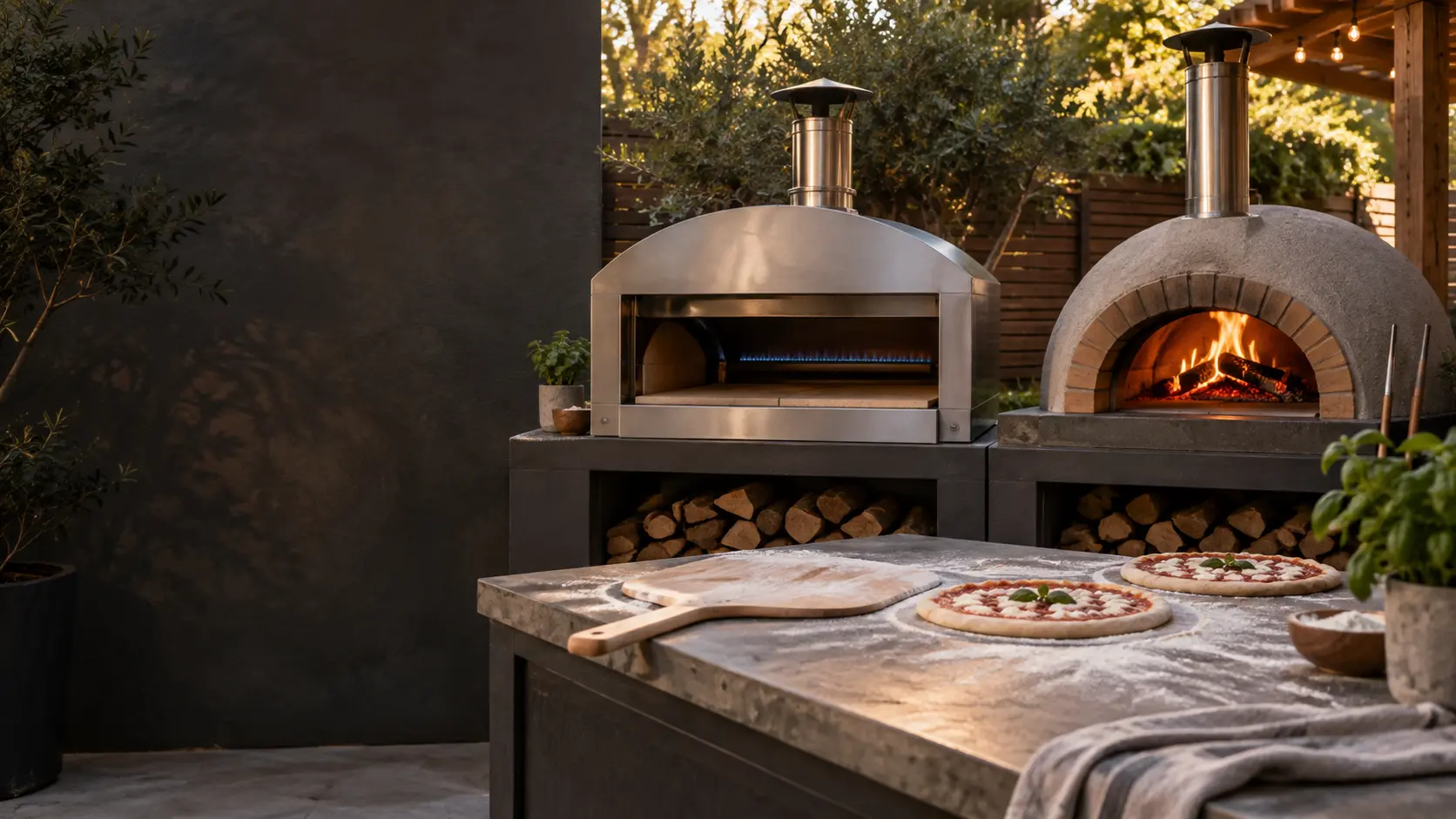
- Wood: heat stored in the dome and floor, flame across the ceiling, embers pushed to one side.
- Gas: a burner holding a steady flame, with a valve and a safety device between the supply line and the fire.
- Electric: elements above and below the baking stone, run by thermostats or a touchscreen.
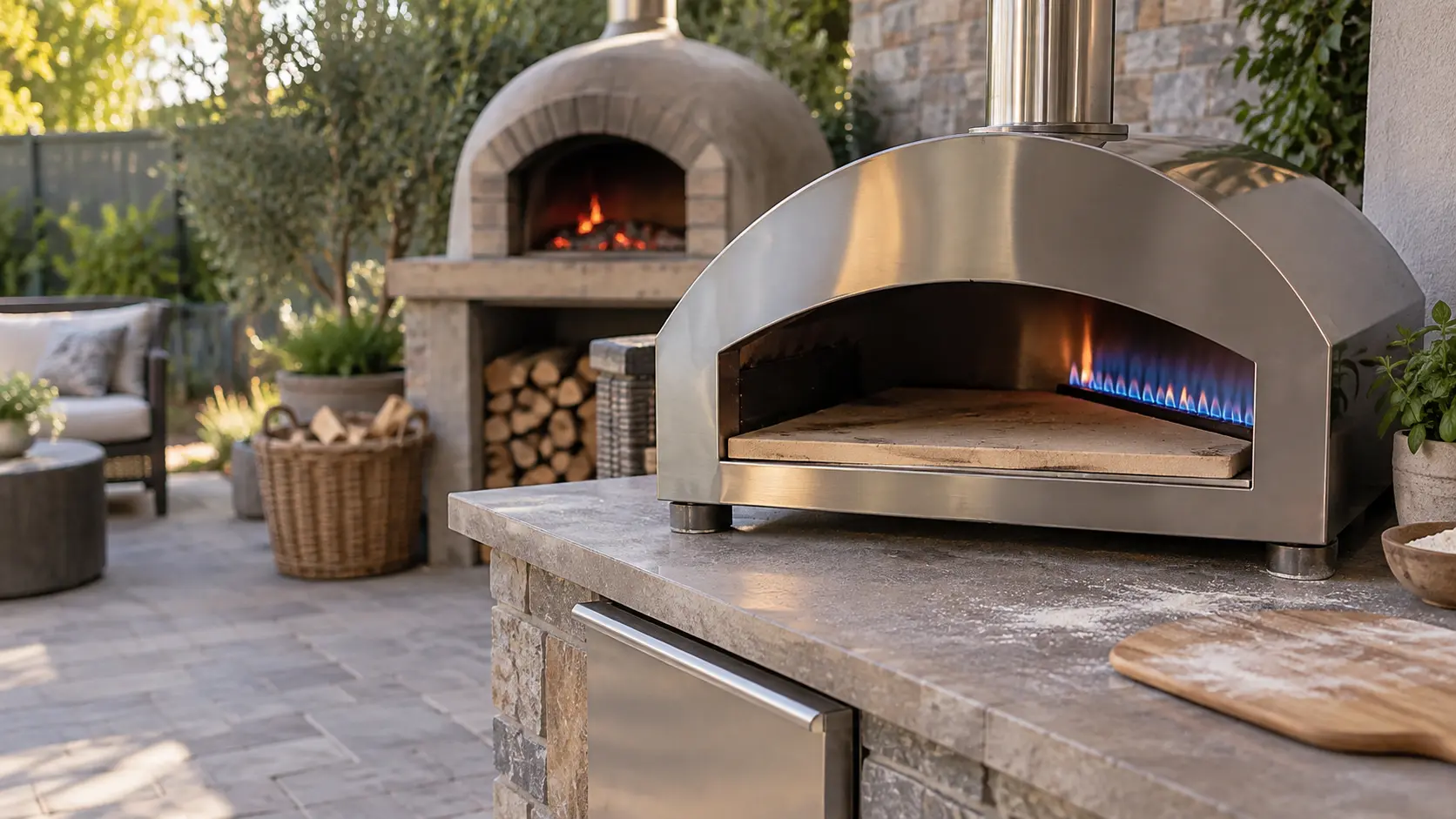
- Hybrid: a gas burner fitted into a dome built for wood, so either fuel can carry the bake.
What a hybrid dome adds
A hybrid gives you both fuels and doubles the list of things to look after. Coyote's 30-inch hybrid ships with a stone burner cover to lay over the gas burner whenever wood is burning, so ash stays out of the ports, and an ash guard for gas cooking that keeps food out of the burner while the bricks are cleaned. Leaving either piece in a drawer is how a hybrid ends up with a burner that lights unevenly or not at all.
Source: Chicago Brick Oven — CBO-500, 750 and 1000 user manual — The dome turns from black to whitish gray when the oven reaches 700°F; burn dry hardwood dried at least two years; ashes go in a metal container with a tight-fitting lid on a noncombustible floor or the ground.; Marra Forni — ELST37-32/1 stackable electric oven specification sheet — 200–950°F cooking temperatures; radiant infrared heaters located within the stone-hearth deck with individually adjustable upper and lower temperatures; each additional deck requires its own dedicated electrical connection and additional ventilation.
Warm-up time and how hot the floor gets
Wood starts slowest and reaches the highest floor temperatures. Coyote says its wood dome can hit 800°F in about 30 minutes with the right amount of hardwood, and wants the cooking floor at 650°F or more before a pizza goes in. A thick masonry oven takes longer, and repays the wait by holding heat for bread and roasting long after the fire has died.
Gas heats the air in a hurry and the stone at its own pace. Commercial electric decks are the steady ones: a deck that holds its setting shift after shift is what a pizzeria pays for, and the Marra Forni electric line covers 200 to 950°F. On a busy night the difference is plain to see, because a wood fire wants feeding every few pies, a burner wants a knob turned, and an electric deck recovers on its own.
Why the dial and the stone disagree
On a gas model the gauge usually tells you about the air. Lynx notes that the Napoli's thermostat reads the air temperature in the oven, not the pizza stone, and gives a separate table for the stone: about 250°F after 5 minutes and roughly 408°F after 25 minutes. Owners who launch a pie the moment the dial looks right get a pale bottom, and an infrared thermometer aimed at the floor settles the question in a second.
Source: Coyote — 40-inch Duomo wood-fired pizza oven use and care manual — With the proper amount of hardwood the oven can reach 800°F in about 30 minutes; the cooking floor should be at least 650°F to make a pizza; logs kiln dried with less than 20% moisture.; Marra Forni — ELST37-32/1 stackable electric oven specification sheet — 200–950°F cooking temperatures; radiant infrared heaters located within the stone-hearth deck with individually adjustable upper and lower temperatures; each additional deck requires its own dedicated electrical connection and additional ventilation.
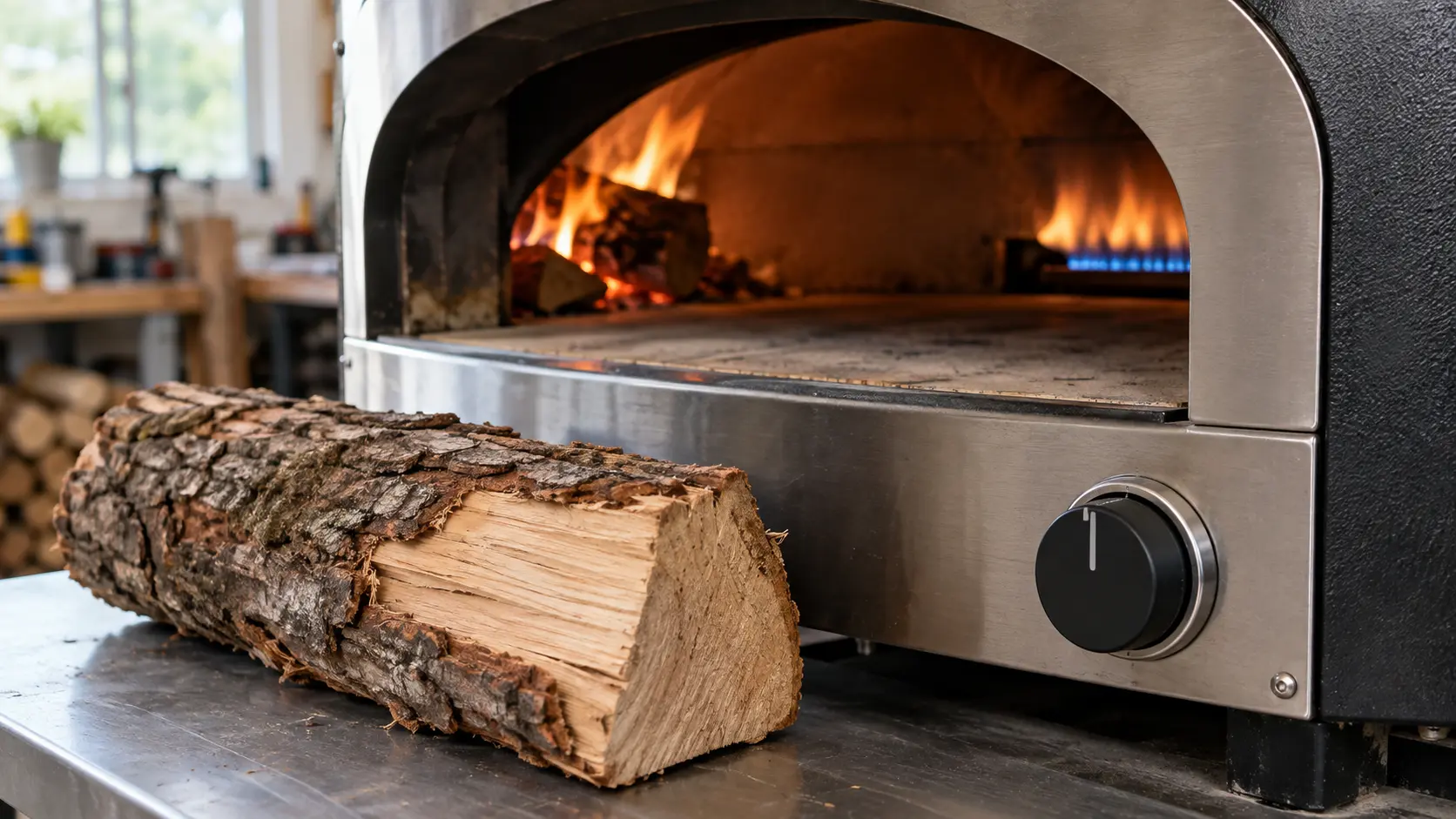
What each fuel needs where the oven stands
Whether you settle on a wood or gas pizza oven or an electric deck, the oven itself is half the purchase. The other half arrives through a pipe, a flue or a cable, and that half is where most installation surprises live.
- Wood-fired: a solid base, insulation under the floor, a chimney suited to solid fuel with a rain cap, and a dry place to keep split hardwood.
- Outdoor gas: a propane cylinder or a natural gas supply with its own shutoff close by, matched to the gas the oven was built for; Kalamazoo asks for 6 inches of open space to the left, right and back of its countertop model and nothing overhead.
- Hybrid: everything on the wood line plus everything on the gas line.
- Electric deck: a dedicated electrical connection and venting for every deck; Marra Forni notes that each added deck needs its own connection and more ventilation.
Burn rules and the neighbors
Some towns restrict wood burning on poor air days. Wood Stone points out that wood-fired cooking equipment is often treated differently from wood stoves under those rules, tells owners to ask their state or local air quality agency, and offers its gas-fired ovens where wood burning is restricted. If your area calls frequent burn bans, a hybrid or an all-gas model keeps pizza night from depending on the air forecast.
Source: Kalamazoo — Artisan Fire pizza oven use and care guide — 6 inches of clearance to the left, right and back with no obstructions above; use only a long-handled brass bristle brush on the cooking deck; brush burnt cornmeal or flour into the crumb tray; never use liquids on the cooking deck.; Marra Forni — ELST37-32/1 stackable electric oven specification sheet — 200–950°F cooking temperatures; radiant infrared heaters located within the stone-hearth deck with individually adjustable upper and lower temperatures; each additional deck requires its own dedicated electrical connection and additional ventilation.
Everyday care for each kind
Wood leaves ash, and ash has to go somewhere safe: a metal container with a tight lid, set on the ground or a noncombustible floor until every cinder is cold, as both Chicago Brick Oven and Wood Stone describe. Feeding the fire only dry hardwood, dried at least two years in CBO's words, keeps smoke and creosote down.
Gas trades ash for crumbs. Kalamazoo has owners brush burnt flour and cornmeal off the deck into its crumb tray with a long-handled brass brush, and forbids any liquid on the cooking deck. Electric decks in a pizzeria are scraped and brushed through the day like any other baking stone.
Source: Chicago Brick Oven — CBO-500, 750 and 1000 user manual — The dome turns from black to whitish gray when the oven reaches 700°F; burn dry hardwood dried at least two years; ashes go in a metal container with a tight-fitting lid on a noncombustible floor or the ground.; Kalamazoo — Artisan Fire pizza oven use and care guide — 6 inches of clearance to the left, right and back with no obstructions above; use only a long-handled brass bristle brush on the cooking deck; brush burnt cornmeal or flour into the crumb tray; never use liquids on the cooking deck.; Wood Stone — Mountain Home and Traditional Home installation and operation manual (M0365) — Wood-fired cooking ovens are often exempt from restrictions aimed at wood stoves; check with the state or local air quality agency; gas-fired ovens are the alternative where wood burning is restricted; properly seasoned wood is 20% moisture or less; ash in a closed metal container until cinders are cold.
What each kind brings to a repair visit
Over the years, the fuel decides which parts come up on the work order.
- Wood-fired: cracks in the dome or floor, loose firebricks, a door or chimney cap warped by heat, creosote in the flue.
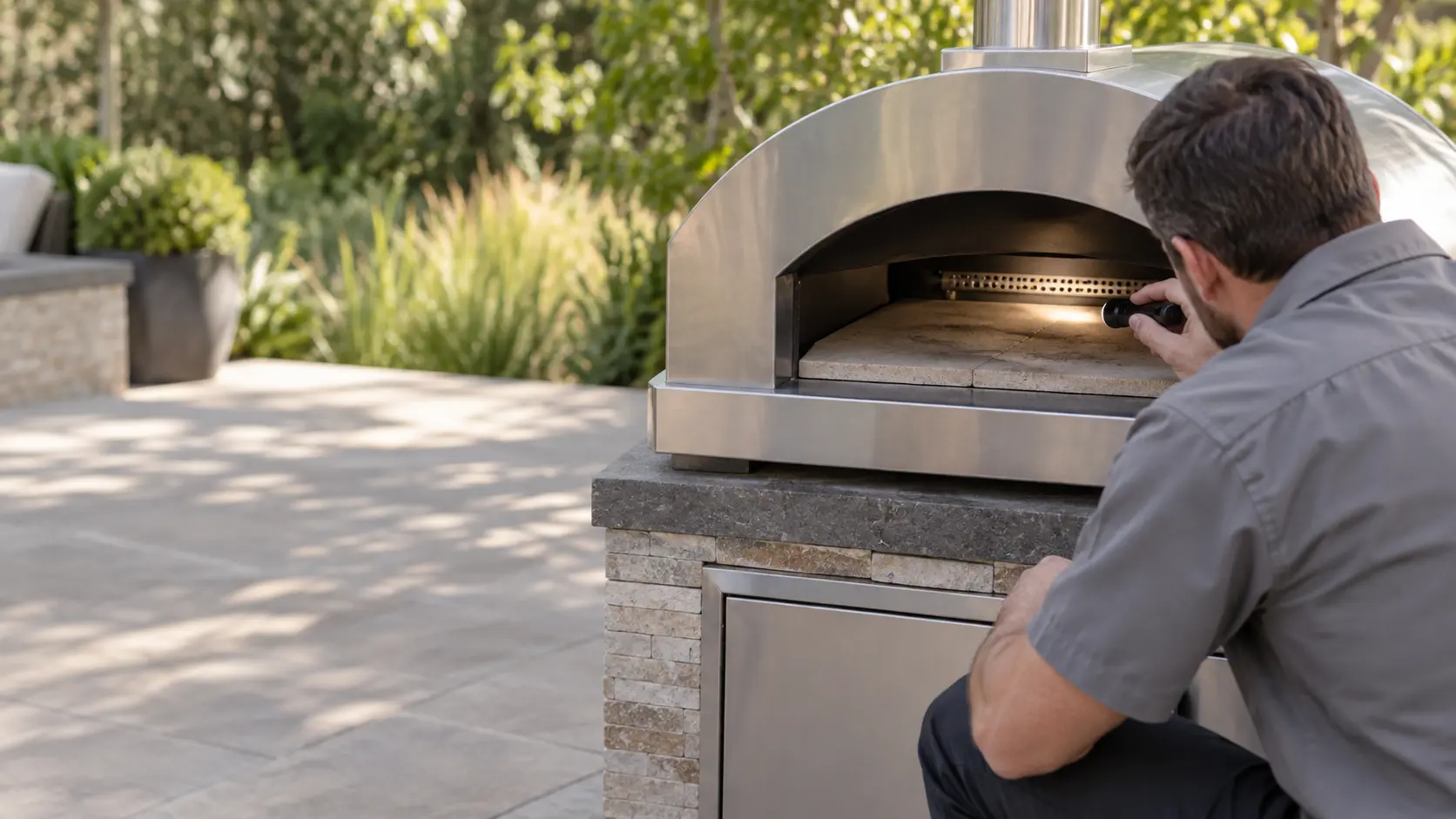
- Gas: igniters, thermocouples or flame sensors, valves and regulators, and burners clogged by ash or crumbs.
- Hybrid: both lists, plus ash packed into the burner when the cover was left off.
- Electric deck: heating elements, thermostats or touch controls, door springs and cracked deck stones.
What a deck's circuit means for service
An electric deck is simple to live with and hard to troubleshoot yourself, because every useful test happens behind a panel with the power on. Owners stop at the breaker and the display. Element, contactor and control work belongs to a technician who isolates the power first.