
Why each pizza oven carries its own clearances
A countertop gas oven with a steel jacket, a refractory dome wrapped in a blanket and a commercial deck oven lose heat through different surfaces, so their makers test them separately and print different distances. The table below shows how far apart the published figures are. None of them can be borrowed from a neighbor's oven or from a rule of thumb; the installer reads the manual for the model on the order and the local building and fire rules, and the larger number wins.
Combustible means anything that can char or burn: wood framing and decking, siding, a pergola, a fence, plastic laminate, even a painted or varnished finish. Noncombustible means stone, brick, concrete, block and steel. Many makers allow smaller gaps to noncombustible walls, but Chicago Brick Oven and Alfa both warn that the required air spaces must never be packed with insulation or anything else.
| Pizza oven | Sides and back | Above or overhead | In front of the mouth |
|---|---|---|---|
| Kalamazoo Artisan Fire (gas, countertop) | 6 in | 12 in above; never under an overhead combustible surface | Counter should extend 9 in past sides and back |
| Alfresco countertop gas oven | 12 in behind the rear exhaust; 1 in around the base | Not under unprotected combustible construction | Not stated |
| Coyote Duomo (wood-fired) | 36 in | Not under combustibles at any height | 36 in |
| Chicago Brick Oven CBO-500/750 (wood-fired) | 10 in | 18 in above the dome; 30 in below | 30 in each side of the door, 36 in in front |
| Marra Forni static (commercial) | 2 in | Per the venting method | 30 in beside the door opening, 36 in in front |
Source: Kalamazoo — Artisan Fire Pizza Oven Use and Care Guide (North America) — 6 inches at sides and back, 12 inches above, never under an overhead combustible surface, noncombustible surface extending 9 inches, 36 to 42 inches high, 100-pound oven; definitions of an outdoor installation; Alfresco — Pizza Oven Care and Use Manual (AXE-PZA) — 12 inches from rear exhaust and 1 inch around the base to combustibles; never over, under or next to unprotected combustible construction; never on combustible countertops; built-ins need bottom access and an access door to the shutoff and GFCI; Coyote — Duomo Wood Fired Pizza Oven Owner's Manual — 36 inches to combustibles at sides and rear and 36 inches from the mouth; not under combustible material at any height; nothing within 10 feet of the chimney cap top; wood decks are combustible; Chicago Brick Oven — CBO-500/750/1000 User Manual — 10 inches at sides and back, 18 above, 30 below, 30 inches beside and 36 in front of the door; do not pack clearances with insulation; masonry or metal base for a 350-pound oven on a 4-inch reinforced slab; layer order and dry insulation boards; Alfa Forni — User manual, domestic ovens (North America) — Never fill a required clearance with insulation; under a roof or pergola the oven needs a UL 103HT double-wall chimney; Marra Forni — Static oven manual (Rev. 5-2026) — 2 inches to combustibles at sides and back; combustible sidewalls 30 inches from the door opening and 36 inches in front; forklift handling and legs anchored into a 4-inch concrete slab
Roofs, pergolas and eaves above the oven
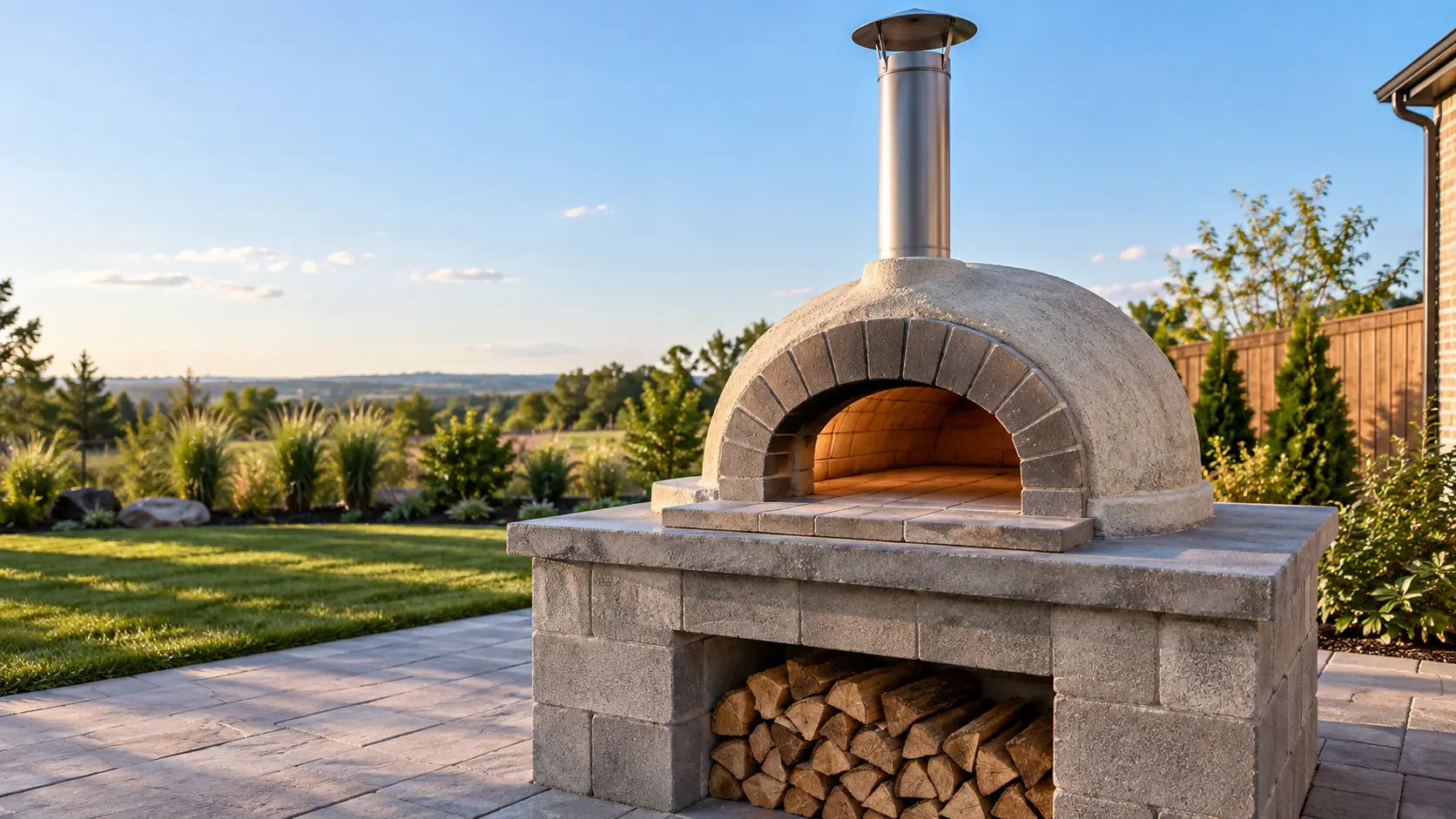
Overhead is where installations most often go wrong, because a pergola or patio roof is usually added for the cook's comfort. Alfresco says its oven must not be placed over, under or next to unprotected combustible construction, and Kalamazoo says never to put its oven beneath an overhead combustible surface. Coyote says its wood oven should not sit under combustible material at any height, and that nothing should be within 10 feet of the top of the chimney cap.
A roof also changes the chimney. Alfa's venting guide says the single-wall pipe supplied with its ovens is enough outdoors with no overhead obstructions, but an oven under a roof, a pergola or any ceiling needs a UL 103HT double-wall chimney run through the structure, installed with its own clearances.
When a covered patio stops counting as outdoors
Outdoor gas ovens are certified for outdoor use only, and Kalamazoo spells out what that means. An oven is outdoors with walls on three sides and no roof; with a roof and no more than two walls; or with a roof and three walls if at least 30 percent of the enclosure's perimeter is permanently open. Sliding doors, garage doors, windows and screens do not count as open. A space that fails that test needs a different kind of oven and a vented installation.
Source: Kalamazoo — Artisan Fire Pizza Oven Use and Care Guide (North America) — 6 inches at sides and back, 12 inches above, never under an overhead combustible surface, noncombustible surface extending 9 inches, 36 to 42 inches high, 100-pound oven; definitions of an outdoor installation; Alfresco — Pizza Oven Care and Use Manual (AXE-PZA) — 12 inches from rear exhaust and 1 inch around the base to combustibles; never over, under or next to unprotected combustible construction; never on combustible countertops; built-ins need bottom access and an access door to the shutoff and GFCI; Coyote — Duomo Wood Fired Pizza Oven Owner's Manual — 36 inches to combustibles at sides and rear and 36 inches from the mouth; not under combustible material at any height; nothing within 10 feet of the chimney cap top; wood decks are combustible; Alfa Forni — User manual, domestic ovens (North America) — Never fill a required clearance with insulation; under a roof or pergola the oven needs a UL 103HT double-wall chimney
The stand and hearth under a wood-fired oven
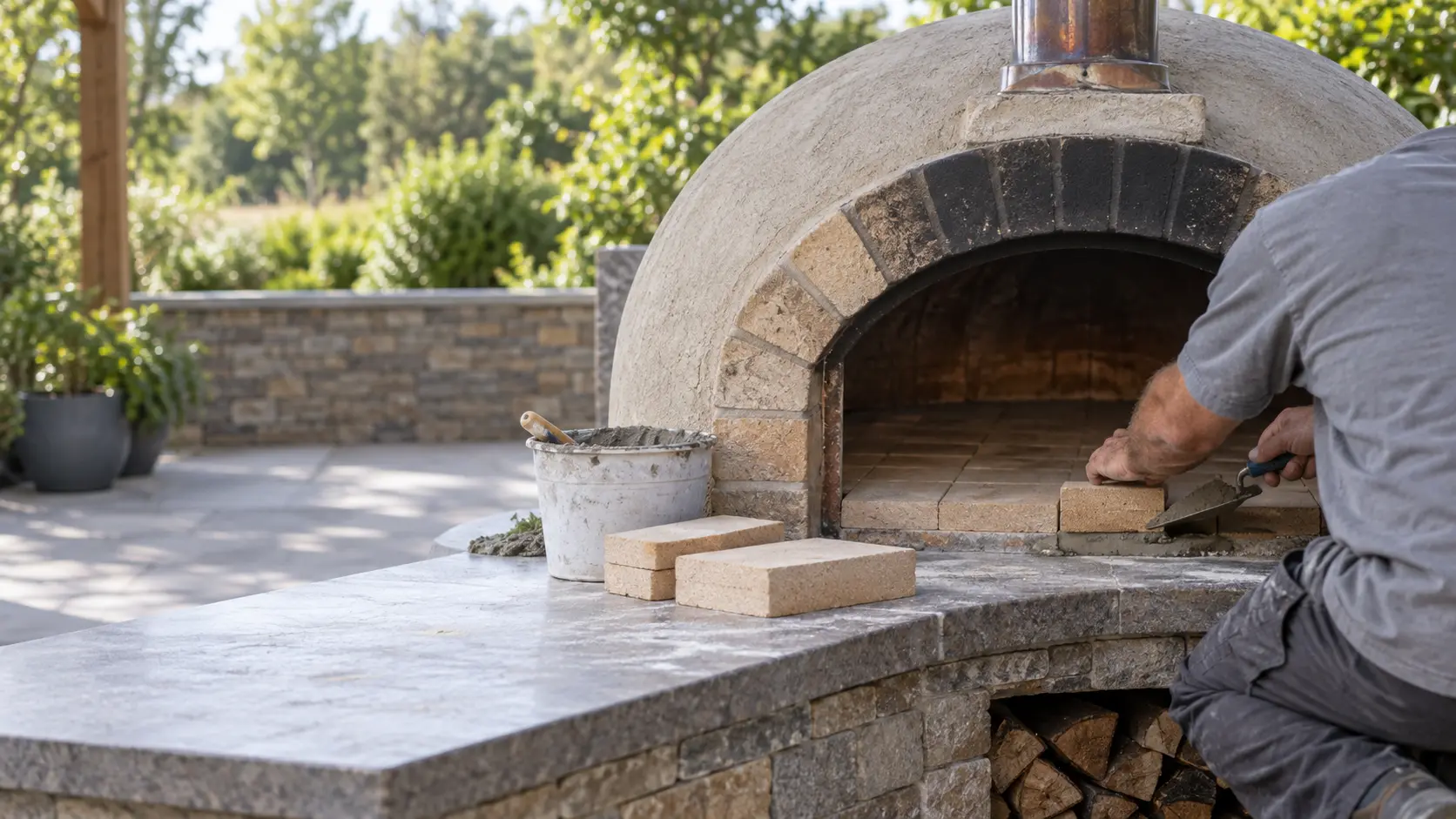
A refractory dome is heavy and holds heat for hours, and all of it sits on the stand. Chicago Brick Oven's manual for its CBO-500 says the support base must be masonry or metal, at least as large as the oven's footprint, flat, level and able to carry the oven's 350 pounds plus the finish built around it. Its typical base is two legs of concrete block topped with a 4-inch, steel-reinforced concrete slab, and it warns that the base and any framing around the oven must be noncombustible and never made of wood.
Commercial domes are heavier still. Marra Forni's manual covers moving its ovens by forklift from the sides and anchoring the stand's legs into a 4-inch concrete slab, and asks that a floor outline be marked first so the full circumference of the oven fits the space.
Insulation under the floor is not optional
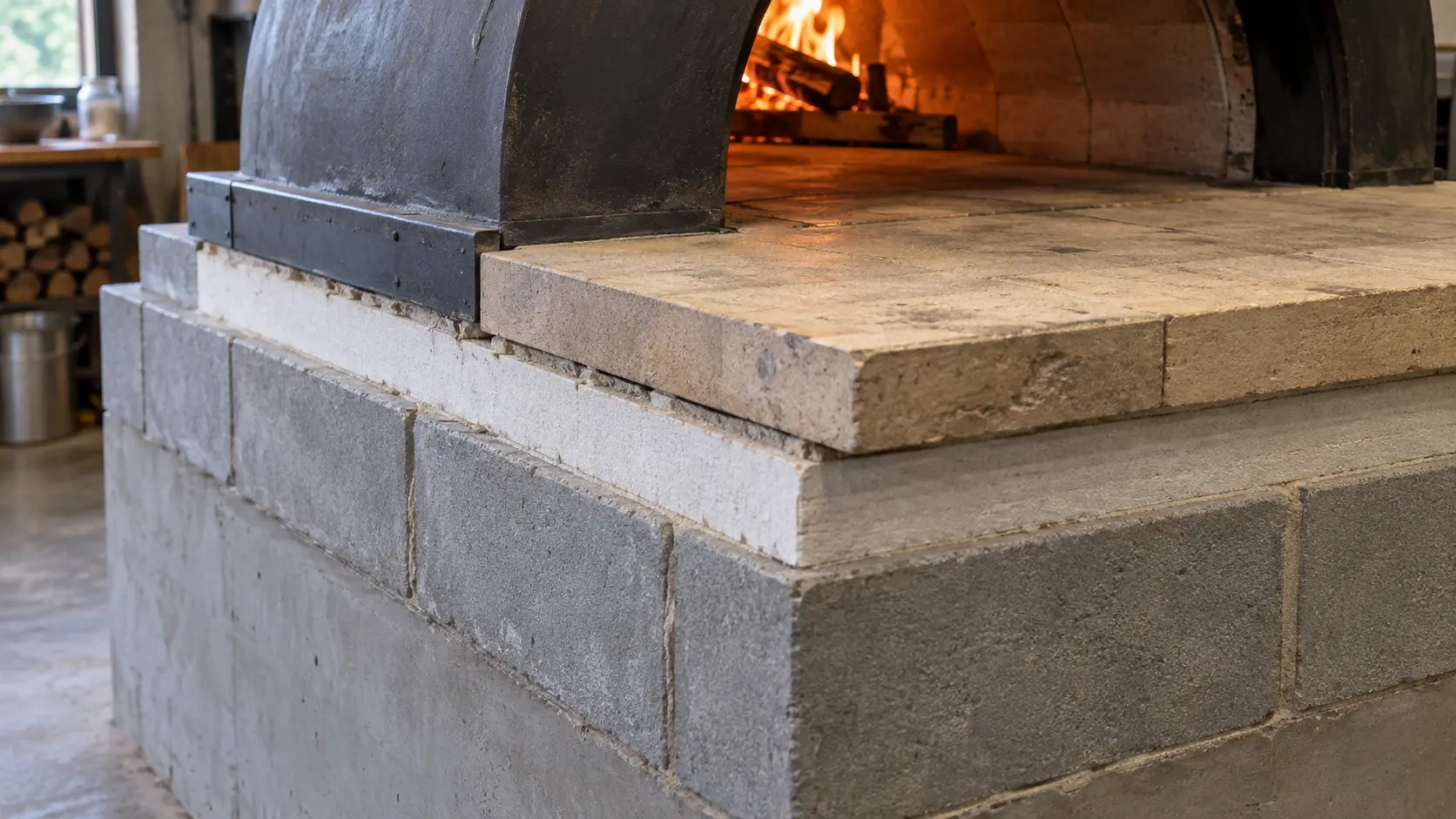
Chicago Brick Oven's answer to whether a concrete or masonry base still needs insulation is yes: a noncombustible base does not replace the boards specified under the hearth or the blanket over the dome. Without them the slab soaks heat away from the cooking floor, and the heat keeps traveling into the stand. The manual stacks the layers in a fixed order.
- Reinforced concrete slab on block legs
- A thin galvannealed steel plate
- Insulation boards, cut flush with the front and kept dry
- The hearth pieces, laid tight with no mortar or glue beneath
- The dome, then the insulating blanket over its whole surface
Keeping those layers dry
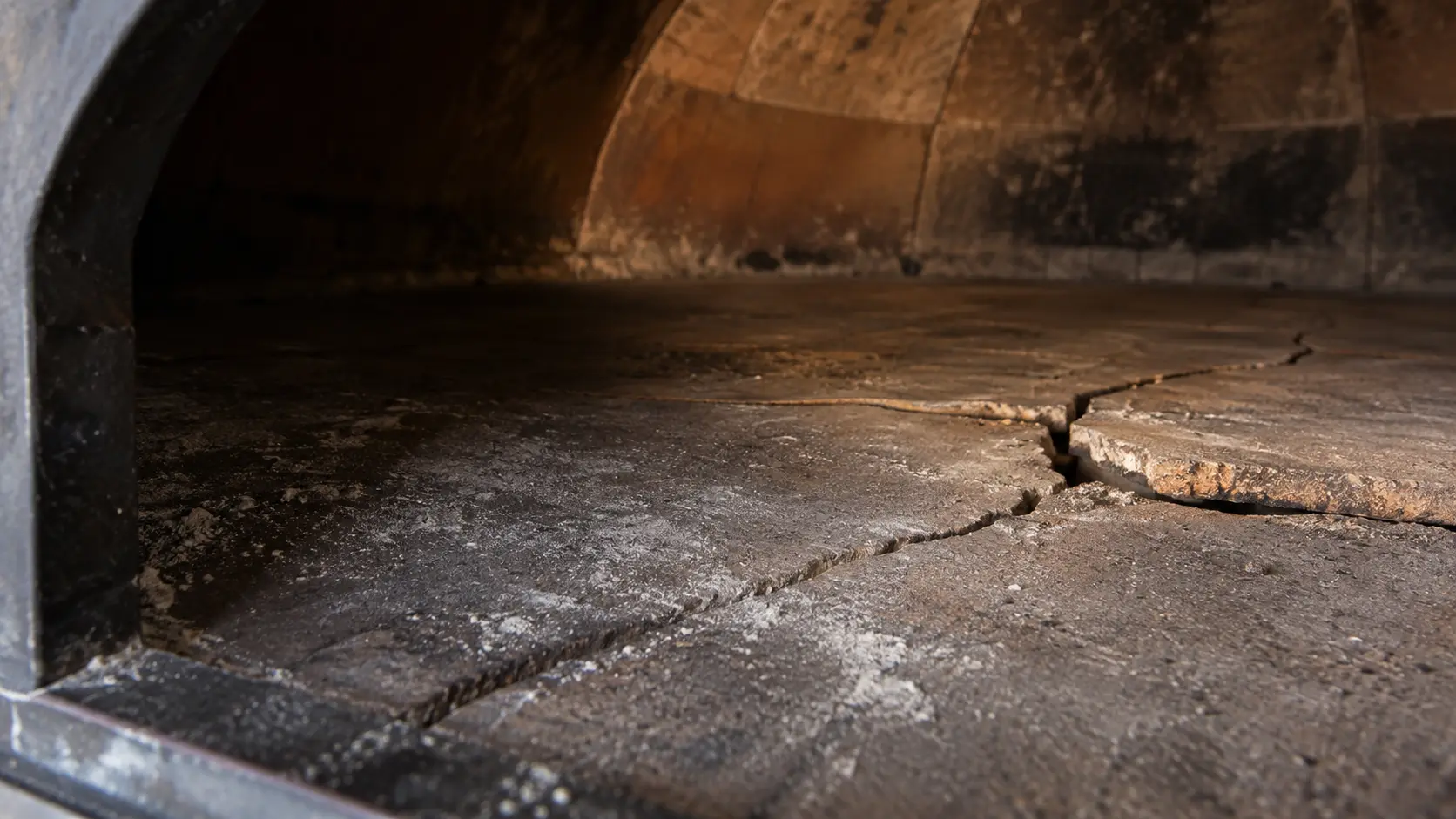
Chicago Brick Oven asks that the sub-hearth insulation never be left exposed to the weather and that the decorative finish be built on the support base, not on the boards. Water that reaches the insulation turns to steam on the next hot fire, which is why an installation that lets rain in often ends as a call about a cracked floor.
Source: Chicago Brick Oven — CBO-500/750/1000 User Manual — 10 inches at sides and back, 18 above, 30 below, 30 inches beside and 36 in front of the door; do not pack clearances with insulation; masonry or metal base for a 350-pound oven on a 4-inch reinforced slab; layer order and dry insulation boards; Marra Forni — Static oven manual (Rev. 5-2026) — 2 inches to combustibles at sides and back; combustible sidewalls 30 inches from the door opening and 36 inches in front; forklift handling and legs anchored into a 4-inch concrete slab
The counter under an outdoor gas pizza oven
Countertop gas ovens push heat downward through their base, so the surface below matters. Alfresco says its oven must never run on combustible counters and names laminate, solid-surface and quartz composite materials, wood and anything with combustible binders or finishes. Kalamazoo asks for a noncombustible surface that can carry its roughly 100-pound oven without tipping or sliding, extends 9 inches past the sides and back, and stands 36 to 42 inches high.
Once an oven is built into masonry it can no longer be lifted out for service. Alfresco requires access to the bottom of a built-in unit and recommends an access door so the gas shutoff and the GFCI receptacle can be reached. Planning that door at build time saves a demolition later.
- Stone, concrete, tile over a noncombustible base or steel, not laminate or quartz composite
- Strong enough for the oven's weight without flexing or sliding
- Deep and wide enough to leave the margin the maker asks for around the oven
- The space under the oven left open so combustion air can reach the burner
- An access door to the gas shutoff and the receptacle on a built-in
Source: Kalamazoo — Artisan Fire Pizza Oven Use and Care Guide (North America) — 6 inches at sides and back, 12 inches above, never under an overhead combustible surface, noncombustible surface extending 9 inches, 36 to 42 inches high, 100-pound oven; definitions of an outdoor installation; Alfresco — Pizza Oven Care and Use Manual (AXE-PZA) — 12 inches from rear exhaust and 1 inch around the base to combustibles; never over, under or next to unprotected combustible construction; never on combustible countertops; built-ins need bottom access and an access door to the shutoff and GFCI
Floors and walls around a deck oven or conveyor oven
Pizzeria ovens are set close to walls but need a floor that cannot burn. Middleby Marshall's conveyor manual allows zero clearance to side and rear walls for its PS638 series, yet requires noncombustible flooring with nothing combustible beneath it, extending at least 12 inches beyond the oven on every side. Bakers Pride lists 3 inches to combustible construction on the left and rear of its gas deck ovens and 1 inch on the right, and says nothing may be stored on top of or under the oven.
Air around the base matters as much as distance. Blodgett keeps 6 inches clear on each side, the back and underneath its 1060 deck oven, plus 12 inches on the left for service, and says the oven must not sit on a curb base or be sealed to a wall; pilot outages or yellow, floating burner flames are its signs of too little air.
Source: Middleby Marshall — PS638 Series Owner's Operating and Installation Manual — Zero clearance to side and rear walls; noncombustible floor extending at least 12 inches beyond the oven on all sides; Bakers Pride — Floor model gas deck oven operation manual — 3 inches left and rear and 1 inch right to combustible construction; store nothing on top of or under the oven; Blodgett — 1060 Gas Deck Oven installation, operation and maintenance manual — 6 inches at each side, back and bottom, 12 inches left for service; no curb base or sealing to a wall; pilot outages or yellow floating flames show a lack of secondary air