How does pie size decide what size pizza oven you need?
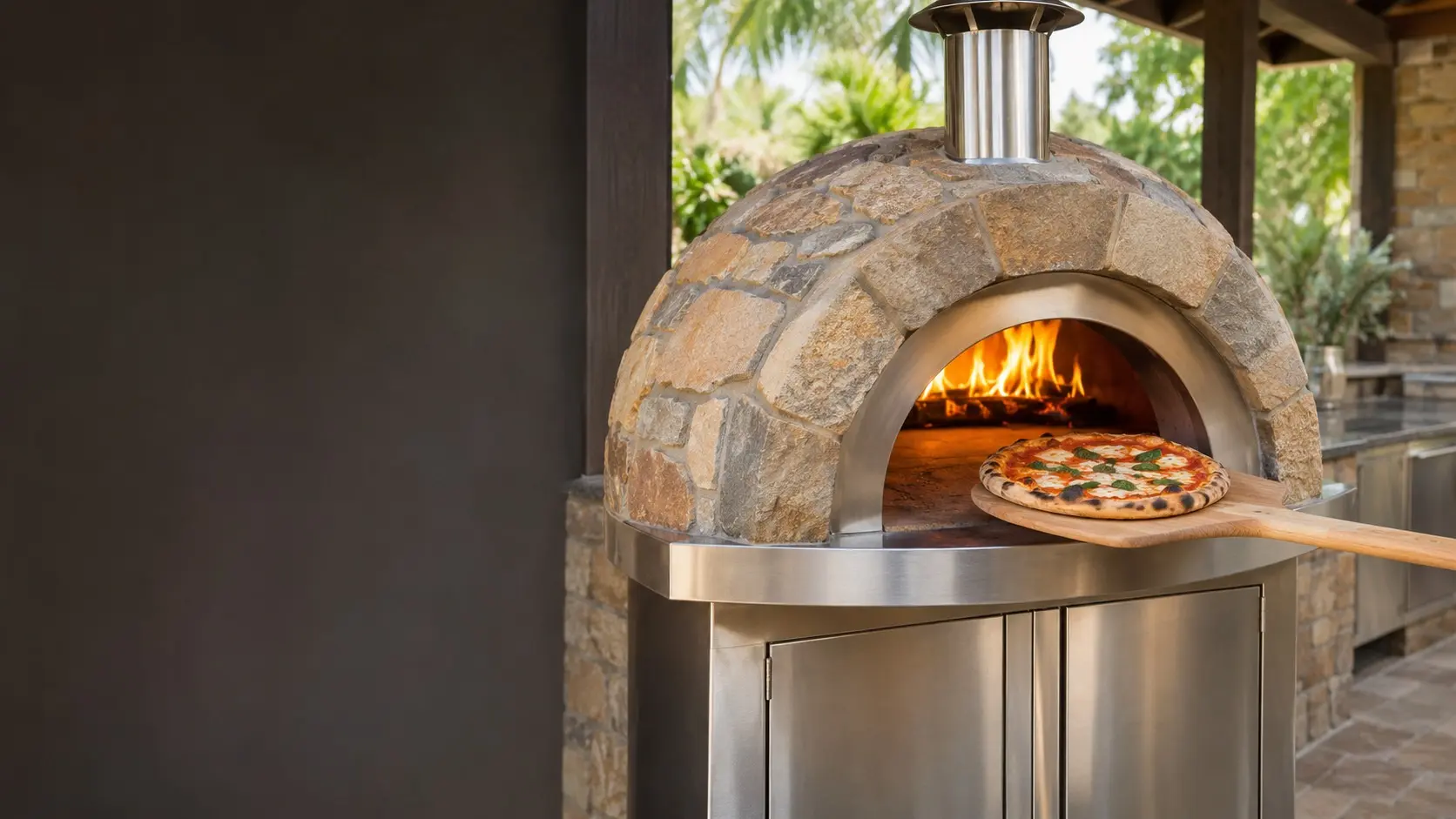
Start with the biggest pie you plan to bake and add room to move it. The floor must be wider than the pizza, because you need space to turn the pie with a peel, and the mouth must be wider than the pie so you can slide it in without catching the edge.
A common home pie is around 12 inches. If you want to bake larger ones, such as 14 or 16 inches, the oven must grow in floor, mouth and dome height. Many ovens list a maximum pie size; read it as the diameter that fits with a little turning room, not an ideal.
What the maker's pie size means
A listed size is the largest pie that fits, and baking it comfortably usually means sizing one step down. Plan for the pie you make most, not the one you make once a year.
- Measure the pie you bake most often
- Add room to turn it on the floor
- Check the mouth width against the pie, with the peel
- Check the dome height, so toppings and crust do not touch it
How many pizzas do you bake in a row?
The more pies per session, the more floor area you need, or the faster the floor must recover between bakes. A small floor holds one pie at a time, and each pie draws heat from the stone, so the next one needs the floor to catch up.
One at a time or two at once
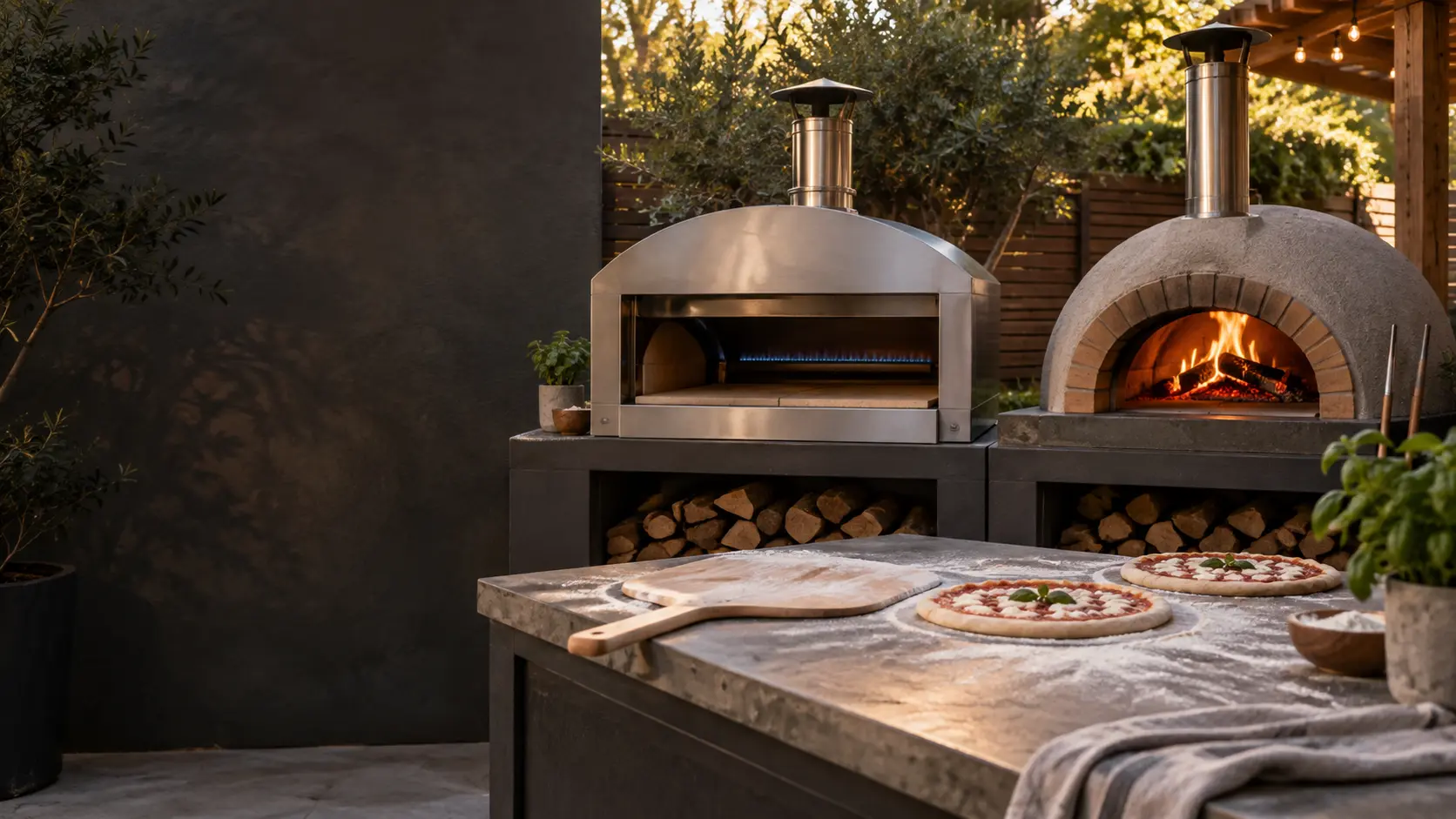
A floor with room for two pies side by side halves the queue, and for a family of four that often matters more than anything else. But two pies also pull more heat out of the floor in one go, so a larger oven needs more fuel or a stronger burner to match.
Recovery time
Recovery is how long the floor takes to return to baking temperature after a pie comes out. Gas ovens often recover faster than wood-fired ones, since the burner keeps adding heat. Wood-fired ovens depend on the fire; feed it small, dry pieces of wood to keep the floor hot. If the floor cools too much between pies, bottoms come out pale. The why a pizza oven will not heat guide covers a floor that never gets there.
Table: How serving size shapes the oven
| You bake | Floor you need | Why |
|---|---|---|
| One 12-inch pie at a time | Room for one pie plus turning | Compact is fine, and heats fast |
| Two or three pies in turn | A floor with recovery to spare | The floor must recover between pies |
| Pies for a crowd | Room for two pies at once | Halves the queue |
| 14- or 16-inch pies | Wider mouth and taller dome | The pie must pass without touching |

What about heat-up time and fuel?
A bigger oven takes longer to heat and uses more fuel for it, and a small one is ready sooner. If you often decide on pizza at the last minute, a compact oven that reaches baking heat quickly may serve you better than a large one.
Fuel type matters too
Wood-fired, gas and electric ovens differ in heat-up, control and the space they need. The wood, gas or electric pizza oven guide compares them. For a wood-fired oven, fuel use and fire management grow with the oven's size.
Cure it properly
A new masonry or stone oven needs a gentle curing, as described in the curing a new pizza oven guide, before it is brought to full heat. Rushing a big oven to high heat can crack it.
How big a space does the oven need?
More than its footprint. A pizza oven needs clearance from walls, fences, overhangs and anything that can burn, and a stand or base that carries its weight. A larger oven is heavier and hotter on the outside.
Check the manual and the ground
Read the installation instructions for the oven you are considering, including its clearance to combustibles and its weight. See the clearances and the hearth under an oven guide for what a safe base and space look like. For an indoor or covered space, the venting question comes first.
The peel and the working space
Leave room beside the mouth for these:
- A counter or shelf for the peel and dough
- A place to rest and cut a finished pie
- Standing room that does not brush the hot oven
- A clear path away from children and pets
Is it better to go bigger than you think you need?
Only a little. A step larger than your current need gives room to grow and a floor that holds heat longer, but it takes more fuel and time to heat, more space and often more money. A small oven that you use is better than a large one that you avoid lighting.
If you already own one that feels too small
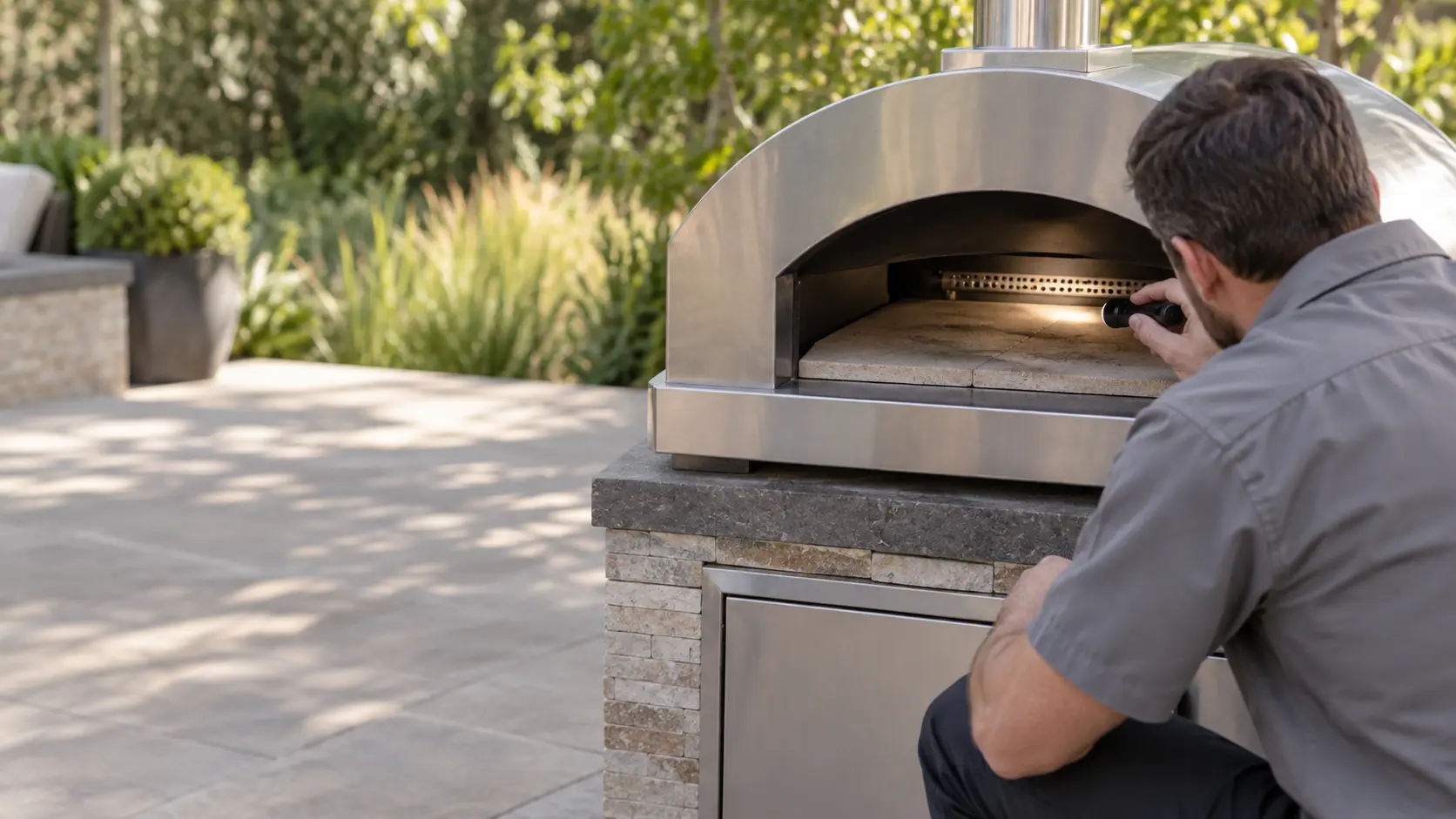
Before replacing it, check whether it is really too small or just not reaching heat. A floor that is not hot enough makes pies slow and pale, which feels like a size problem. The pizza oven not getting hot page lists the usual causes, and a diagnostic visit finds out whether a burner, a thermostat or the floor is the issue. If the floor has cracked, the pizza oven floor and dome repair service covers it, and the repair or replace guide helps you decide.

