How a deck oven and a conveyor oven bake a pie
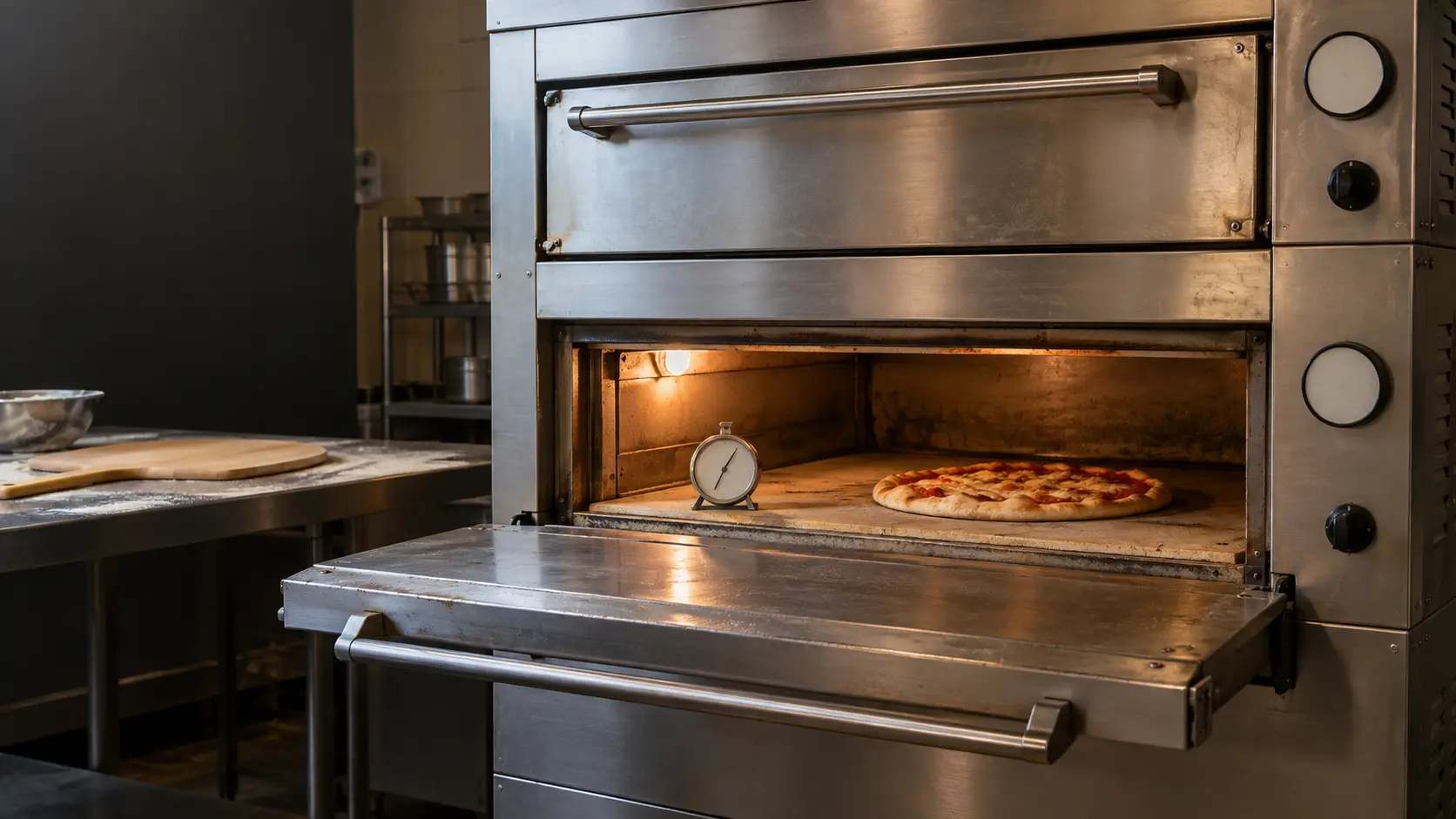
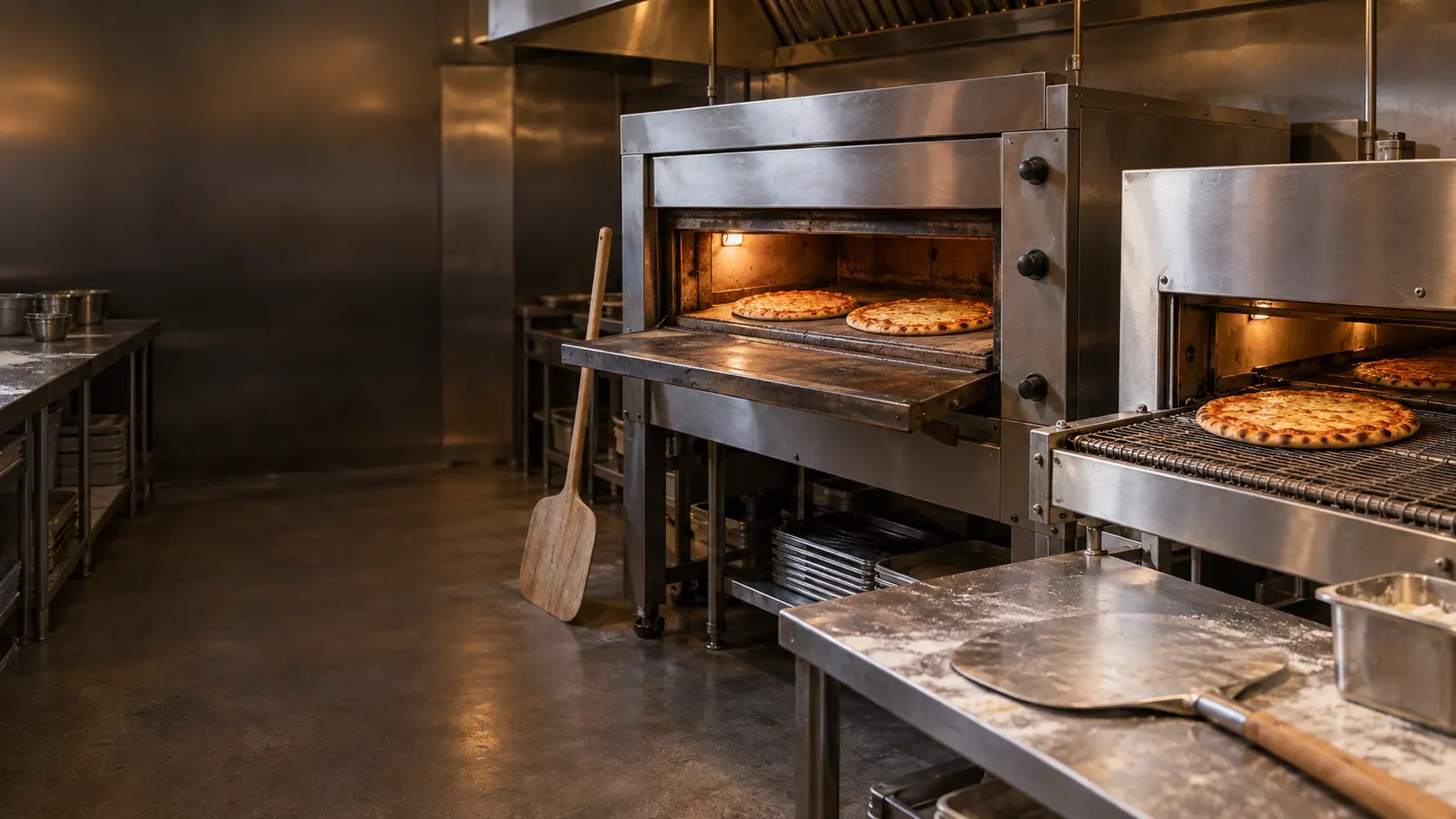
On a deck the crust sits on stone or ceramic heated from below, and the top browns from the hot air and ceiling above. Bakers Pride lists three ways its gas decks are used: pies placed straight on the deck at 550°F or more, pies on screens between 500 and 550°F, and pan pizza between 450 and 500°F.
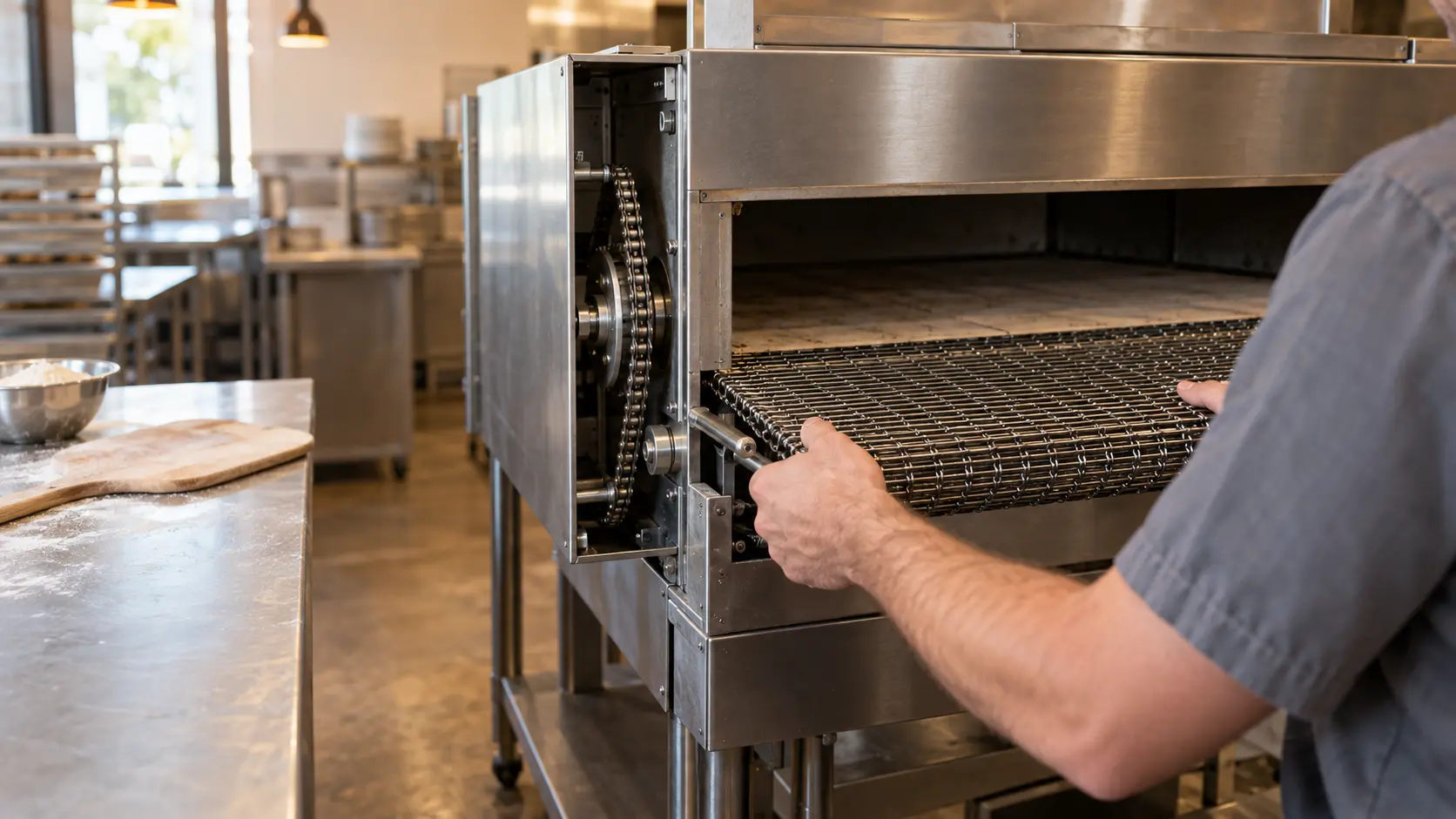
A conveyor has no stone at all. Blowers push heated air through rows of nozzles called air fingers, which Middleby Marshall describes as projecting streams of hot air onto the food, from above and below a wire belt. Belt speed sets the bake, so a pie loaded at one end comes out the other end finished no matter who loaded it.
Countertop and rapid-cook conveyors
Smaller countertop conveyors suit a shop with a short counter or no hood. TurboChef lists its HhC conveyors with UL for ventless operation with most foods, excluding fatty raw proteins such as raw bacon, raw sausage or skin-on chicken, and gives oven weights from about 195 to 265 lb. When those foods are on the menu, local ventilation codes still decide what goes over the oven.
Source: Bakers Pride — floor model gas deck oven operation manual (U4114A) — Deck baking needs at least 550°F, screen baking 500–550°F, pan baking 450–500°F; areas next to the walls are hotter; rotate pies 180° once per bake or keep to the center; decks get hotter when idle; flue vent inspected every six months; flame diverters checked and replaced; baking decks are heavy and fragile and must not get water.; Middleby Marshall — PS3240G series gas conveyor oven owner's operating and installation manual — Air fingers project streams of hot air onto the food; 32-inch belt or 2 x 15-inch split belt; single to triple stacks; 76-1/2 in. long, 60 in. deep, 1,150 lb.; 99,000 BTU per cavity; 15-minute warm-up plus 10 minutes to stabilize; daily, monthly and three-month maintenance; failed cooling fan replaced immediately; blowers run until below 200°F before the breaker is switched off.

Crew skill and consistency on a busy night
A deck rewards an experienced oven hand. Bakers Pride notes that the areas next to the walls run hotter, that a patch used again and again cools down, and that pies should be turned half a turn once in each bake or kept to the center; someone has to track all of that while loading more. On a slow afternoon the opposite happens, and an idle stone climbs until bottoms scorch unless the thermostat comes down.
A conveyor takes most of that judgment away. Belt time and setpoint are chosen once per product, and a new hire turns out the same pie as the owner. What it asks for instead is cleaning discipline, because a clogged finger or a crumb-packed belt changes the bake for every pie that follows.
Split belts and stacked cavities
Both designs stack to save floor space. Middleby Marshall's PS3240G stacks up to three cavities and offers a split belt, two 15-inch belts in one chamber, so two products with different bake times run side by side. Marra Forni's electric decks stack up to four high, each with its own controls, which lets one deck run pies while another bakes bread.
Source: Bakers Pride — floor model gas deck oven operation manual (U4114A) — Deck baking needs at least 550°F, screen baking 500–550°F, pan baking 450–500°F; areas next to the walls are hotter; rotate pies 180° once per bake or keep to the center; decks get hotter when idle; flue vent inspected every six months; flame diverters checked and replaced; baking decks are heavy and fragile and must not get water.
Floor space, fuel and the hood
The hood, the gas meter and the electrical service are usually the costliest and slowest parts of the decision to change, so a site survey belongs before the order.
- A full-size gas conveyor such as the PS3240G measures about 76.5 inches long and 60 inches deep, and a single cavity weighs about 1,150 lb.
- Its rated input is 99,000 BTU per cavity, which the gas line and meter must carry for every stacked cavity at once.
- Gas decks connect to a flue that Bakers Pride wants inspected and kept clear every six months.
- Electric decks need a dedicated connection for each deck and venting sized for the whole stack.
Source: Bakers Pride — floor model gas deck oven operation manual (U4114A) — Deck baking needs at least 550°F, screen baking 500–550°F, pan baking 450–500°F; areas next to the walls are hotter; rotate pies 180° once per bake or keep to the center; decks get hotter when idle; flue vent inspected every six months; flame diverters checked and replaced; baking decks are heavy and fragile and must not get water.; Middleby Marshall — PS3240G series gas conveyor oven owner's operating and installation manual — Air fingers project streams of hot air onto the food; 32-inch belt or 2 x 15-inch split belt; single to triple stacks; 76-1/2 in. long, 60 in. deep, 1,150 lb.; 99,000 BTU per cavity; 15-minute warm-up plus 10 minutes to stabilize; daily, monthly and three-month maintenance; failed cooling fan replaced immediately; blowers run until below 200°F before the breaker is switched off.; Marra Forni — ELST37-32/1 stackable electric oven specification sheet — Decks stack up to four high with independent controls; typical capacity per 37 x 32 in. deck of four 16-inch pizzas; each additional deck needs its own dedicated electrical connection and additional ventilation.
Upkeep and the repairs each one invites
Deck upkeep is simple and physical: scrape and brush the stones, keep water off them, and check the flame diverters under the deck, replacing any that are damaged. The costly surprise is a cracked deck stone, and Bakers Pride warns that the decks are heavy and fragile.
Conveyor upkeep runs on a calendar. Middleby Marshall asks for daily brushing of the belt, the cooling fan grills and the crumb trays, monthly removal and cleaning of the air fingers, and work every three months on the blower compartments and conveyor shafts. A cooling fan that stops has to be replaced right away, and belts, drive motors and blowers are the usual reasons for a call.
Why the conveyor shutdown order matters
After the heat is switched off, the PS3240G keeps its blowers turning until the chamber drops below 200°F. Cutting the breaker before then leaves that heat sitting around the motors and controls, which is why the manual has staff switch the breaker off only after the oven has cooled and the blowers have stopped on their own.
Source: Bakers Pride — floor model gas deck oven operation manual (U4114A) — Deck baking needs at least 550°F, screen baking 500–550°F, pan baking 450–500°F; areas next to the walls are hotter; rotate pies 180° once per bake or keep to the center; decks get hotter when idle; flue vent inspected every six months; flame diverters checked and replaced; baking decks are heavy and fragile and must not get water.; Middleby Marshall — PS3240G series gas conveyor oven owner's operating and installation manual — Air fingers project streams of hot air onto the food; 32-inch belt or 2 x 15-inch split belt; single to triple stacks; 76-1/2 in. long, 60 in. deep, 1,150 lb.; 99,000 BTU per cavity; 15-minute warm-up plus 10 minutes to stabilize; daily, monthly and three-month maintenance; failed cooling fan replaced immediately; blowers run until below 200°F before the breaker is switched off.