Why does pizza stick to the stone in the first place?
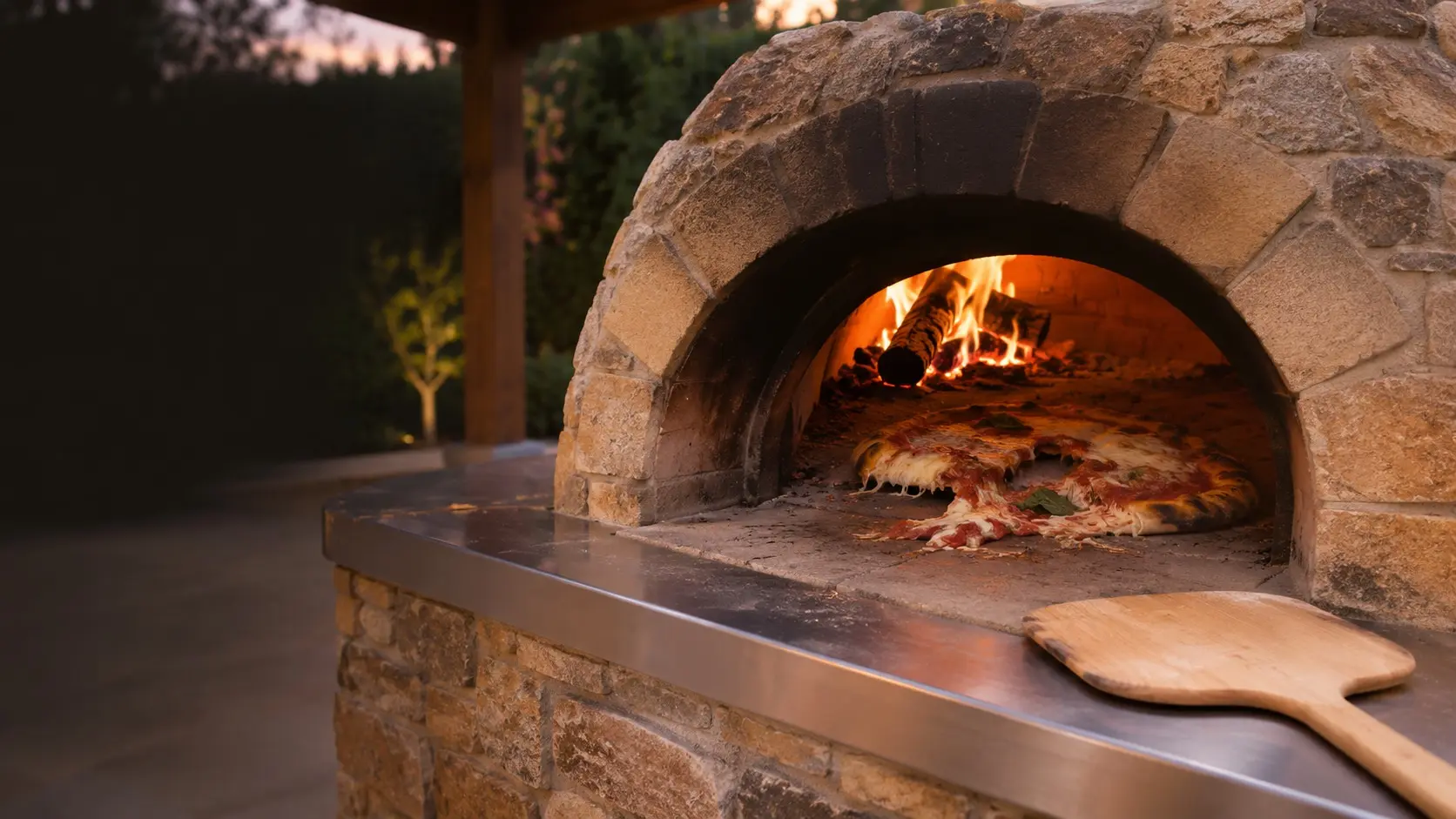
Dough sticks when the surface it lands on is cooler than it should be, wetter than it should be, or rougher than it should be. A properly hot floor sears the underside of the base within seconds, and the crust sets before it can bond. When that sear is slow, wet dough soaks into the surface and the pie welds itself down.
Four causes cover nearly every case, and they behave differently:
- A floor that is not yet at launch temperature, so the base steams instead of sears.
- Dough that is too wet, too fresh from the fridge with condensation, or left sitting on the peel.
- A dusting that is wrong in kind or amount: raw flour that scorches, or none at all.
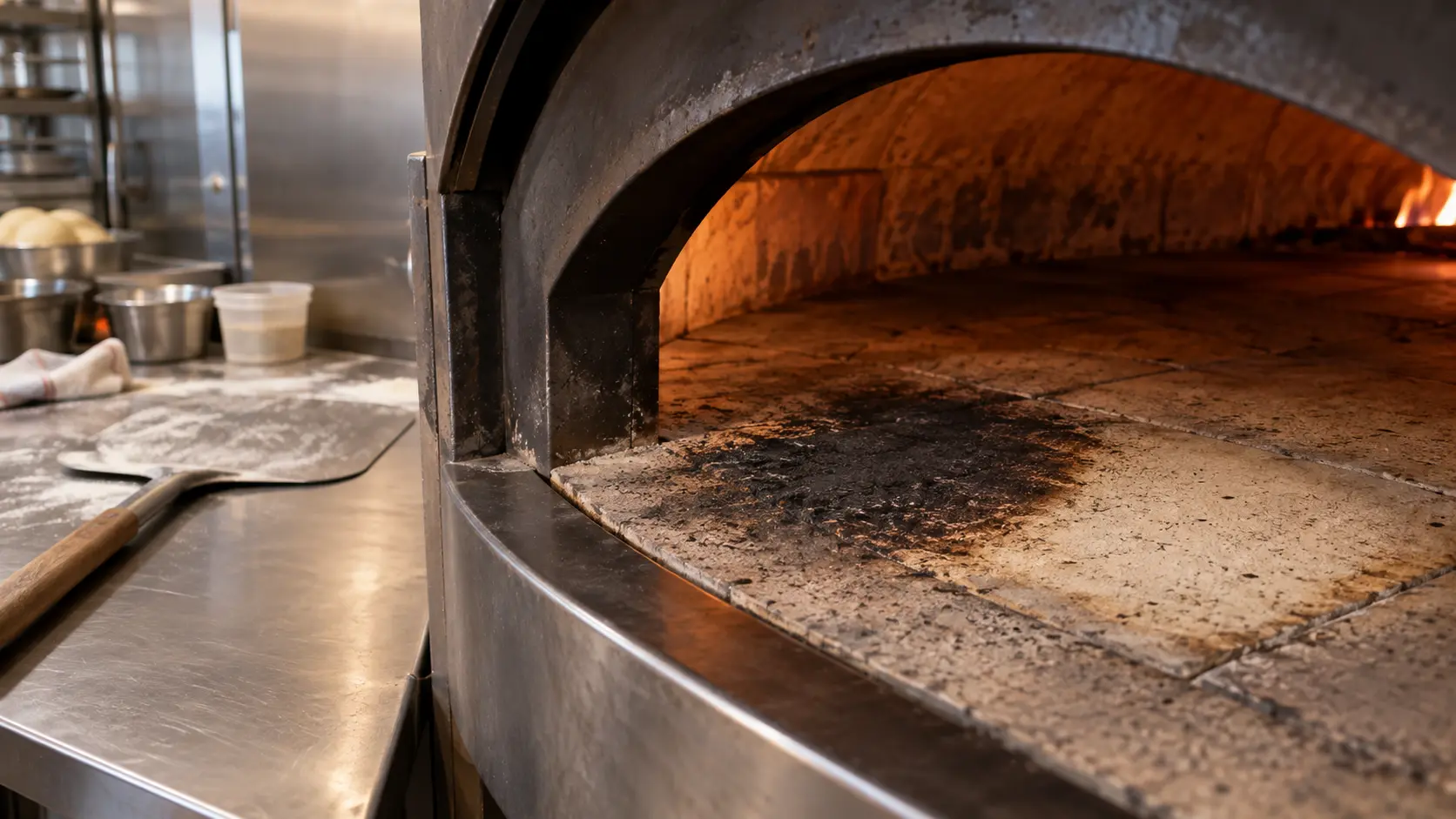
- A floor with burnt cheese, sugar or flour baked into the surface, which gives new dough something to grip.
Only the first one can be an oven problem. The other three are technique and housekeeping, which is good news because you can change them tonight.
Is it the oven or the technique?
Run one controlled bake. Preheat the oven for the full time you normally need, measure the floor, and launch a single pie made with dry dough and a fresh dusting. If it slides cleanly, the earlier failures were technique. If it sticks even then, the floor is the suspect and the next section applies.
Is the floor hot enough to launch?
As a general pizza-making range, a Neapolitan-style pie launches onto a floor around 750°F to 850°F in a wood-fired oven, while a New York-style pie bakes on a cooler floor, around 550°F to 650°F. A floor that reads several hundred degrees below the target is the classic cause of a stuck base, because the stone has been drained by earlier pies and has not recovered.
Measure, do not guess. Point an infrared thermometer at the floor a few inches in from the mouth and again toward the middle. Our guide on checking pizza oven floor temperature covers where to aim and the common reading mistakes. A dome that glows while the floor lags usually means the fire has not run long enough to soak heat into the stone.
Why a floor can read fine and still stick
A reading taken once, before the first pie, hides recovery. Each pie pulls heat out of the stone beneath it. If you launch several in a row, the floor under the first spot drops fast and the second pie lands on a cold patch. Wait a minute between pies, or rotate which part of the floor you use.
When the oven itself is the cause
If a gas or electric oven cannot reach its usual floor temperature in its usual time, or the dial no longer matches the heat, the control side is worth checking. A thermostat and control repair looks at the sensor, the valve or element, and the calibration. Our thermostat guide explains how a dial and the real heat drift apart.

Does too much moisture make the dough weld?
Yes, and it is one of the most common causes at home. Water on the underside of a pie turns to steam against the stone, and steam cools the very spot that needs to sear. Three places moisture sneaks in:
- Dough taken straight from a cold fridge, where condensation beads on the surface.
- Wet toppings, such as fresh mozzarella that was not drained, or sauce spread to the rim.
- A pie dressed on the peel and left to sit, so the dough sweats into the dusting.
Dress the pie quickly and launch within a minute or two. A pie that waits on the peel will stick to the peel, which is the same problem one step earlier. If the peel itself grabs, the dough has absorbed the flour; give it a shake before every topping and again before launch to confirm it moves freely.
Which dusting works, and which scorches?
Use a coarse, dry dusting that acts like ball bearings between dough and surface. Semolina and rice flour are the usual choices because they do not burn as fast as plain wheat flour, and cornmeal works but can taste bitter when it chars. Plain flour is fine on a wooden peel and is the cheapest option, but extra of it scatters onto the floor and scorches.
Table: Common dusting choices and how they behave on a hot floor
| Dusting | On the peel | On a hot floor |
|---|---|---|
| Semolina | Slides well, grips little | Toasts lightly, easy to brush off |
| Rice flour | Slides very well | Burns slowly, leaves little residue |
| Plain flour | Sticks once damp | Scorches and bitters quickly |
| Cornmeal | Slides well | Can char and taste bitter |
How much is enough?
A light, even layer. A heavy mound makes the pie slide on loose grains and then shed them onto the floor, where they burn. Tap the peel over the bin before you launch so only a thin film travels with the pie.
What does a dirty floor do, and how do I fix it?
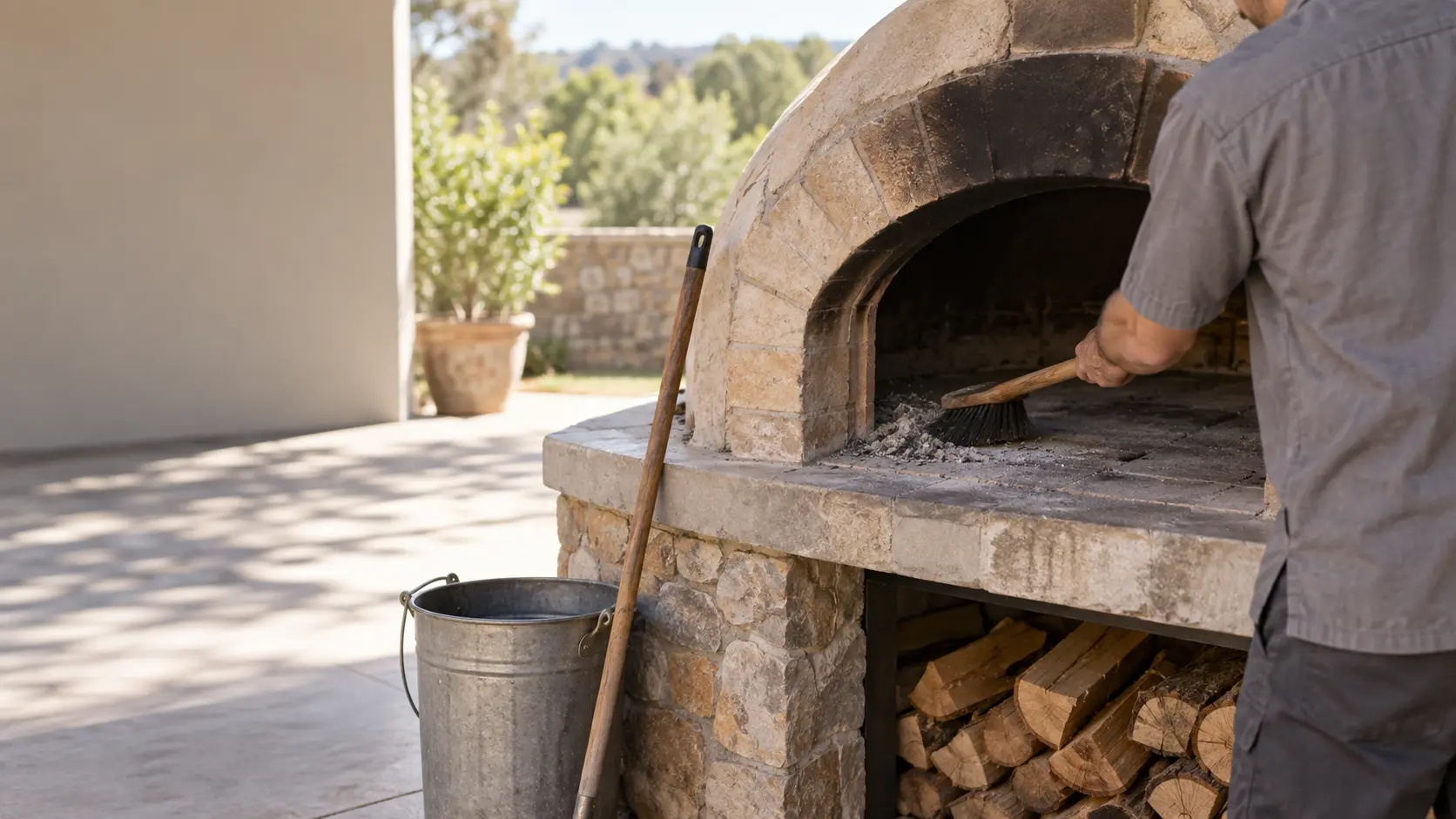
Burnt cheese, sugar from sauce and carbonized flour build a rough crust that dough grips like tape. Brush the floor with a brass-bristle brush while it is hot, working from the back toward the mouth, and let it rest. Never use water on hot stone; sudden steam can crack it. Our guide on cleaning the floor and the chimney covers the safe order.
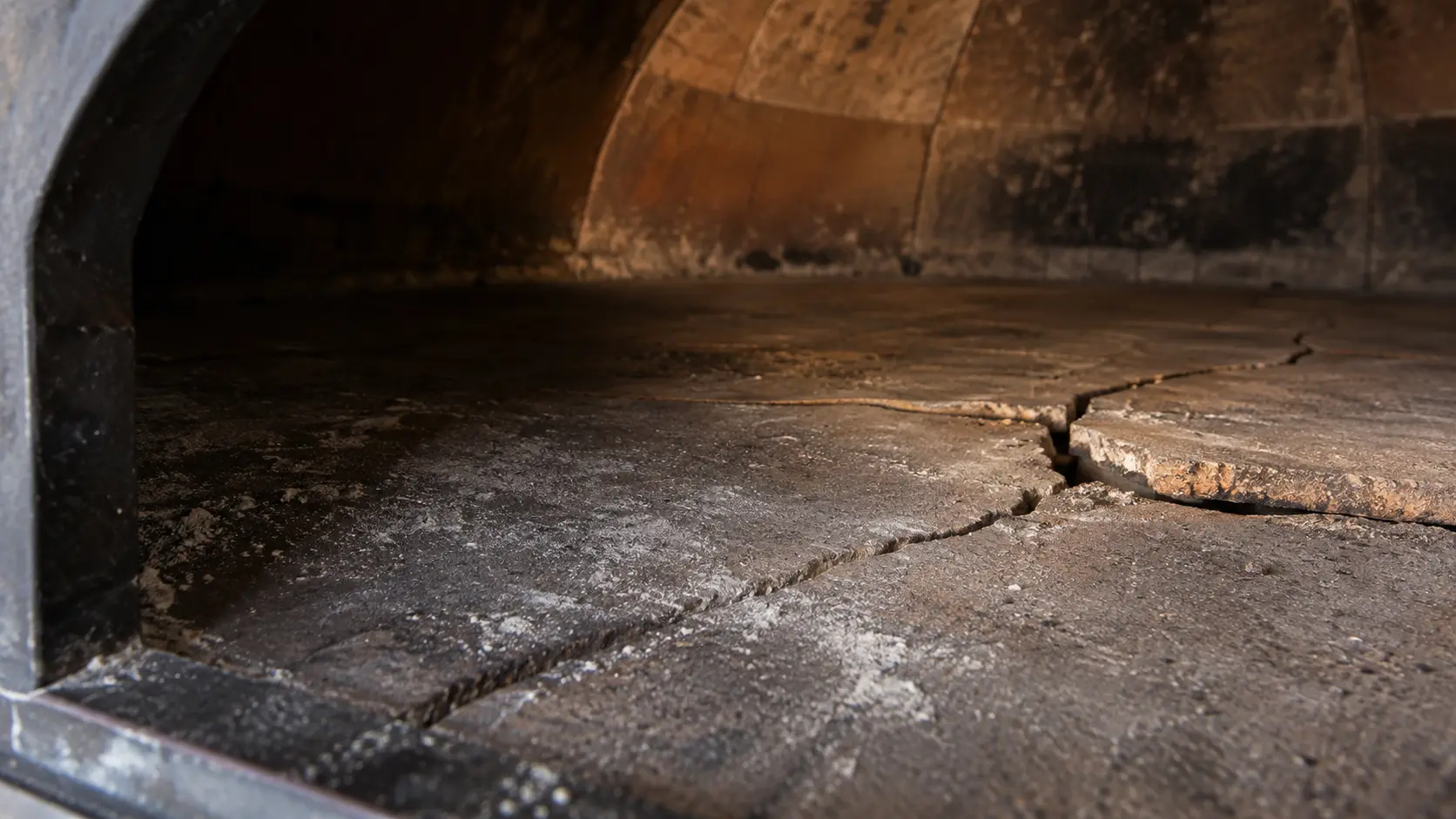
For a floor that is pitted, glazed or stained deeply, a cleaning and safety inspection checks the stone, the flue and the burner area together. If the stone itself has cracked or is lifting, that is a floor and dome repair job, and a cracked floor catches dough at every edge. See also our uneven bake problem page if the base burns in patches as well as sticking.
A quick order for tonight
Work through the causes from cheapest to costliest.
Table: Symptom, likely cause and the next move
| What you see | Likely cause | Next move |
|---|---|---|
| Base is pale and gummy underneath | Floor too cool | Preheat longer, measure the floor |
| Pie will not leave the peel | Wet dough or damp dusting | Dress faster, shake the peel |
| Burnt black patches stick | Dirty floor | Brush clean while hot |
| Floor never reaches the target | Oven or fuel problem | Book an inspection |