Three sources of heat, and which one has run ahead
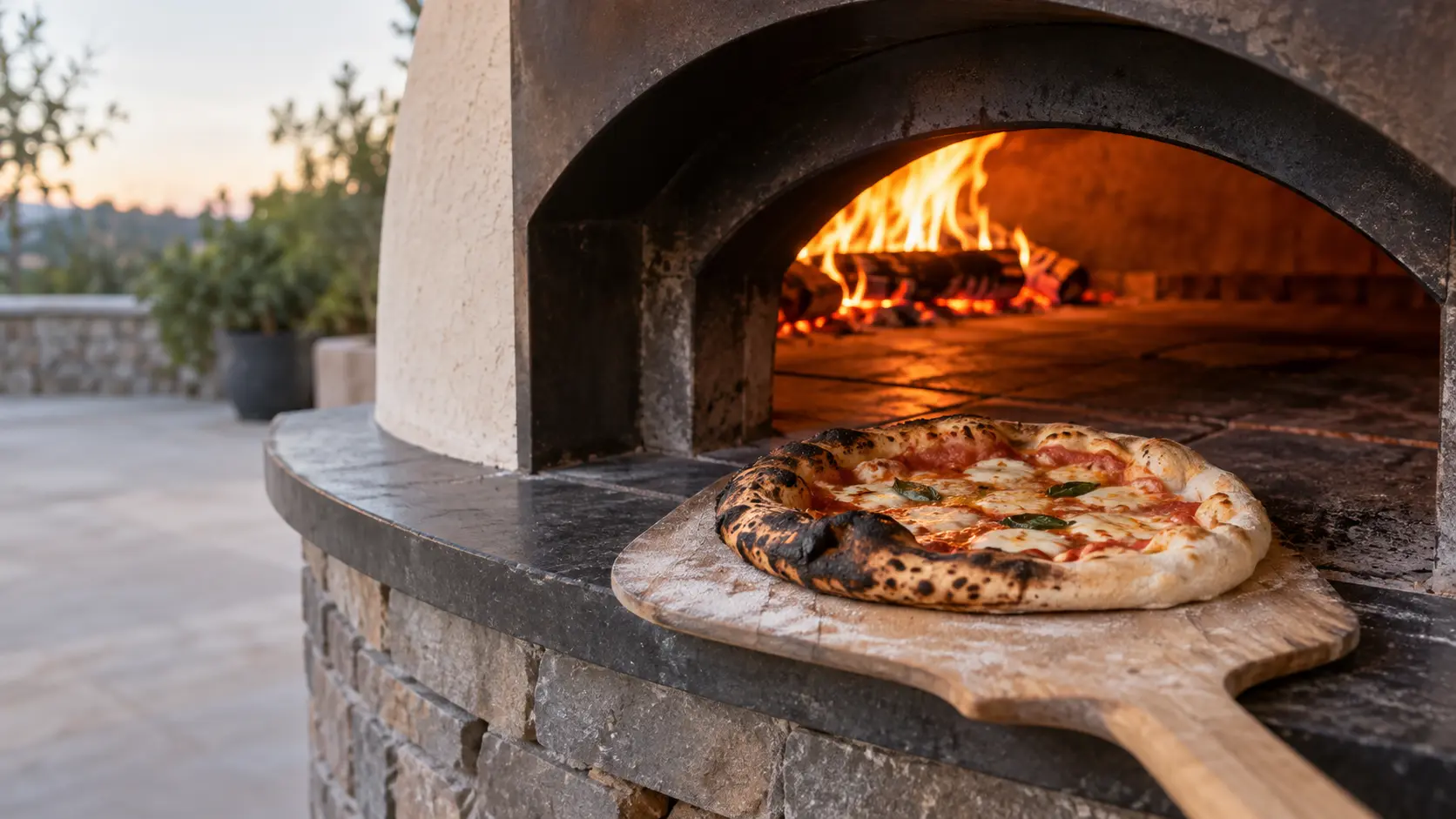
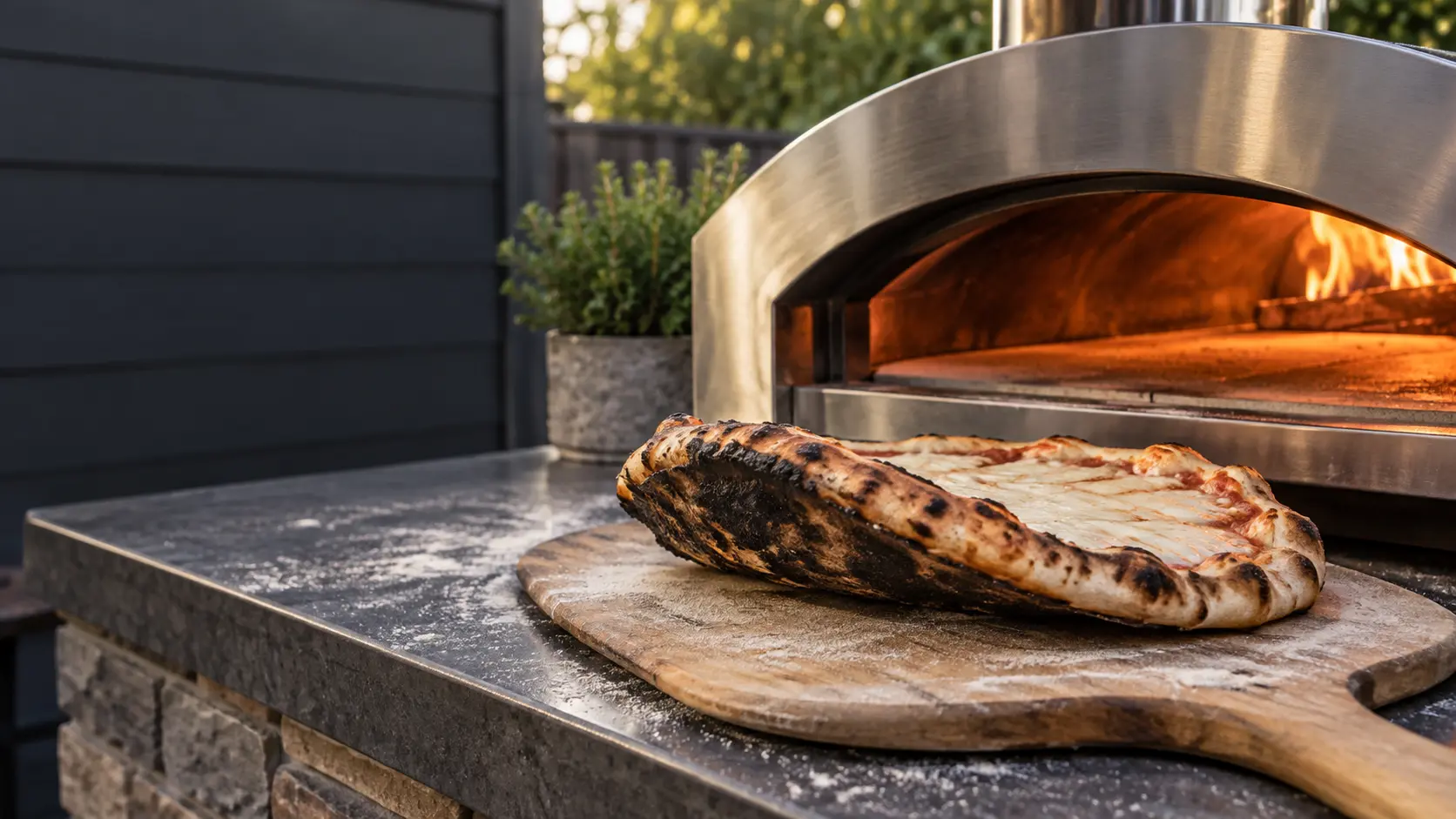
Coyote explains a good pie as the sum of three heats: conduction from the cooking floor into the dough, radiant heat from live flame, and convection from the hot dome curling back over the toppings. Pizza oven bottom burning with a pale top is not the oven being too hot; it is the floor out in front of the other two. Coyote's own reading of a charred crust whose toppings have no browned spots is that the oven needs healthy flames again.
The reverse pattern has the reverse cause. When the toppings scorch and the base stays soft, the same manual says the floor has not reached cooking heat, and it puts the minimum for a pizza at 650°F on the floor. Knowing which way the pie is out of balance tells you which lever to pull.
Reading a finished pie
Turn a pie over as soon as it comes out and photograph both faces. The pattern is worth more than a thermometer reading, and it is the first thing a technician will ask about.
- Black underneath, pale and wet on top: floor ahead, flame or top heat behind.
- Charred rim on one side only: the pie sat too long facing the fire or burner.
- Burnt bottoms only in one spot of a deck: that spot is resting between loads and overheating.
- Burnt bottoms after a cleaning night on a conveyor: finger layout, not temperature.
Source: Coyote — Wood-fired pizza oven owner's manual — Conductive, radiant and convective heat; charred crust with pale toppings needs healthy flames from a couple of small logs; charred toppings over raw crust means the floor is below 650°F
Bringing the flame back over the top of a wood-fired dome
Late in a session a wood fire tends to collapse into a bed of coals. The floor stays scorching because it has been soaking all evening, but with no flame rolling across the ceiling the tops stop coloring. Coyote's fix is to add a couple of small logs so fresh flame climbs the side and travels across the dome and over the pie. Thin, dry splits catch within a minute; a large round log smothers the coals and makes things worse for ten.
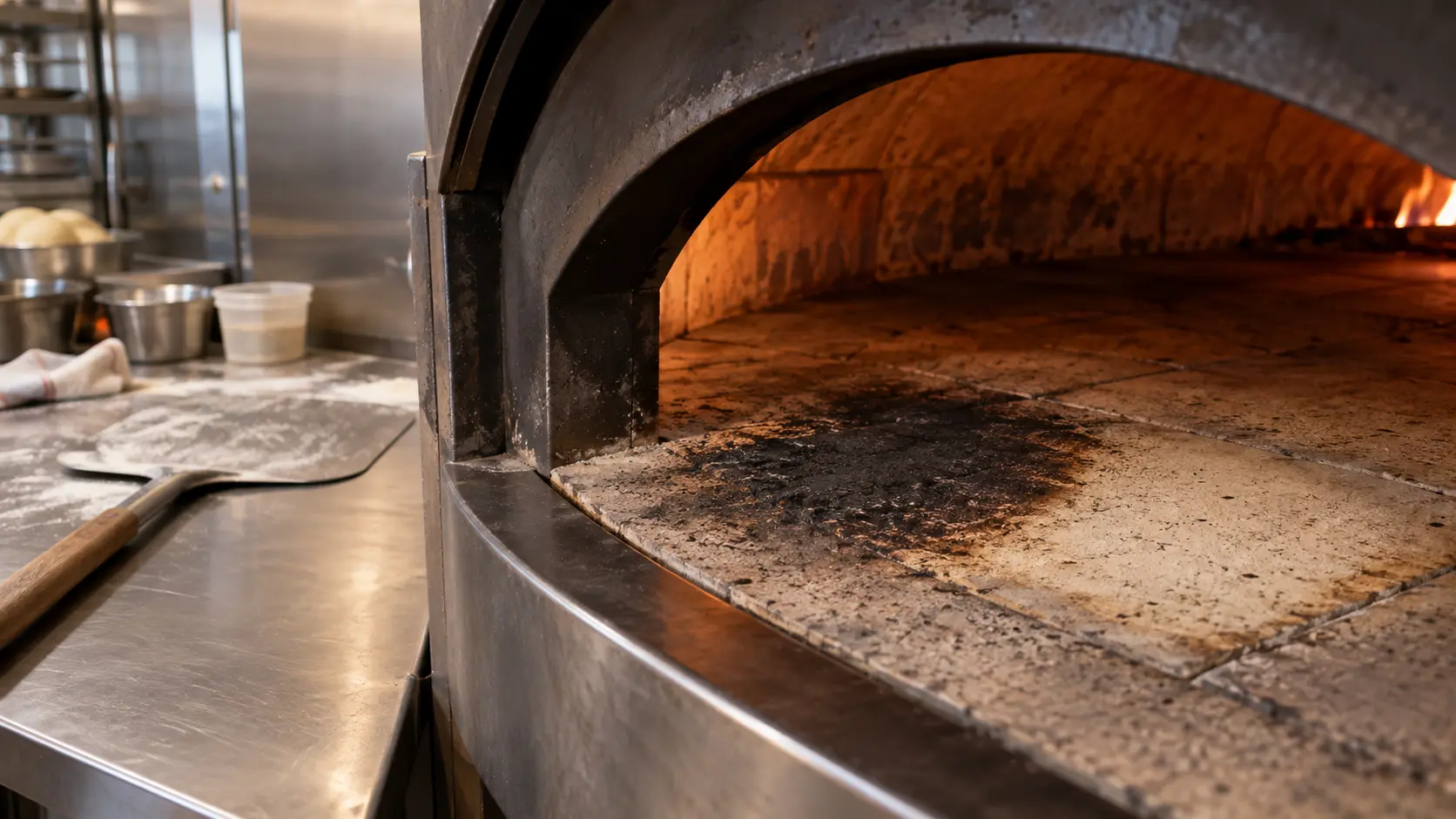
Where the fire sits matters too. Alfa asks for the fire to one side of the floor and away from the mouth, which leaves a working area that is hot but not directly under the coals. Launching a pie onto the patch the fire has just been pushed off is the classic way to scorch a base: that stone can be well over a hundred degrees hotter than the rest.
Letting an overheated patch of floor come down
If the base keeps blackening, give the floor a minute to shed heat into the air before each launch, or move the pie to a spot farther from the coals and turn it more often. Some bakers drag a damp cloth mop over the floor to knock back the surface; do that only if your oven's maker allows moisture on its floor, and never splash water onto hot refractory, because the sudden chill is how floors and domes crack.
Source: Coyote — Wood-fired pizza oven owner's manual — Conductive, radiant and convective heat; charred crust with pale toppings needs healthy flames from a couple of small logs; charred toppings over raw crust means the floor is below 650°F; Alfa Forni — User manual, domestic ovens (North America) — Keep the fire on one side of the oven and not near the mouth

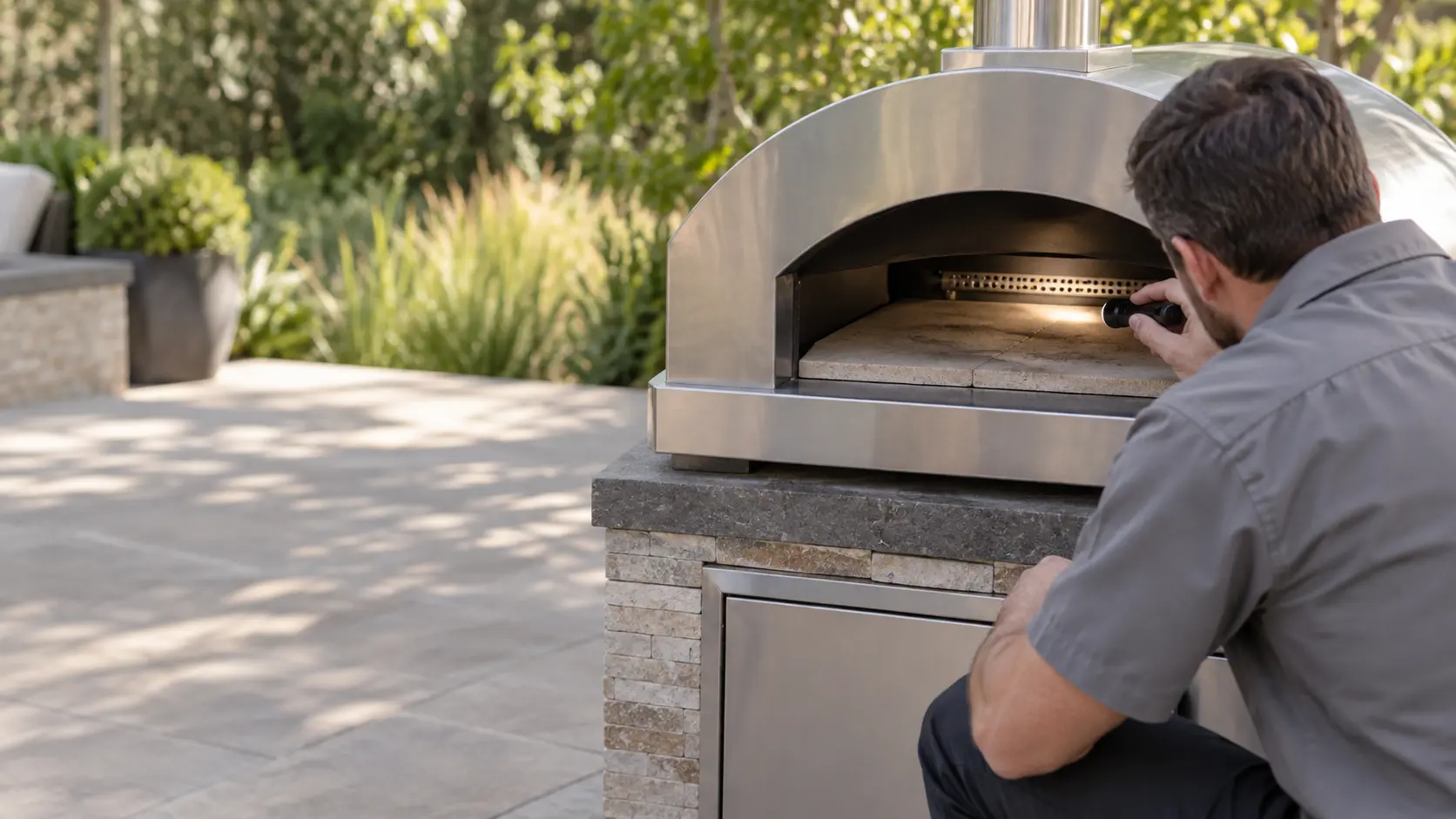
Gas pizza ovens with a hearth burner and a top burner
Many outdoor gas ovens heat the floor and the ceiling separately. Alfresco's oven has an infrared burner under the hearth stones and a burner at the back that plays over a ceramic log, and its manual is frank about the balance: once the hearth burner is hot it needs very little to stay hot, so low is enough, while the top burner goes to high only to finish browning at the end. It also warns that stones heat quickly but take several minutes to cool, so an overheated hearth keeps burning bases for a while after you turn it down.
Kalamazoo's Artisan Fire oven likewise gives the lower and upper burners their own knobs and their own flame sensors. On ovens of this kind a burnt bottom is usually a hearth left on high for the whole session. If turning the hearth down and the top up for fifteen minutes changes nothing, the upper burner may not be delivering its full flame, which is a burner, orifice or valve question for a technician.
A sequence worth trying on a two-burner oven
- Preheat by the manual, usually both burners high with the door on.
- Before the first pie, drop the hearth burner to low and leave the top on high.
- Wait five to ten minutes for the stone to settle, then bake one test pie.
- If the base still burns, keep the hearth low and wait longer; do not turn it off and on repeatedly.
Source: Alfresco — AXE-PZA pizza oven care and use manual — Hearth burner needs only LOW once hot; log burner on HIGH only to brown at the end; too much top heat burns food before the dough is done; stones take several minutes to cool; Kalamazoo — Artisan Fire pizza oven use and care guide — Lower and upper burners have separate controls and each has its own thermocouple
Deck ovens: slow hours, top dampers and the night setting
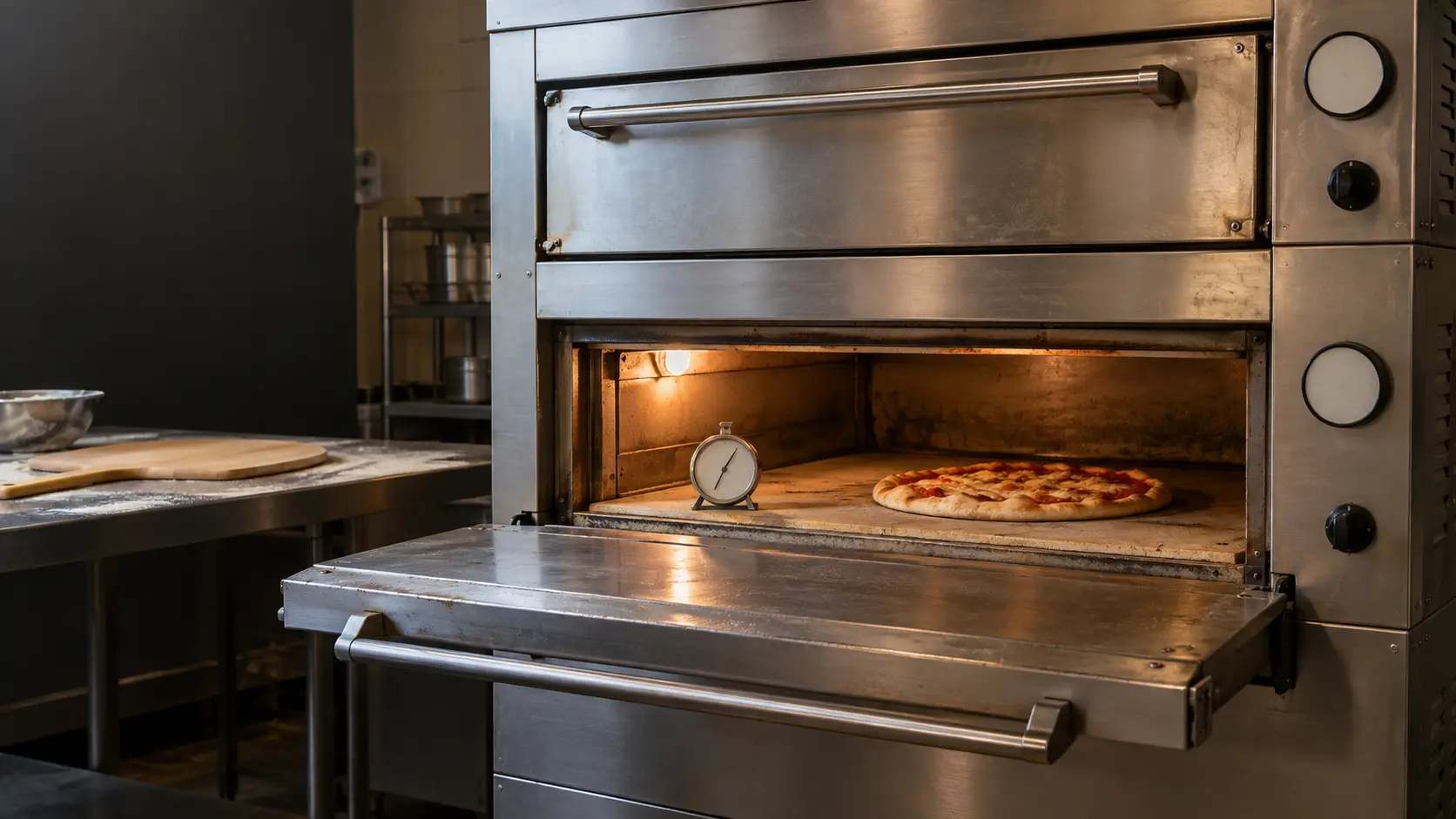
Bakers Pride's troubleshooting chart for its floor-model gas deck ovens is almost a checklist for this complaint. Bottoms burning before the toppings are done has four listed causes: decks that ran too hot during a slow period, micro-slides closed too far, an oven left on overnight and an exhaust fan that is too strong. For the first, it suggests setting the thermostat 50° to 75° below the normal bake temperature until the decks cool, then raising it again by the same amount once the rush starts.
The same chart handles the opposite complaint. Bottoms that come out undercooked usually mean one area of the deck has been used over and over and has cooled; move pies to rested areas. It also notes that the zones beside the oven walls usually run hotter, and recommends a half turn once per bake or keeping pies toward the center. Blodgett's advice when cheese scorches before the crust is set is to lower the temperature and lengthen the bake, working up in 25°F steps from a 500°F start to find the best setting for your dough.
What the micro-slides do
The small sliding controls across the front of many gas deck ovens change how much heat reaches the upper part of the chamber. Bakers Pride says pushing them in opens them and adds top heat, while pulling them out closes them and trims it. Staff often slide them shut to hold heat on a cold day and forget them; that alone can burn every base for a week.
Source: Bakers Pride — Y600/Y800 series deck ovens operation manual — Bottoms burn: deck too hot in slow periods (set 50–75° lower), micro-slides closed, oven left on overnight, exhaust fan too strong; undercooked bottoms from reusing one area; walls run hotter, rotate 180°; push micro-slides in for more top heat; air and bypass adjustments sealed at the factory; Blodgett — 1060 gas deck oven installation, operation, maintenance — Start test bakes at 500°F; if cheese scorches lower the temperature and lengthen the bake; raise in 25°F increments
Conveyor ovens: the air fingers set the balance
A conveyor oven browns with jets of hot air blown through rows of fingers above and below the belt. Change which finger sits where and you change how much air hits the base versus the top. Middleby Marshall's manual for its PS640 asks staff to write each finger's location code on it as it comes out for cleaning, and warns that reassembling them in the wrong order changes the oven's baking properties.
So when bottoms start burning the morning after a deep clean, pull the fingers again with the oven off and cool, and match each one to its slot before anyone touches the temperature or the belt speed. A change of dough, pan or topping weight can also tip the balance, and that is a menu setting, not a repair.
Source: Middleby Marshall — PS640 gas conveyor oven owner's manual — Write each air finger's location code when removing it; incorrect reassembly changes the baking properties