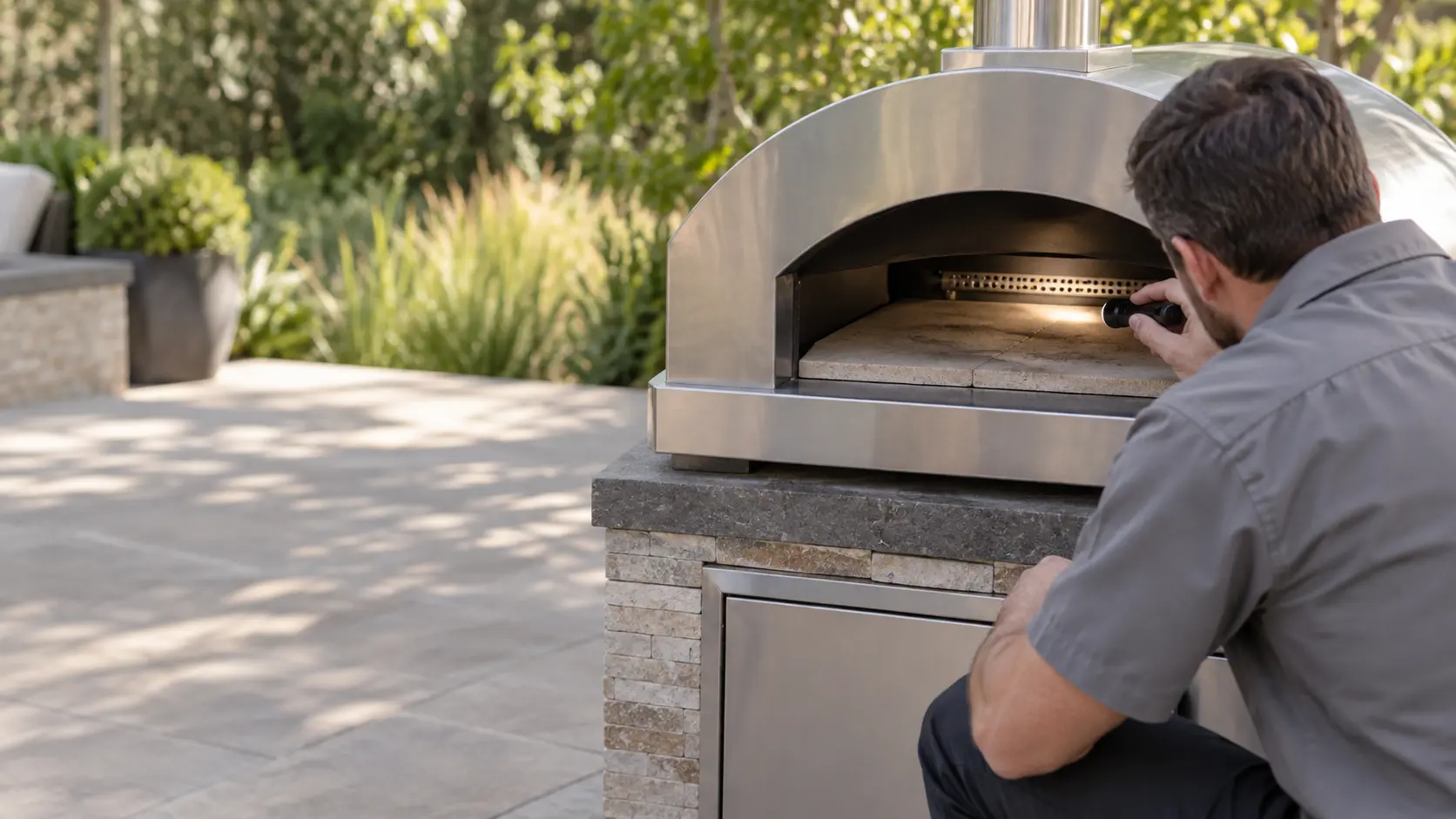
A lively flame is not the same as a hot floor
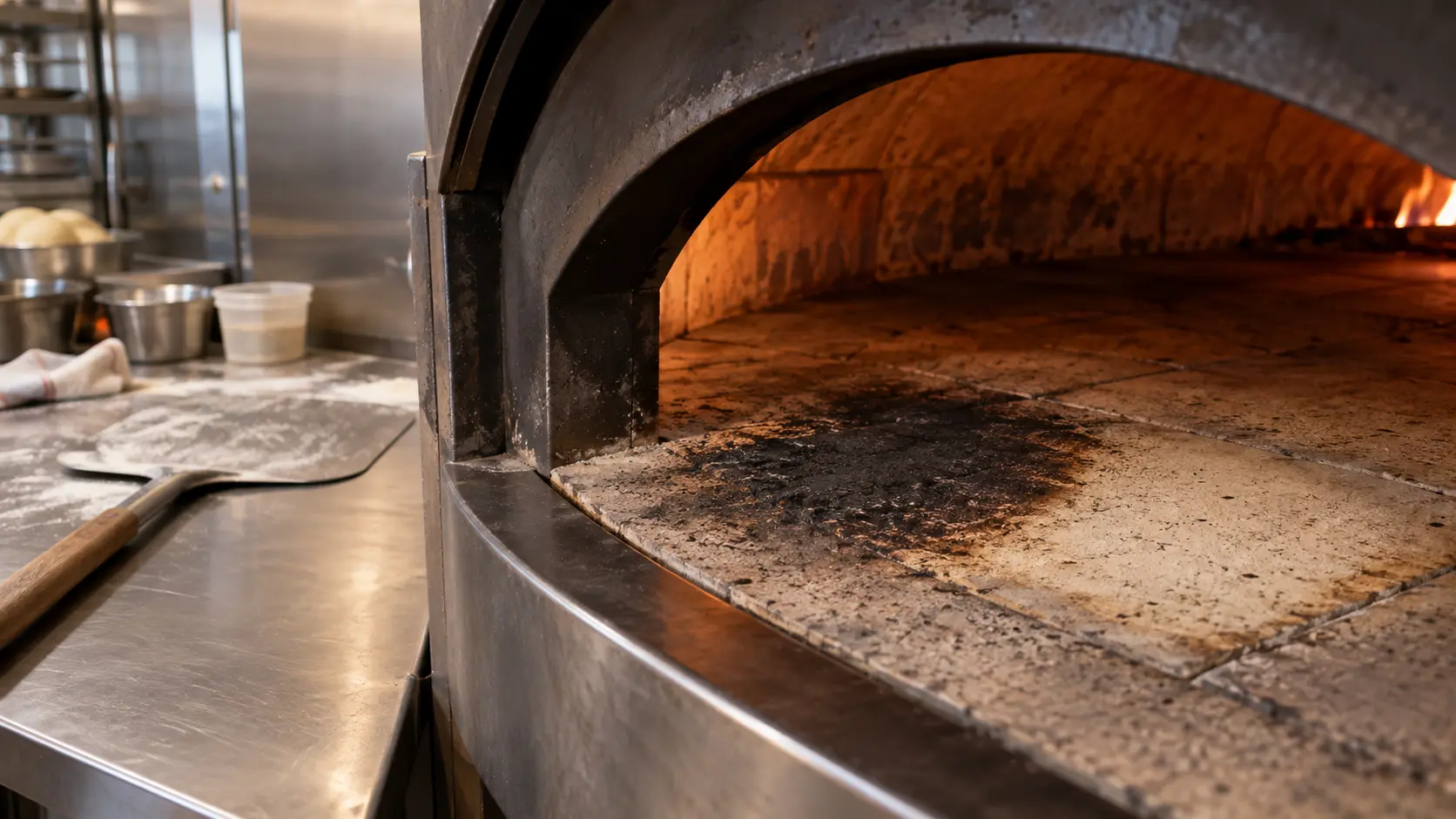
Every kind of pizza oven works as a battery. The stone floor and the dome or deck above it soak up energy during the preheat and pay it back in the two to eight minutes a pie spends inside. If the preheat was cut short, the air in the chamber can read hot while the stone under the dough is still hundreds of degrees behind, and the first pies come out soft underneath however bright the fire looks.
So the first question is never which part has failed. It is how long the oven ran, how it was fired, and what the floor itself reads. Most calls about an oven that stays cool end at one of those three.
Read the stone, not the dial
A dial thermometer in the door or the dome reports the air, and air heats long before stone does. A handheld infrared gun pointed at the center of the stone from outside the mouth tells you what the dough will meet. Take three readings: near the fire or burner, in the center and near the door. A wide spread is normal on a wood dome; a floor that is low everywhere has not banked enough heat yet.
- Toppings browning while the crust stays pale and soft: floor below baking heat.
- Pies improving after the first three or four: preheat was too short.
- Heat fading quickly between pies: the stone was never fully soaked, or it holds water.
- Low readings everywhere after a full preheat: a fuel or flame problem, read on.
Gas pizza ovens: the cylinder, the flow limiter and the flame
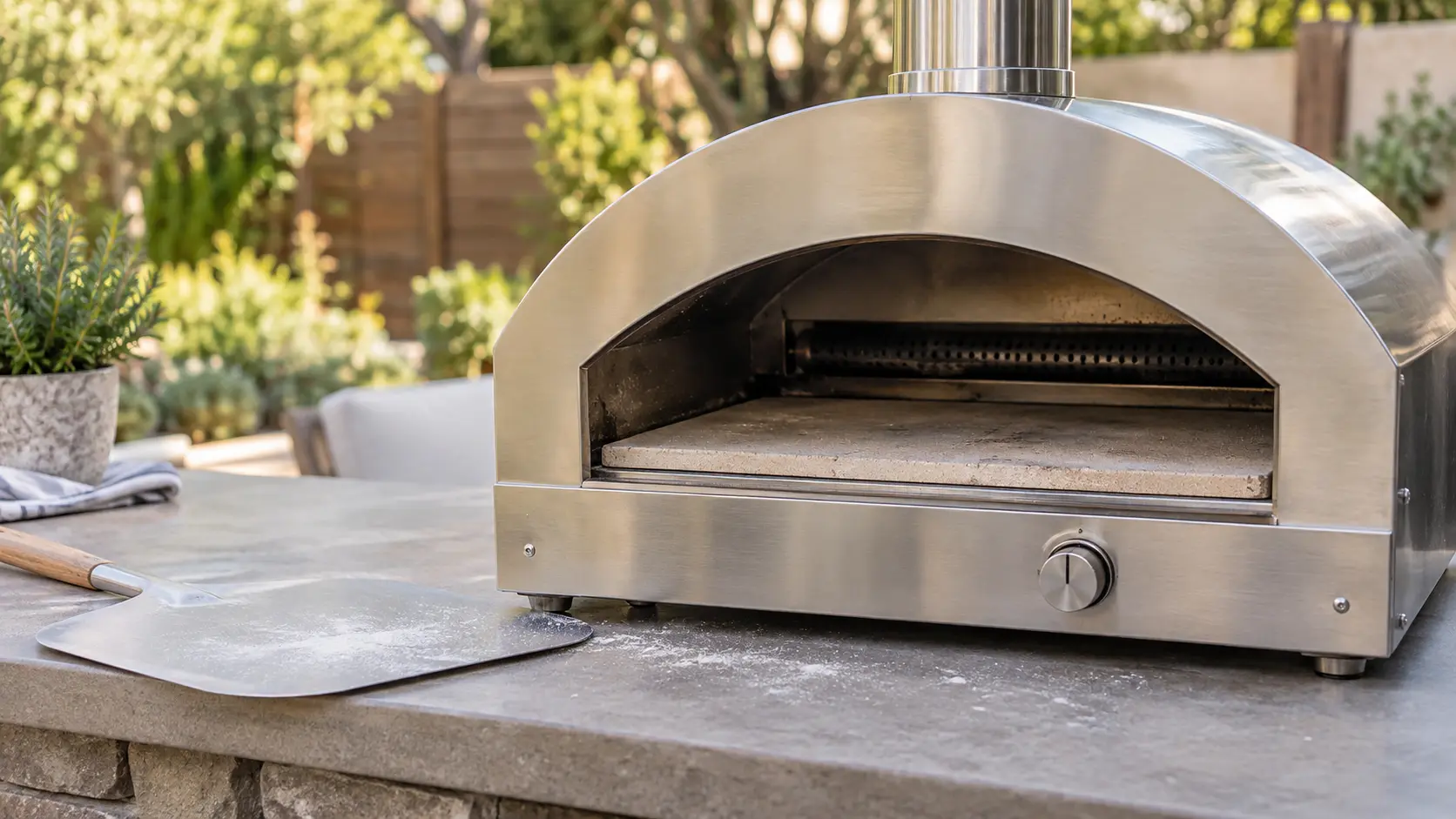
Lynx asks owners of its Napoli oven to give the burners ten to fifteen minutes before judging the heat low at all, and Kalamazoo says its Artisan Fire oven is usable after twenty minutes but bakes best after forty-five. Alfresco has the infrared hearth burner in its oven run on maximum for fifteen minutes first, and warns that setting it to low straight after lighting leaves the stones a long way from baking heat.
If the clock was honest, look at the fuel. An almost empty propane cylinder can light the burners and still lack the pressure to run them on high; Lynx and Alfresco both list it among the first causes of weak heat. In cold weather Kalamazoo adds that a cylinder can ice up and lose pressure, and that a full tank is less likely to do so than one under half. On a natural gas oven, confirm that the shutoff near the oven is fully open rather than cracked partway.
Clearing a propane flow limiter
Turning the cylinder on while one of the oven's knobs is open can trip the excess-flow device in the cylinder connection, which then passes only a trickle. Lynx gives the reset for its oven, and it is the same idea on most portable propane setups.
- Set all of the oven's knobs to their off position.
- Shut the cylinder valve all the way.
- Wait about thirty seconds.
- Reopen the cylinder valve very slowly, then light the oven by its own procedure.
What the top flame should look like
Kalamazoo's check for an oven that is still cool after twenty minutes is simple: with the upper burner on high, its flame should be plainly visible at the back of the oven, tall, but not licking the ceiling. A flame that stays short on high, with a full tank and the shutoff open, points at the regulator, a restricted orifice or the valve, and those are not owner parts. Lynx adds that its regulator must hang clear of the oven body and the surround, since the diaphragm inside needs room to flex.
Source: Lynx — Napoli outdoor oven use and install guide — Preheat 10 to 15 minutes before judging low heat; almost-empty cylinders lack pressure; flow-control reset by closing the valve, waiting 30 seconds and reopening slowly; regulator must not touch the oven; Kalamazoo — Artisan Fire pizza oven use and care guide — Ready in 20 minutes, 45 recommended; upper flame tall but not touching the ceiling; LP cylinders can ice up in the cold; clogged orifice is dangerous; wrong orifices for the gas are unsafe; Alfresco — AXE-PZA pizza oven care and use manual — Preheat the IR hearth burner on MAX for 15 minutes; set low at once and it takes a long time to reach cooking heat; a mostly empty tank may lack pressure

Wood-fired and hybrid domes: wood, fire size and water
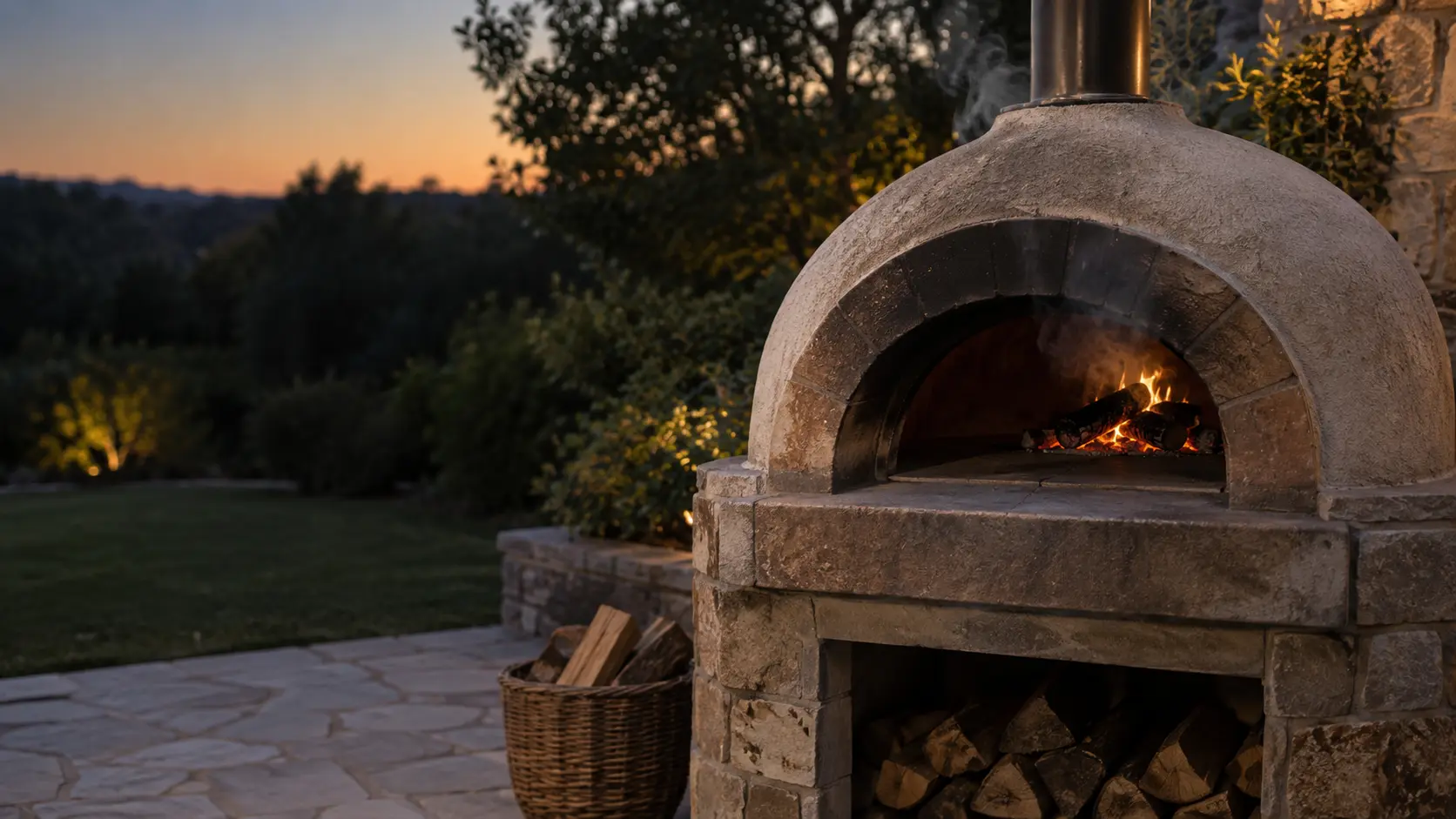
Wet wood spends its energy boiling off its own water, and the fire smolders instead of roaring over the dome. According to EPA Burn Wise, firewood performs best once its moisture is under 20 percent, a figure a cheap meter can confirm; Coyote asks for kiln-dried hardwood under the same figure and says a well-fed oven of its design reaches about 800°F in around thirty minutes. Split logs that hiss, bubble at the ends or feel heavy for their size are the first thing to replace.
How the fire is built matters as much as what it burns. Alfa's troubleshooting page for an oven that will not heat asks for a fire with vivid flames for about twenty minutes, set to one side of the floor rather than near the mouth, with wood added a little at a time instead of heaped on top of the embers. A fire smothered under a pile of logs looks busy and heats very little.
A dome that loses heat almost as fast as it gains it
When the floor reaches baking heat and then sags after two pies, water in the masonry is the usual reason. Alfa's advice for an oven that cools quickly is to check that no rain has found its way inside, and it notes the same behavior on a first firing or after months unused. Wood Stone, whose ovens are cured at the factory, still warns that the ceramic absorbs moisture during shipping, storage and idle periods and has to be dried slowly. After a wet week, give the dome a longer, gentler fire before a bake night rather than one fierce blaze.
Source: Coyote — Wood-fired pizza oven owner's manual — Kiln-dried hardwood under 20% moisture; about 800°F in around 30 minutes; cooking floor at least 650°F; EPA Burn Wise — Best wood-burning practices — Wood burns best below 20 percent moisture; test it with a wood moisture meter; Alfa Forni — User manual, domestic ovens (North America) — Oven does not heat: vivid flames for 20 minutes, fire on one side and not near the mouth, add wood gradually; cools quickly: check for moisture, first firing or long idle
Deck and conveyor ovens in a pizzeria
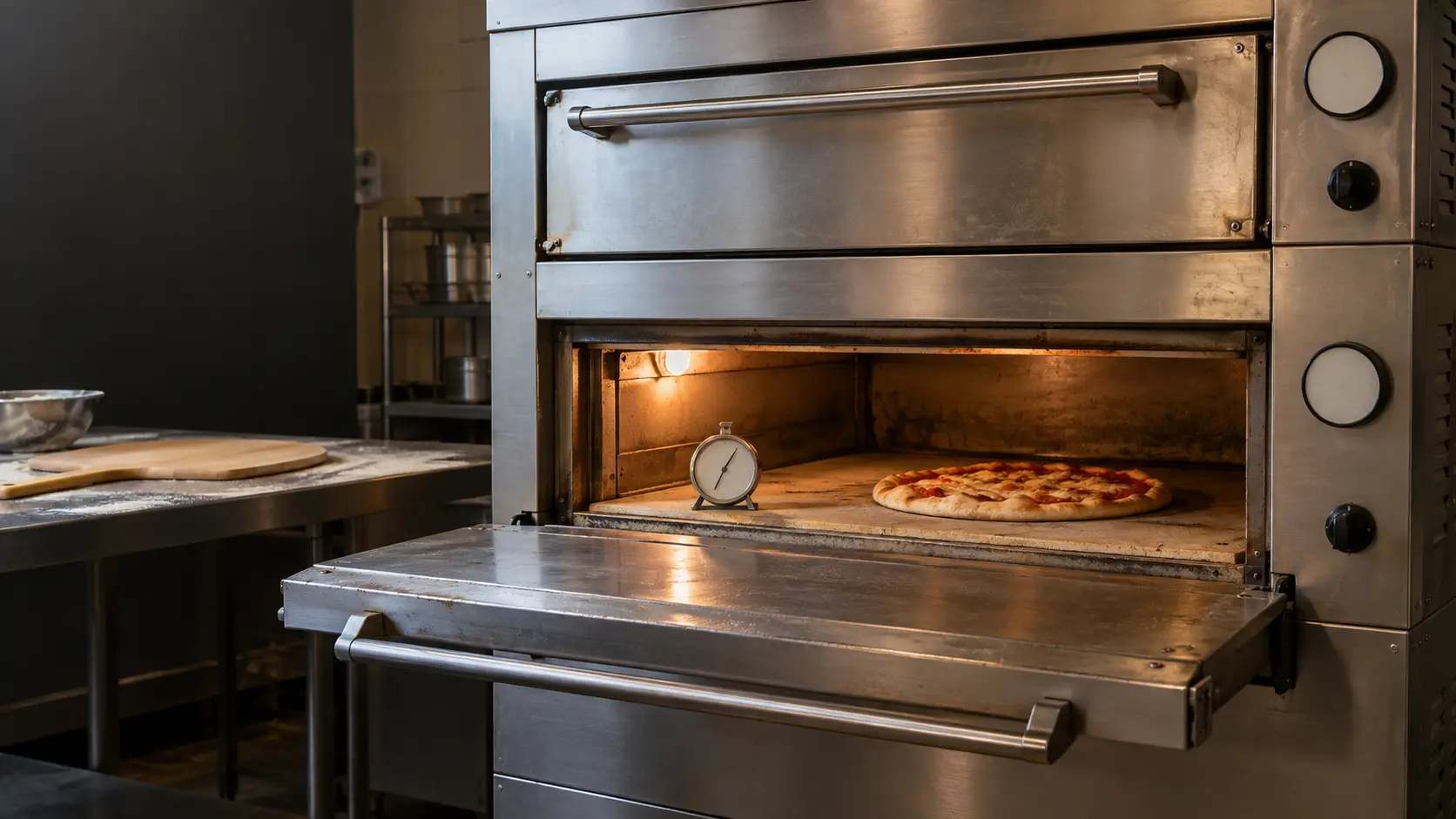
A gas deck oven that takes far too long to come up usually lacks gas volume or pressure, which is exactly how Bakers Pride's troubleshooting chart puts it. Its manual adds a useful test: if other appliances share the line, switch them off for a while and see whether the oven burner steadies, because a burner that weakens whenever the fryers kick on points to an undersized line or a failing regulator rather than the oven.
Deck stones also run cool when they are worked too hard in one place. Blodgett's instructions for its 1060 deck oven load pans in rotation so each spot recovers from the last bake, and ask for the doors to be opened as seldom as possible. A conveyor oven is simpler to read: Middleby Marshall's quick reference for a PS640 that will not heat is to make sure the main gas is on, then turn the oven off and restart it once, and call for service if the burner still does not light.
Source: Bakers Pride — Y600/Y800 series deck ovens operation manual — Slow to reach temperature: gas volume or pressure inadequate; shut off other appliances on the line to test for an overloaded line or regulator; Blodgett — 1060 gas deck oven installation, operation, maintenance — Load pans in rotation so the shelf recovers; open doors as seldom as possible; Middleby Marshall — PS640 gas conveyor oven owner's manual — Oven will not heat: make sure main gas is on; burner did not light: turn off and restart, then call for service
Where the owner's part ends
Everything above can be done with the oven off or cold and nothing loosened. Beyond it sit the orifices, the regulator, the gas valve and pressure testing, and on electric decks the elements and thermostats behind the panels. Kalamazoo treats a clogged orifice as dangerous and says not to use the oven until it is resolved, and it warns that burning natural gas through propane orifices, or the reverse, is unsafe: a converted oven that never ran right since the conversion should be shut down and looked at.
When you book, a few notes save most of the visit: the type and fuel, how long the preheat ran, floor readings in three spots, what the flame looks like on high, and whether the problem began after a tank change, a conversion, a storm or a cleaning.
Source: Kalamazoo — Artisan Fire pizza oven use and care guide — Ready in 20 minutes, 45 recommended; upper flame tall but not touching the ceiling; LP cylinders can ice up in the cold; clogged orifice is dangerous; wrong orifices for the gas are unsafe