Why water stays off the pizza oven floor
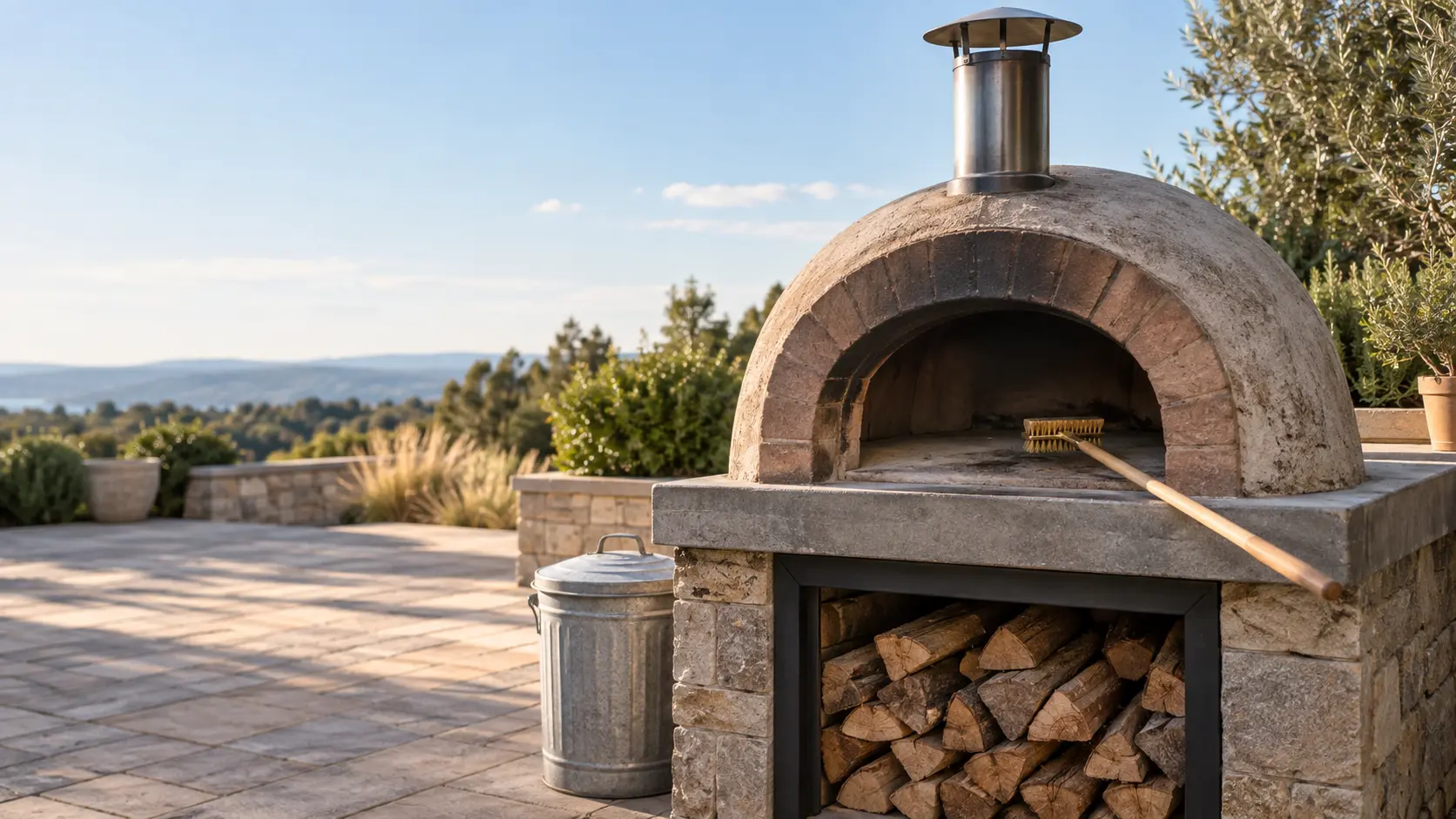
The floor is the surface you cook on and the one most easily ruined by cleaning. Hot stone splashed with cold water shrinks at the surface faster than underneath, and the stress opens cracks. Wood Stone warns against ice or excess water on its floors to prevent thermal shock, Kalamazoo bans any liquid on its cooking deck, and Chicago Brick Oven says no cleaning products go inside its ovens at all.
The good news is that to clean a pizza oven floor you rarely need more than heat and a brush. Spilled cheese and sauce burn to ash at pizza temperatures, and ash brushes away.
Let the fire do the scrubbing
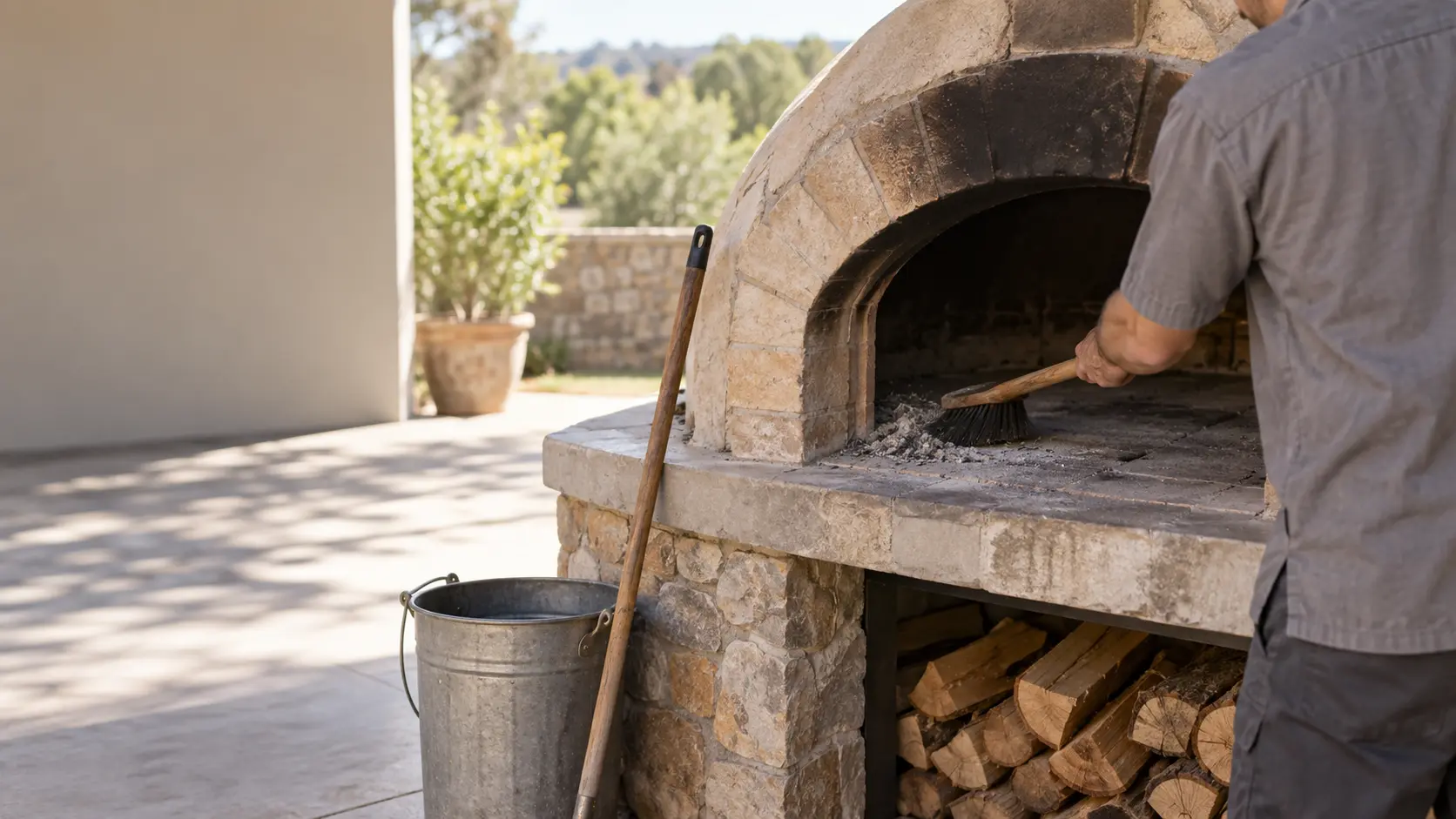
Coyote calls its Duomo self-cleaning: rake some embers over the spill, let them burn for a few minutes, push the fire back to its side and sweep the hearth as usual. Chicago Brick Oven puts the same idea in one line, telling owners to heat the oven properly to clean it.
Source: Wood Stone — Mountain Home and Traditional Home installation and operation manual (M0365) — No ice or excessive water on the floor, to prevent thermal shock; sweep food debris to the doorway about twice per hour and swab with a damp, not wet, rag; burner problems from debris in the burner well are not covered; ash in a closed metal container on a noncombustible floor or the ground until cinders are cold; the interior needs no soot removal but the flue does; a yearly duct inspection suffices for most residential use.; Kalamazoo — Artisan Fire pizza oven use and care guide — Never use any liquids when cleaning the cooking deck; use only a long-handled brass bristle brush; crumbs are brushed into the crumb tray, which is never emptied while the oven is hot.; Chicago Brick Oven — CBO-500, 750 and 1000 user manual — Never use cleaning products inside the oven; heat the oven properly to clean it; creosote forms from slow fires and condenses in a cool flue; inspect the flue connection and flue cap regularly and clean buildup with a wire brush.
Brushing the floor while you bake
Keep crumbs and ash out of burner wells and ports on gas and hybrid ovens. Wood Stone's coverage excludes burner trouble from debris dropped into the well, and Coyote ships a burner cover and an ash guard for exactly this reason.
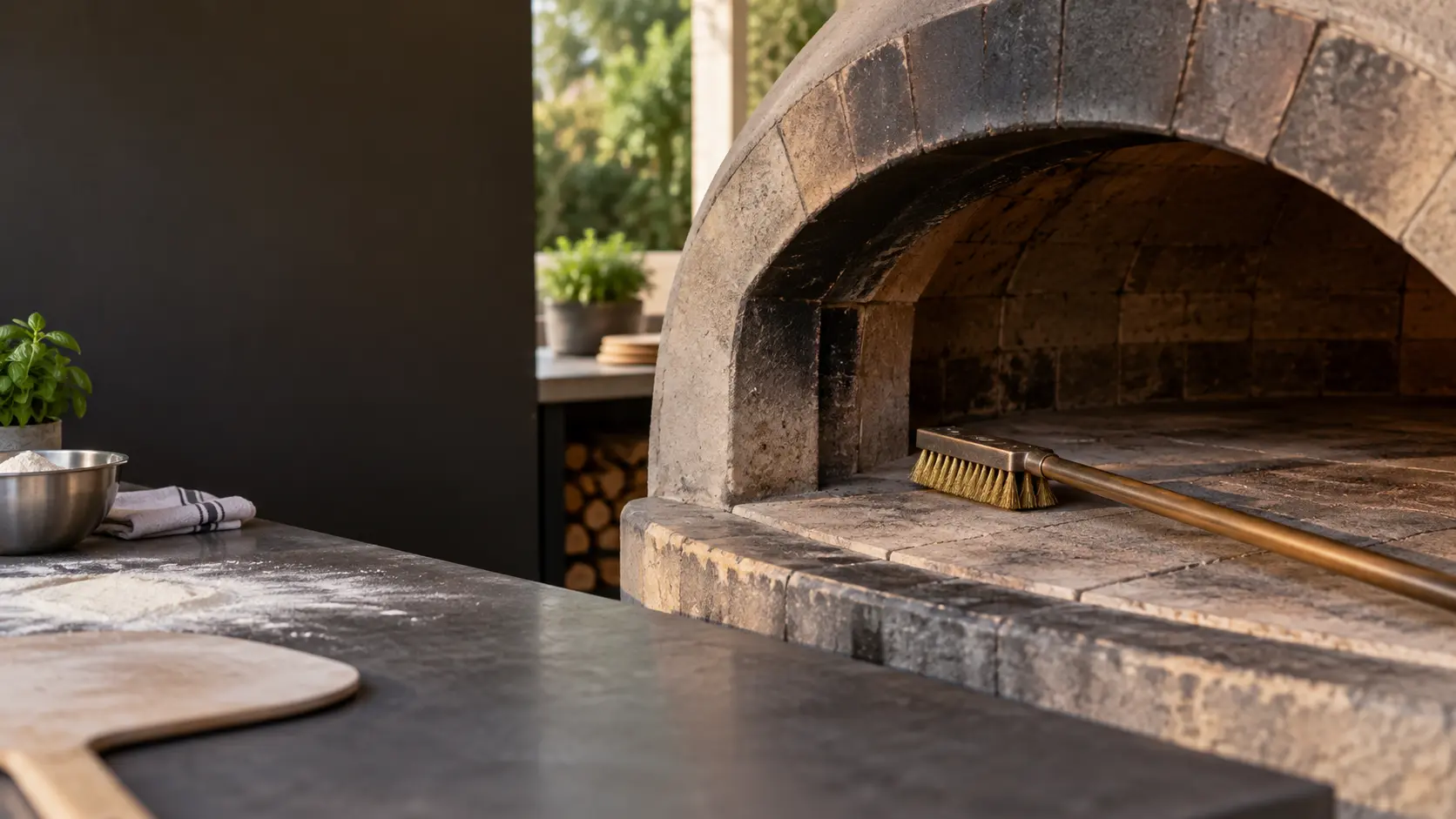
- Use a long-handled brush so your hands stay outside the mouth; Kalamazoo specifies brass bristles on its deck.
- Wood Stone suggests sweeping stray food toward the doorway about twice an hour during service and lifting it out with a dough cutter or spatula.
- For fine flour, Wood Stone wraps a damp, not wet, rag around the floor brush; wring it out hard first.
- On a gas oven with a crumb tray, brush crumbs into the tray and leave it in place until the oven is cold, as Kalamazoo instructs.
Source: Wood Stone — Mountain Home and Traditional Home installation and operation manual (M0365) — No ice or excessive water on the floor, to prevent thermal shock; sweep food debris to the doorway about twice per hour and swab with a damp, not wet, rag; burner problems from debris in the burner well are not covered; ash in a closed metal container on a noncombustible floor or the ground until cinders are cold; the interior needs no soot removal but the flue does; a yearly duct inspection suffices for most residential use.; Kalamazoo — Artisan Fire pizza oven use and care guide — Never use any liquids when cleaning the cooking deck; use only a long-handled brass bristle brush; crumbs are brushed into the crumb tray, which is never emptied while the oven is hot.; Coyote — 30-inch hybrid multi-fuel outdoor pizza oven manual — A burner cover keeps ash out of the burner when wood is used, and an ash guard keeps food out of the burner when cleaning the bricks.

Taking out ash once the oven is cold
Ash hides live embers far longer than it looks. Coyote waits until the oven has cooled down completely, usually the next day, before removing the ashes, and holds them in a fire-resistant bin. Wood Stone's disposal steps are the ones to copy.
- Shovel cold ash into a metal container with a tight-fitting lid.
- Set the closed container on the ground or a noncombustible floor, well away from anything that burns.
- Keep it closed until every cinder is cold, and only then dispose of it.
Under the floor bricks
Fine ash works its way into the joints. Coyote lets owners lift the Duomo's floor bricks from time to time and vacuum beneath them with an outdoor shop vac: lay a towel on the shelf, take out the two metal spacers on the left, slide the front left brick sideways and lift it, then lift the rest straight up without sliding them. Masonry ovens with mortared floors are not built to come apart this way, so leave theirs in place.
Source: Wood Stone — Mountain Home and Traditional Home installation and operation manual (M0365) — No ice or excessive water on the floor, to prevent thermal shock; sweep food debris to the doorway about twice per hour and swab with a damp, not wet, rag; burner problems from debris in the burner well are not covered; ash in a closed metal container on a noncombustible floor or the ground until cinders are cold; the interior needs no soot removal but the flue does; a yearly duct inspection suffices for most residential use.; Coyote — 40-inch Duomo wood-fired pizza oven use and care manual — Move embers over spills and let them burn, then sweep; remove cold ashes after full cooldown, usually the next day, into a fire-resistant bin; brick removal sequence for vacuuming with an outdoor shop vac; chimney and cap washed with soapy water or a garden hose and fully dried before reinstalling.
Keeping the chimney and cap clear
Slow, smoky fires leave creosote, a tarry deposit that condenses in a cool flue and burns extremely hot if it ignites. Chicago Brick Oven asks owners to inspect the flue connection regularly and clear buildup with a wire brush, and to check the flue cap for anything blocking the airflow. Wood Stone notes that the dome and floor of its ovens need no soot removal, while the flue and exhaust system do.
How often the flue gets a look
Frequency depends on how often the oven is fired and what it burns, so treat these as the makers' starting points rather than limits.
- Home wood ovens: Wood Stone finds a yearly inspection of the duct system enough for most residential use.
- Coyote's chimney and cap come off for washing with soapy water or a garden hose, and must be completely dry before they go back on.
- Commercial gas decks: Bakers Pride wants the flue vent inspected and kept clear every six months, and Blodgett checks its venting yearly for damage from moisture and corrosive flue products.
- Any chimney that runs up through a roof: the U.S. Fire Administration advises having chimneys cleaned and inspected every year by a professional.
Source: Wood Stone — Mountain Home and Traditional Home installation and operation manual (M0365) — No ice or excessive water on the floor, to prevent thermal shock; sweep food debris to the doorway about twice per hour and swab with a damp, not wet, rag; burner problems from debris in the burner well are not covered; ash in a closed metal container on a noncombustible floor or the ground until cinders are cold; the interior needs no soot removal but the flue does; a yearly duct inspection suffices for most residential use.; Chicago Brick Oven — CBO-500, 750 and 1000 user manual — Never use cleaning products inside the oven; heat the oven properly to clean it; creosote forms from slow fires and condenses in a cool flue; inspect the flue connection and flue cap regularly and clean buildup with a wire brush.
When the floor is a conveyor belt
A conveyor oven's floor is its wire belt. Middleby Marshall has it brushed every day with a stiff nylon brush while it runs, the person brushing standing at the exit end, and then the crumb trays pulled and cleaned. Hoses, pressure washers and caustic oven cleaner stay out of it: the manual warns they soak the insulation and damage the bake chamber.
Source: Middleby Marshall — PS3240G series gas conveyor oven owner's operating and installation manual — Clean the conveyor belts daily with a stiff nylon brush while the conveyor runs, standing at the exit end; remove and clean the crumb trays; never use a water hose, pressurized steam or caustic oven cleaner.


