Why a new pizza oven needs slow first fires
Refractory cement, firebrick and mortar all hold water, even in an oven that arrives looking bone dry. Marra Forni says it plainly: a small amount of moisture remains in the bricks and mortar, and neglecting the cure damages the oven. Wood Stone cures its ovens at the factory and still asks for a slow first startup, because ceramic absorbs moisture again during shipping and storage on site.
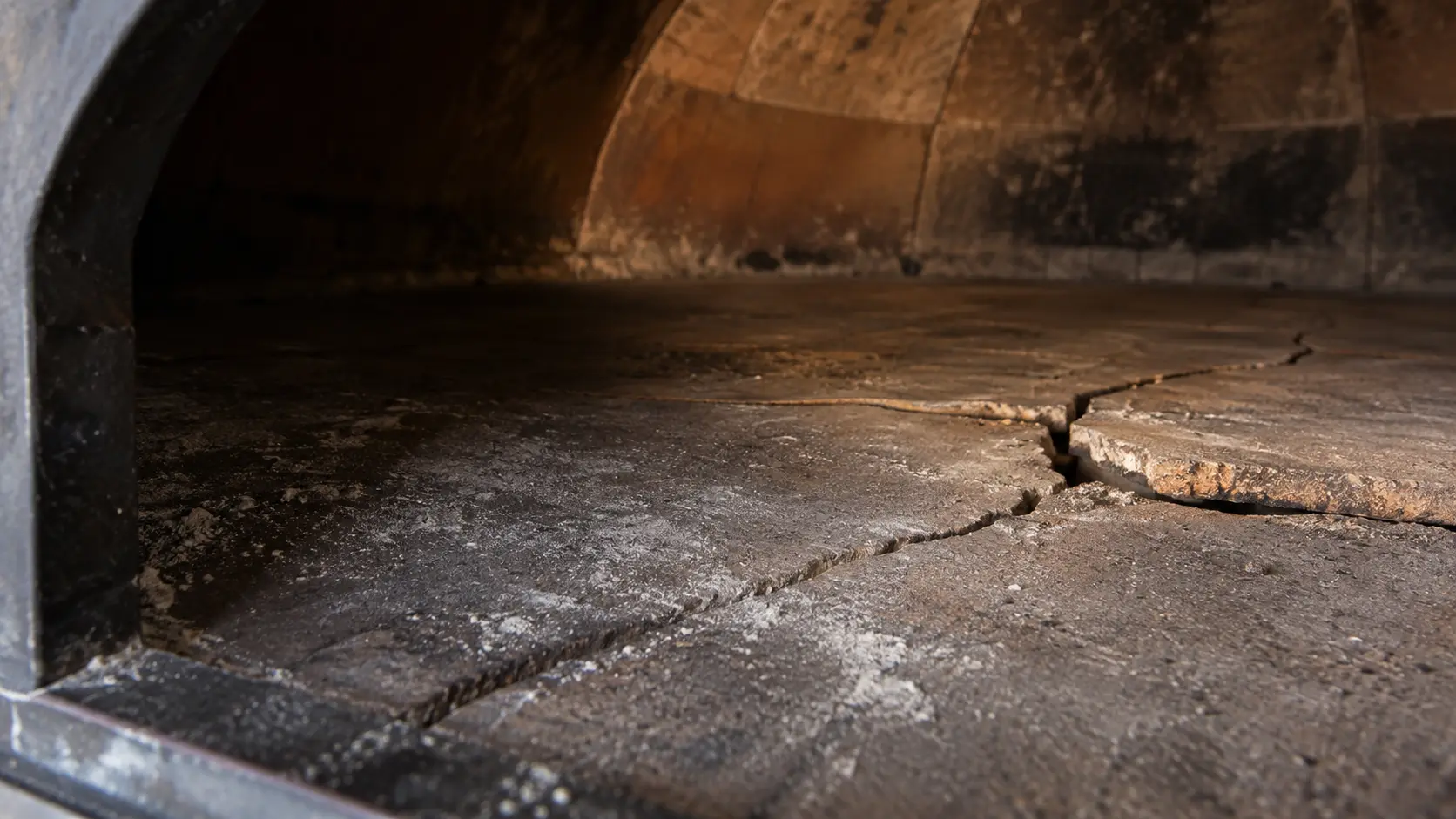
Heated fast, that water turns to steam inside the material faster than it can escape, and the pressure opens cracks. Heated slowly, it works its way out through the surface. Chicago Brick Oven warns that a big fire at the start can shorten the oven's life, cause permanent damage and void the maker's coverage.
What you will see during the cure
None of these means the cure is going wrong, as long as the heat stays within the day's limit.
- Steam or damp patches on the outer shell as water leaves the masonry.
- Water dripping from the oven along with an unpleasant smell, which Marra Forni says stops once curing is complete.
- Fine cracks in the dome or hearth, which Chicago Brick Oven and Marra Forni both call normal.
- A dome blackened by the first low fires; it clears to whitish gray only later, at cooking heat.
Source: Chicago Brick Oven — CBO-500, 750 and 1000 user manual — Cure as close to 212°F as possible, not above, over a 2- to 3-day period; coals from a fire built elsewhere give heat without flame; a large first fire can cause permanent damage and void the warranty; small cracks are normal; never use starter fluids; discard the first two cooks; heat slowly in cold temperatures; re-cure after long disuse or excessive moisture.; Marra Forni — Static oven owner's manual, Rev 5 2026 — Moisture remains in the bricks and mortar and neglecting the cure damages the oven; five-day wood cure by pieces of wood per day; five-day gas cure at 300, 400, 500, 600 and 700°F for 3 hours a day; do not shut off or unplug mid-cycle; only dry medium or hard firewood, no liquid fuel or treated wood; small cracks, dripping water and odor during curing are expected.; Wood Stone — Mountain Home and Traditional Home installation and operation manual (M0365) — Ovens are cured at the factory but absorb moisture in shipping and storage; initial startup of 1 hour at factory settings (hearth 100°F, lowest flame), 4 hours at 25% flame, then 50% flame for at least 4 hours or until 500°F; repeat after extended periods without use.
Curing schedules for a wood-fired oven
Makers disagree on the calendar, and the one printed for your model is the one to follow. Two examples show how far apart they sit.
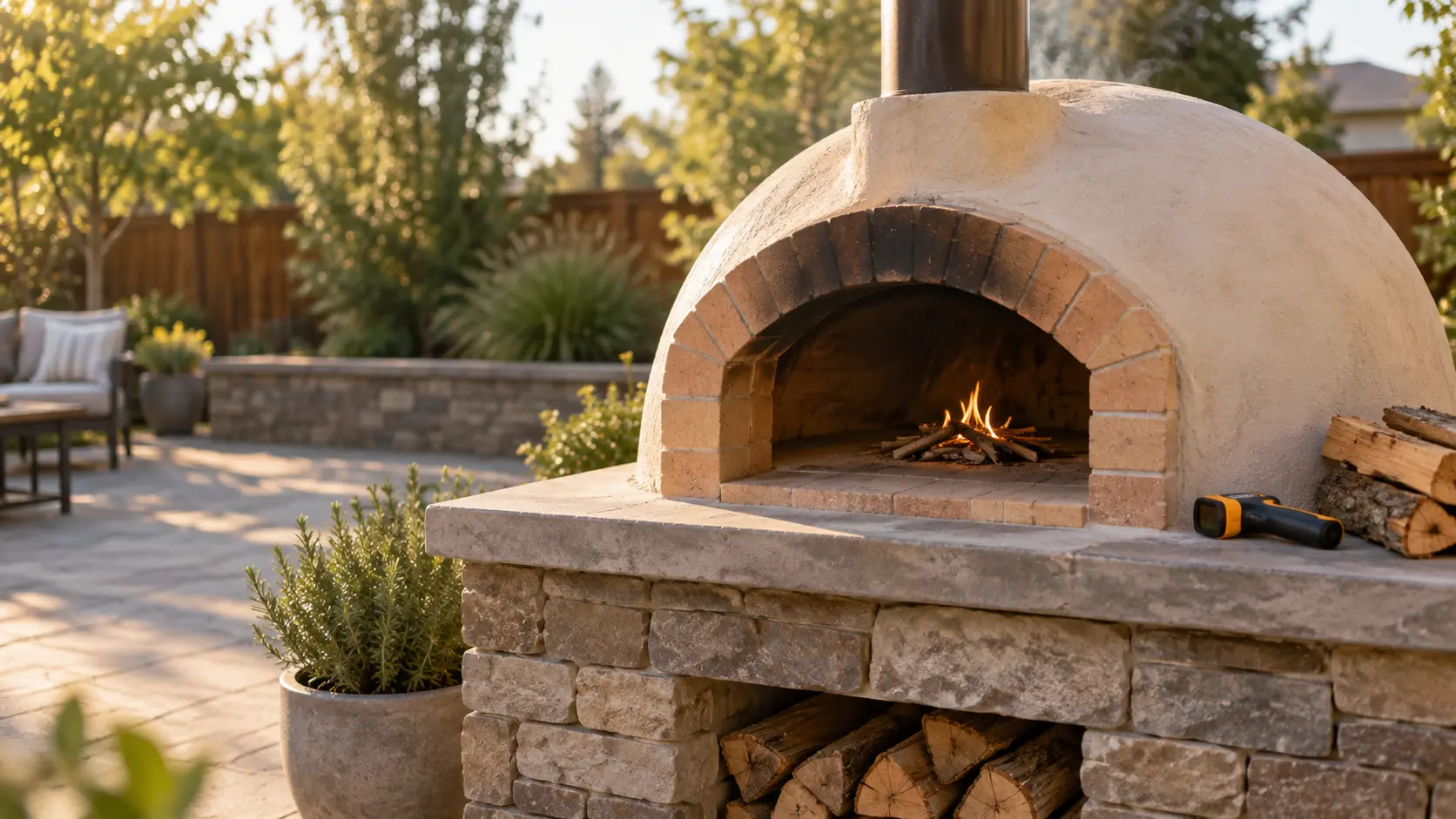
- Chicago Brick Oven: hold the oven as close to 212°F as possible, never above it, over two to three days. Coals carried in from a fire built elsewhere give heat without flame and make the low temperature easier to hold.
- Marra Forni wood ovens, five days: on day 1 burn two pieces of wood until they fall apart; on day 2 do the same and add a third; on day 3 add a fourth, let it burn down, then a fifth; on day 4 burn two pieces and then one at a time up to working heat; by day 5 the oven is cured.
Only dry wood for the cure
Wet wood works against the whole exercise. Marra Forni accepts only dry medium or hard firewood and bans liquid fuel and treated, coated or laminated wood. Coyote's list of suitable hardwoods runs from alder and apple through hickory, maple and mesquite to pecan and oak, and it rules out pine, fir, cedar, plywood and anything painted. Paper and kindling start the fire; lighter fluid and gasoline never do.
Source: Chicago Brick Oven — CBO-500, 750 and 1000 user manual — Cure as close to 212°F as possible, not above, over a 2- to 3-day period; coals from a fire built elsewhere give heat without flame; a large first fire can cause permanent damage and void the warranty; small cracks are normal; never use starter fluids; discard the first two cooks; heat slowly in cold temperatures; re-cure after long disuse or excessive moisture.; Marra Forni — Static oven owner's manual, Rev 5 2026 — Moisture remains in the bricks and mortar and neglecting the cure damages the oven; five-day wood cure by pieces of wood per day; five-day gas cure at 300, 400, 500, 600 and 700°F for 3 hours a day; do not shut off or unplug mid-cycle; only dry medium or hard firewood, no liquid fuel or treated wood; small cracks, dripping water and odor during curing are expected.

Curing a gas or hybrid oven
Ovens with a burner let the controls hold the low temperatures, which makes the cure easier to get right and easier to ruin by impatience.
- Marra Forni gas ovens: the controller runs five days on its own, 3 hours at 300°F on day 1 and then 400, 500, 600 and 700°F on the days that follow. The manual says not to switch the oven off or unplug it mid-cycle, or the rest of the cure has to be done by hand.
- Wood Stone Mountain Home and Traditional Home: 1 hour at factory settings with the hearth set to 100°F and the dome flame at its lowest, 4 hours at a quarter flame, then half flame for at least 4 more hours or until 500°F.
- Chicago Brick Oven CBO-750 Hybrid: hearth burner at 250° for 4 hours with the door open, then the hearth at 400° with the ambient burner also on for 4 more hours, door still open.
- Coyote hybrid: bring the oven up to temperature slowly the first time; its burner may need up to 30 seconds of priming on that first lighting.
Commercial decks get a break-in
Deck ovens go through a shorter version called a break-in. Bakers Pride runs a new gas deck at 300°F for 5 hours, or until the smoke and fumes from the deck, the insulation and a light coat of factory oil have cleared, and asks that it be done in a well-ventilated area. Blodgett tempers its Ultra Rokite decks by starting at 300°F and climbing in 100°F steps to 600°F over four hours.
Source: Chicago Brick Oven — How to cure a pizza oven — CBO-750 Hybrid: hearth burner at 250° for four hours with the door open, then hearth at 400° with the ambient burner on for four more hours with the door open.; Marra Forni — Static oven owner's manual, Rev 5 2026 — Moisture remains in the bricks and mortar and neglecting the cure damages the oven; five-day wood cure by pieces of wood per day; five-day gas cure at 300, 400, 500, 600 and 700°F for 3 hours a day; do not shut off or unplug mid-cycle; only dry medium or hard firewood, no liquid fuel or treated wood; small cracks, dripping water and odor during curing are expected.; Wood Stone — Mountain Home and Traditional Home installation and operation manual (M0365) — Ovens are cured at the factory but absorb moisture in shipping and storage; initial startup of 1 hour at factory settings (hearth 100°F, lowest flame), 4 hours at 25% flame, then 50% flame for at least 4 hours or until 500°F; repeat after extended periods without use.; Coyote — 30-inch hybrid multi-fuel outdoor pizza oven manual — Bring the oven up to temperature slowly the first time to drive out moisture; prime the burner for up to 30 seconds on first firing; use dried hardwood such as alder, apple, ash, hickory, maple, mesquite, pecan or oak, never pine, fir, cedar, painted or engineered wood.
After the cure: first bakes and curing again
Chicago Brick Oven suggests cooking something simple the first two times, such as a plain pizza shell, and throwing it away, then eating from the third firing on. From then on it asks for fires built up gradually, and more gently still in cold weather.
Curing is not a once-in-a-lifetime event. Chicago Brick Oven calls for a new cure after a long spell without use or heavy exposure to moisture, and Wood Stone repeats its startup schedule when the oven has not been used for an extended period. An uncovered dome through a rainy week counts.
Source: Chicago Brick Oven — CBO-500, 750 and 1000 user manual — Cure as close to 212°F as possible, not above, over a 2- to 3-day period; coals from a fire built elsewhere give heat without flame; a large first fire can cause permanent damage and void the warranty; small cracks are normal; never use starter fluids; discard the first two cooks; heat slowly in cold temperatures; re-cure after long disuse or excessive moisture.; Wood Stone — Mountain Home and Traditional Home installation and operation manual (M0365) — Ovens are cured at the factory but absorb moisture in shipping and storage; initial startup of 1 hour at factory settings (hearth 100°F, lowest flame), 4 hours at 25% flame, then 50% flame for at least 4 hours or until 500°F; repeat after extended periods without use.