
What properly dried wood looks, weighs and sounds like
EPA's Burn Wise program gives three tests anyone can make at the woodpile: seasoned wood is darker than fresh-cut wood, weighs less, and sounds hollow when two pieces are knocked together. Its target is a moisture content under 20 percent, checked with a wood moisture meter before the wood goes into the fire. Coyote uses the same figure in its Duomo manual and asks for kiln-dried logs under 20 percent water content.
Time does the drying. EPA's storage page suggests at least 6 months for soft wood and 12 months for hardwood, split before stacking so more of each piece is exposed to air. Chicago Brick Oven sets a stricter bar for its domes, asking for hard woods dried at least two years, and adds a simple warning sign: if you see moisture coming out of the logs on the fire, the wood is not dry.
Hissing, popping and steam at the log ends
Alfa warns that wet or damp wood is hard to start, can pop as the water inside expands, and produces a lot of smoke and ash with less heat. A log that sizzles and bubbles at the cut end is boiling off water, and every bit of heat spent on that water is heat the floor of the pizza oven never receives.
Source: EPA Burn Wise — Best wood-burning practices — Seasoned wood is darker, lighter and sounds hollow; burn wood under 20 percent moisture, tested with a meter; store off the ground with only the top covered; the list of materials not to burn; regular smoke signals a problem; EPA Burn Wise — Firewood storage — Split before stacking; keep wood off the ground under a sloped roof with overhang; season at least 6 months for soft wood and 12 months for hard wood; Coyote — Duomo Wood Fired Pizza Oven Owner's Manual — Use dried hardwood such as alder, apple, ash, hickory, maple, mesquite, pecan or oak, kiln-dried under 20 percent water; no pine, fir, cedar, painted wood or plywood, which coat the flue with creosote; 3 to 5 inch pieces; place the oven where smoke will not reach homes; Chicago Brick Oven — CBO-500/750/1000 User Manual — Use hard woods dried at least two years; moisture seen coming from logs means the wood is not dry; burn only solid dried wood, not scrap, compressed logs or coal; keep 7 inches between the bottom insulation boards and stored wood
The best wood for a pizza oven, by the makers' own lists
Coyote names alder, apple, ash, hickory, maple, mesquite, pecan and oak for its wood-fired dome, with oak as the most popular and easiest to find. Chicago Brick Oven asks for clean, dry hardwood suited to cooking, seasoned or kiln-dried, and to keep it under cover after delivery. The makers do not rank flavors; the rule they agree on is dense, clean, dry hardwood, split to a size that fits the oven's mouth.
Size matters as much as species. Coyote suggests medium pieces about 3 to 5 inches across once the fire is established, because larger logs take longer to catch and can heat the oven unevenly. EPA suggests softer, less dense woods such as maple or basswood as starter pieces, with the denser hardwood added once the fire is burning well.
| Wood | Makers' view | Why |
|---|---|---|
| Oak, maple, ash, hickory | Named by Coyote for cooking fires | Dense, clean-burning hardwoods |
| Apple, alder, pecan, mesquite | Named by Coyote | Hardwoods used for their flavor |
| Pine, fir, cedar | Ruled out by Coyote and Alfa | High sap and resin, heavy soot and creosote |
| Plywood, painted or stained boards | Ruled out by Coyote, Alfa and EPA | Glues and coatings release harmful fumes |
| Compressed logs, coal, scrap | Ruled out by Chicago Brick Oven | Not the solid, dried wood the dome is built for |
Source: EPA Burn Wise — Tips for a better burn — Use softer or less dense hardwoods to start the fire; look at the chimney, visible smoke usually means the fire needs more air; bring kindling in the night before; Coyote — Duomo Wood Fired Pizza Oven Owner's Manual — Use dried hardwood such as alder, apple, ash, hickory, maple, mesquite, pecan or oak, kiln-dried under 20 percent water; no pine, fir, cedar, painted wood or plywood, which coat the flue with creosote; 3 to 5 inch pieces; place the oven where smoke will not reach homes; Chicago Brick Oven — CBO-500/750/1000 User Manual — Use hard woods dried at least two years; moisture seen coming from logs means the wood is not dry; burn only solid dried wood, not scrap, compressed logs or coal; keep 7 inches between the bottom insulation boards and stored wood; Chicago Brick Oven — Frequently asked questions — Use clean, dry hardwood, seasoned or kiln-dried, stored under cover; avoid treated, painted or resinous wood; a damp oven may need recuring

What never goes into the fire
EPA's list of materials that release toxic or harmful chemicals when burned, and can damage the appliance, applies to a pizza oven as it does to any wood burner. Food cooks inches from that smoke, which is one more reason to keep the fire clean. Marra Forni, writing for restaurant ovens, says to burn only seasoned or dried, untreated solid wood and never liquids, charcoal or garbage.
- Household trash, cardboard, plastics, foam and printed wrappers
- Coated, painted or pressure-treated wood
- Ocean driftwood, plywood, particle board or anything with glue
- Wet, rotted, diseased or moldy wood
- Gasoline, kerosene, lighter fluid or charcoal starter
Charcoal depends on the maker
The manuals do not agree on charcoal, so read yours. Alfa allows high-quality natural lump wood charcoal in its home ovens but not briquettes, Chicago Brick Oven rules out coal, and Marra Forni rules out charcoal in its commercial domes. Whichever fuel the manual allows, the starter is the same: paper, dry kindling or an all-natural fire starter, never a liquid.
Source: EPA Burn Wise — Best wood-burning practices — Seasoned wood is darker, lighter and sounds hollow; burn wood under 20 percent moisture, tested with a meter; store off the ground with only the top covered; the list of materials not to burn; regular smoke signals a problem; Marra Forni — Static oven manual (Rev. 5-2026) — Burn only seasoned or dried, untreated solid wood, never liquids, charcoal or garbage; firewood near the oven kept in a tightly sealed metal container per NFPA 96
Storing firewood so it stays dry
EPA's advice is to store wood outdoors, off the ground, with only the top covered, because covering the sides traps moisture. A roof with a good overhang and a sloped top keeps rain off, and a raised base keeps out ground moisture and pests. Chicago Brick Oven adds that wood kept dry after delivery heats the oven more consistently, and that a dome left damp may need recuring before it goes back to high heat.
Commercial kitchens have tighter rules. Marra Forni says firewood kept near its ovens must sit in a tightly sealed metal container, well away from the oven and any source of heat, and points to NFPA 96 for wood storage procedures.
- Split the wood before it goes on the stack
- Raise the stack on a base, clear of the soil
- Roof the top with an overhang and a slope; leave the sides open
- Give hardwood a full year to season, soft wood about six months
- Keep the pile away from the pizza oven's mouth and any hot ash
Wood stacked under the oven
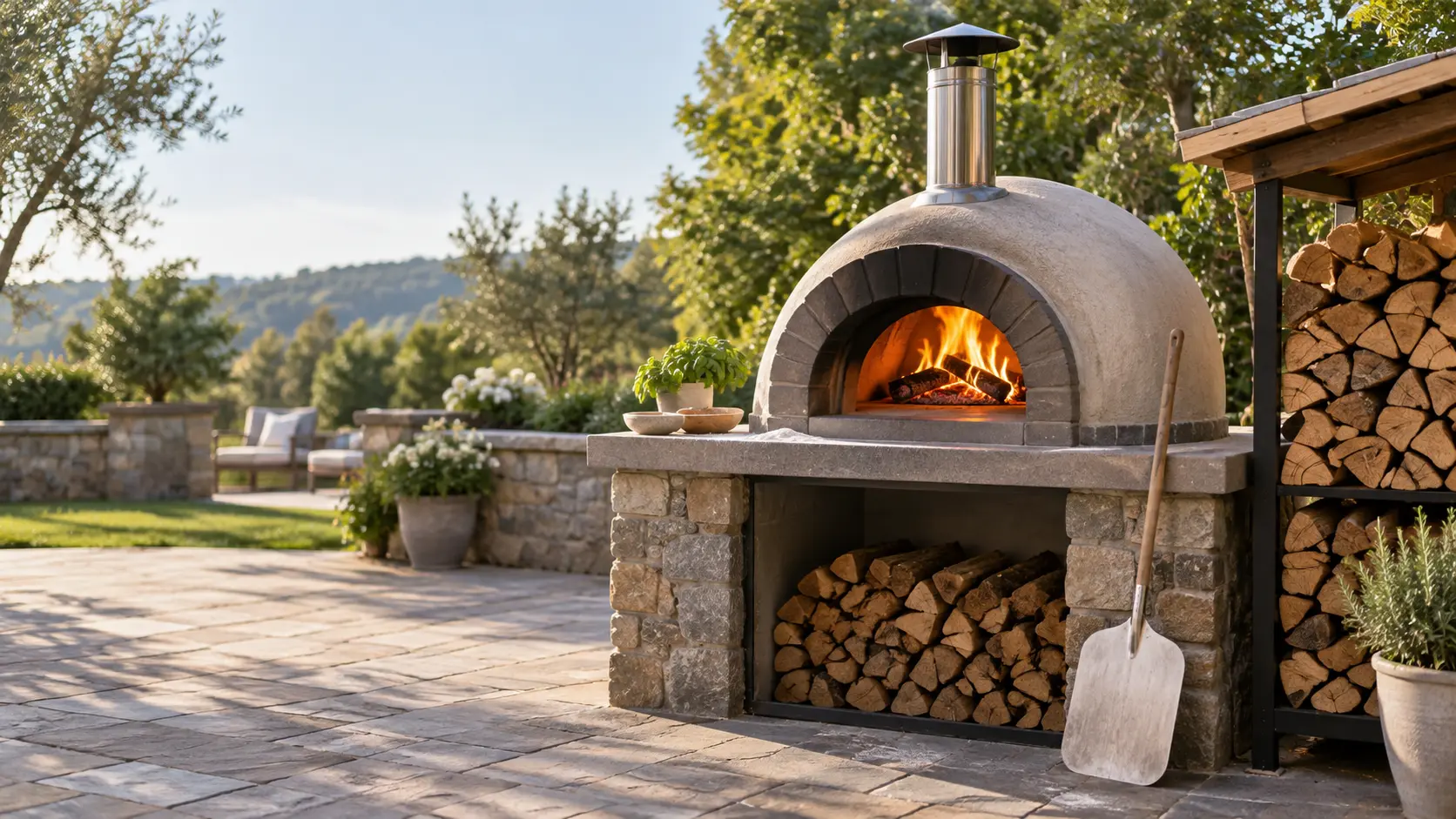
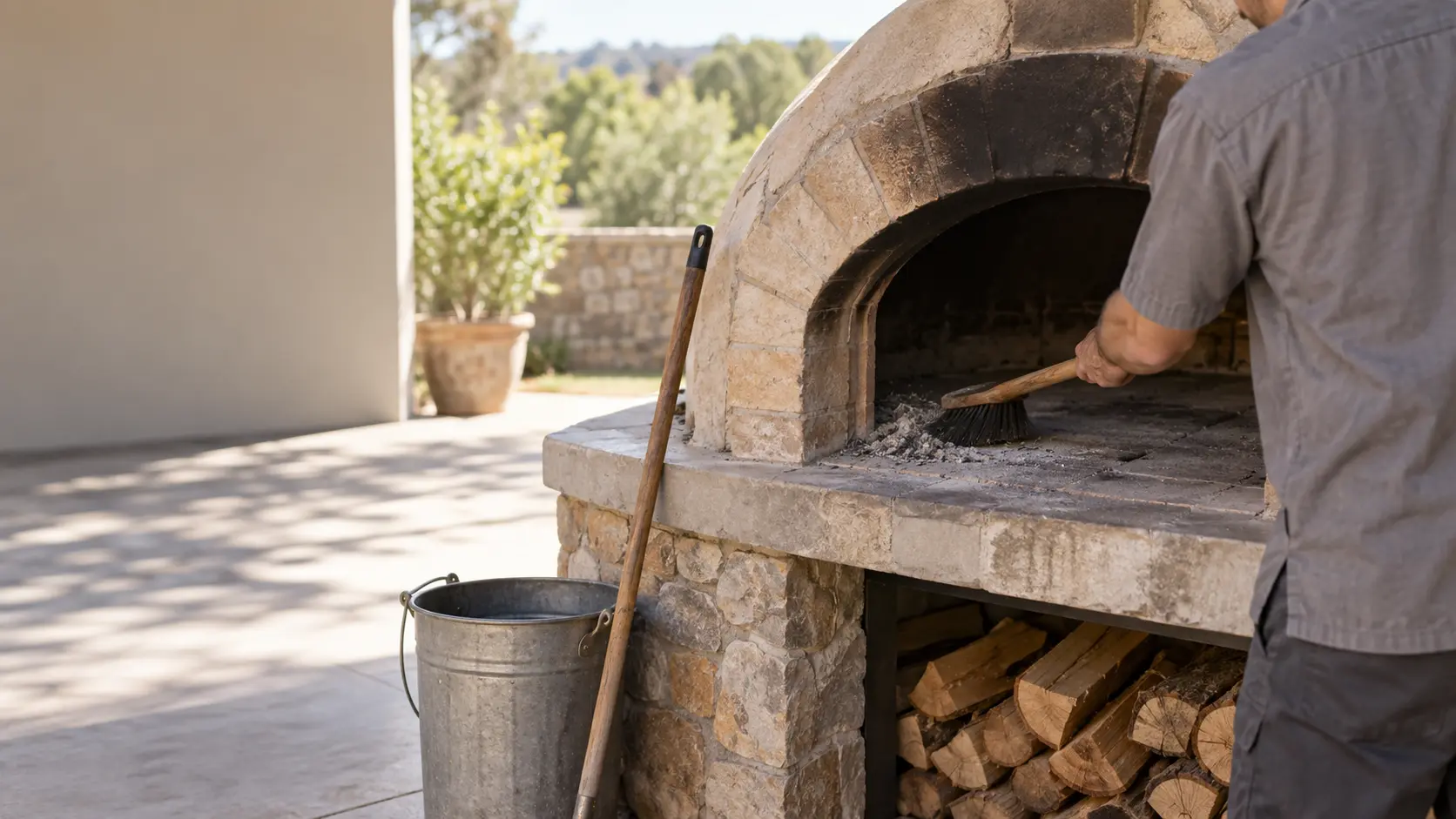
The space under a built dome looks made for a woodpile, and it can be, within limits. Chicago Brick Oven requires 7 inches between the bottom insulation boards of the oven and any wood stored beneath, and suggests a noncombustible barrier or marker so the pile never creeps closer. Coals and ash never go there; Alfa says to keep hot coals and ashes off the ground, the patio, the deck and away from plants.
Source: EPA Burn Wise — Best wood-burning practices — Seasoned wood is darker, lighter and sounds hollow; burn wood under 20 percent moisture, tested with a meter; store off the ground with only the top covered; the list of materials not to burn; regular smoke signals a problem; EPA Burn Wise — Firewood storage — Split before stacking; keep wood off the ground under a sloped roof with overhang; season at least 6 months for soft wood and 12 months for hard wood; Chicago Brick Oven — Frequently asked questions — Use clean, dry hardwood, seasoned or kiln-dried, stored under cover; avoid treated, painted or resinous wood; a damp oven may need recuring; Marra Forni — Static oven manual (Rev. 5-2026) — Burn only seasoned or dried, untreated solid wood, never liquids, charcoal or garbage; firewood near the oven kept in a tightly sealed metal container per NFPA 96
How the wrong wood shows up at the oven
The pattern is familiar: the fire takes a long time to get going, the dome stays gray instead of burning clear, smoke rolls out of the mouth and leaves black streaks up the front, and the floor struggles to reach baking heat. EPA says a properly used wood burner should make very little smoke, and that smoke you regularly see or smell is a sign of a problem. It also suggests stepping outside to look at the chimney: visible smoke usually means the fire needs more air.
Coyote traces the longer-term cost: soft woods with high sap or oil content leave excess soot on the oven and coat the chimney flue with creosote. That coating is fuel for a flue fire, so a winter of damp wood is a reason to have the chimney looked at before spring.
Smoke and the neighbors
EPA's page on backyard fires reminds owners that wood smoke carries fine particles, that children, older adults and people with heart or lung disease are more sensitive to them, and that fires should not be lit on air quality alert days. Coyote asks that the oven be placed where smoke will not drift into your home or the homes next door.
Source: EPA Burn Wise — Best wood-burning practices — Seasoned wood is darker, lighter and sounds hollow; burn wood under 20 percent moisture, tested with a meter; store off the ground with only the top covered; the list of materials not to burn; regular smoke signals a problem; EPA Burn Wise — Tips for a better burn — Use softer or less dense hardwoods to start the fire; look at the chimney, visible smoke usually means the fire needs more air; bring kindling in the night before; Coyote — Duomo Wood Fired Pizza Oven Owner's Manual — Use dried hardwood such as alder, apple, ash, hickory, maple, mesquite, pecan or oak, kiln-dried under 20 percent water; no pine, fir, cedar, painted wood or plywood, which coat the flue with creosote; 3 to 5 inch pieces; place the oven where smoke will not reach homes


