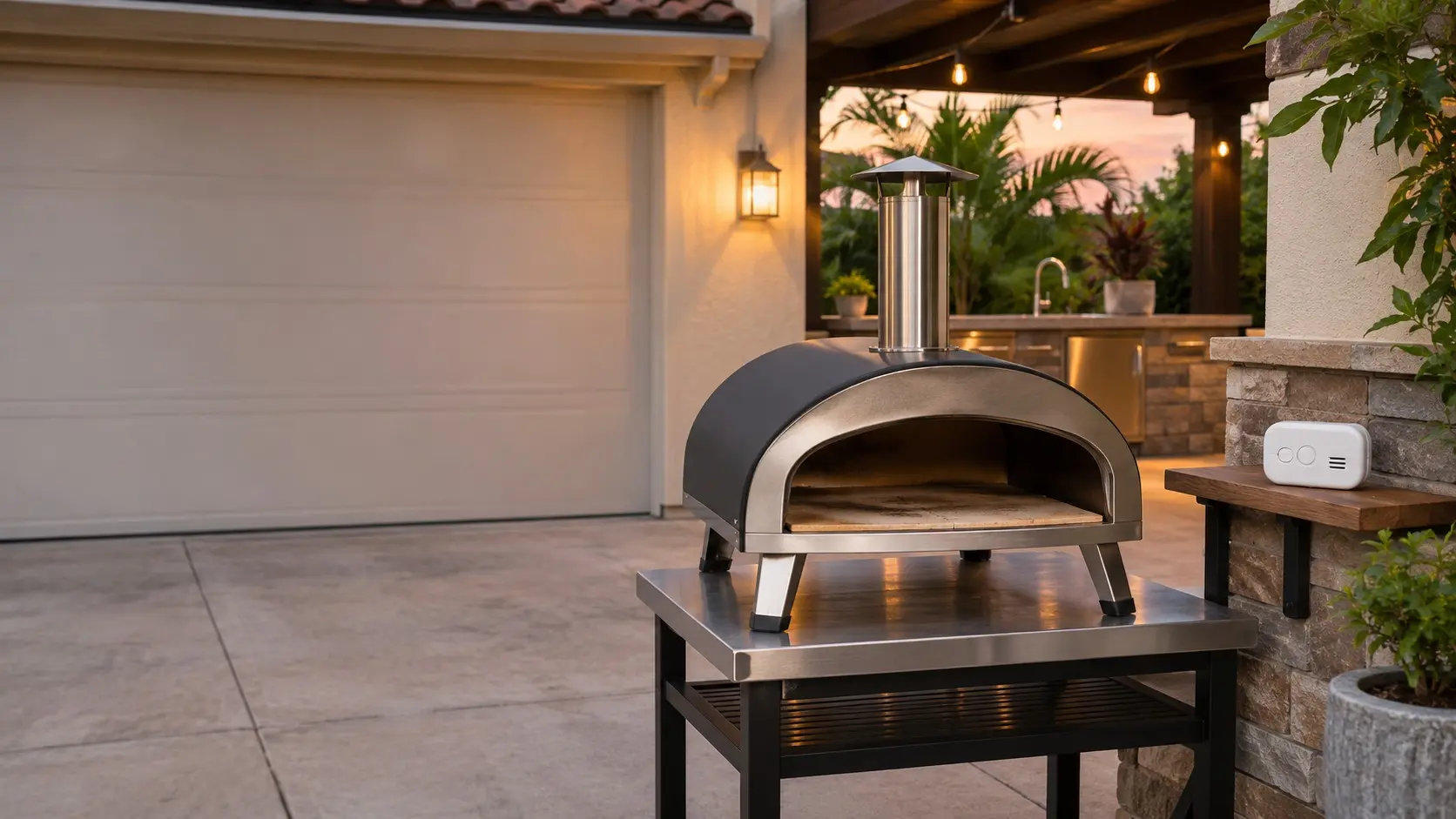

Why does a pizza oven make carbon monoxide?
Any oven that burns wood, pellets, charcoal or gas can make carbon monoxide, usually shortened to CO. It forms when fuel burns without enough air to burn completely, and it is a normal part of the exhaust of a fire. A well-drawing chimney carries it away outdoors; an enclosed space lets it build up.
The U.S. Consumer Product Safety Commission and the Centers for Disease Control and Prevention both describe CO as a colorless, odorless gas that can kill. CDC lists grills, stoves and fireplaces among its sources, and tells people never to burn charcoal indoors or use a portable gas camp stove indoors. A pizza oven rated for outdoors burns fuel the same way and falls under the same logic.
Is a hot, clean fire safe?
No. A clean-burning fire with good fuel still produces CO. A well-tuned gas oven in the open air disperses it, but the same oven in a closed space will not. Cleanliness lowers the amount; it never removes the need for outdoor air.
Is a garage, porch or tent enough ventilation?
No. CPSC and CDC both say never to run a portable generator inside a home or garage, even with doors and windows open, and CDC says the same about a car in an attached garage. Neither agency names pizza ovens, but the reasoning is the same for any fuel-burning appliance made for outdoors: an open door does not clear the gas, and an enclosed porch or a tent traps it the same way.
Why those spaces trap CO:
- A garage shares a wall or a ceiling with the house, and CO drifts through gaps and doors.
- A tent or porch holds the gas around the oven in still air.
- Cold weather pushes people to close up the space tighter.
- A small gust or a closed door can reverse the little airflow that exists.
If you want to bake in winter, move the oven to an open, uncovered spot well away from windows, doors and vents, and shelter it from the wind rather than enclosing it. Our winter pizza oven guide covers shelter without a roof over the flame. Check your owner's manual for the clearances for your model, and see clearances and the hearth under an oven.
Source: CPSC — Carbon Monoxide Information Center — CO alarm placement, and never running a generator in a home or garage even with doors and windows open

How do indoor-rated pizza ovens differ?
An oven that is meant for indoors is built, tested and listed for that use, and it vents its exhaust outside through a flue or hood. An oven rated for outdoors has no such venting and no such listing. The rating plate and the manual tell you which you have; see finding the rating plate.
Table: Indoor-rated and outdoor-rated ovens compared
| Feature | Outdoor-rated | Indoor-rated |
|---|---|---|
| Where it may run | Open air only | Where the manual says |
| Exhaust | Rises into the open | Carried out by a flue or hood |
| Makeup air | Plenty outdoors | Planned for in the install |
| Installation | Often none | Often by trades under local code |
Our venting guide explains chimneys, hoods and makeup air for ovens that are meant to go indoors. If you are not sure what you have, treat it as outdoor-only.
Does a chimney make an outdoor oven safe indoors?
No. A chimney on an outdoor oven is not an engineered exhaust system. Adding one, or moving the oven under a roof, does not change its rating and can pull CO back into the building.
What are the signs of carbon monoxide poisoning?
CDC lists the common symptoms as headache, dizziness, weakness, upset stomach, vomiting, chest pain and confusion. They can feel like the flu, and people who are asleep or drunk can be overcome without ever noticing any of them. If several people or pets in a space feel unwell at once, think of CO.
What to do right away
- Get everyone, pets included, into fresh air immediately.
- Call 911 or your local emergency number from outside.
- Shut the oven down only if you can do so from outside, without going back in.
- Do not re-enter until emergency responders say it is safe.
CO alarms are the backstop. CPSC advises battery-operated or battery-backup CO alarms on every level of a home and outside sleeping areas, with the batteries checked regularly. Treat an alarm as a signal to leave. An alarm does not replace keeping the oven outdoors. If smoke from an oven ever enters a room, see chimney fire or smoke in the room.
Source: CDC — About Carbon Monoxide Poisoning — what CO is, its sources, its symptoms and the warning never to burn charcoal or use a camp stove indoors
When should I have the oven looked at?
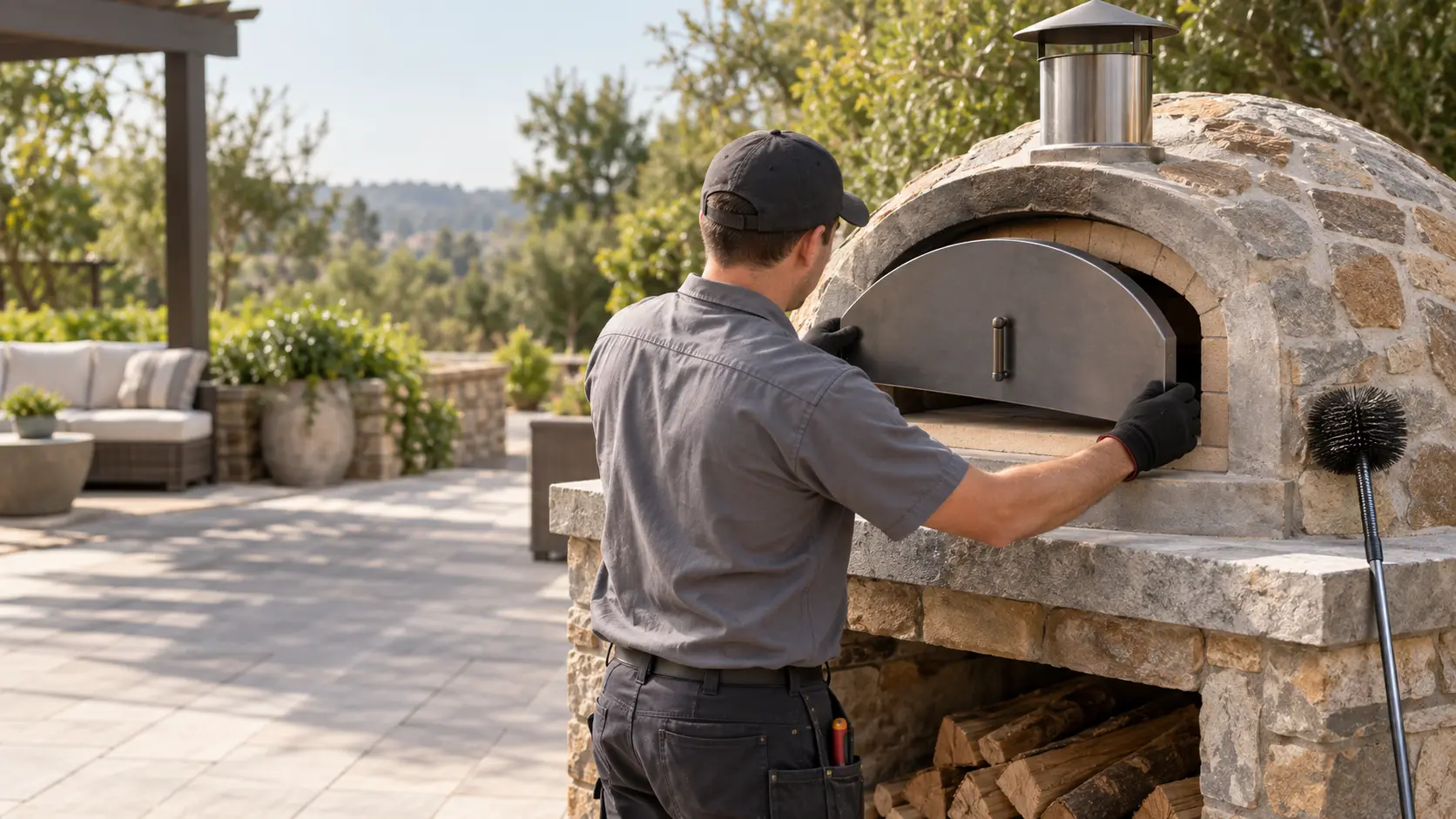
Book a visit if the oven smokes back out of the mouth, if soot builds on the front, or if a chimney or door damage is letting exhaust escape where it should not. A door and chimney repair restores the draw path, and a diagnostic visit finds out why the oven is not venting. A gas smell is a separate emergency; follow the gas smell guide.
How do I keep carbon monoxide out of the house during cold weather?
Cold weather is when people are most tempted to cook under cover, so settle the habits before the first freeze.
- Set the oven up outdoors, well away from doors, windows, vents and the garage, with the flue pointing up and clear.
- Check that a CO alarm covers every level of the home and each sleeping area, and test it as its maker says.
- Replace alarms when the maker's instructions say to.
- Let the oven cool outdoors. A hot or smoldering oven still gives off gas, so never carry one inside to cool.
- Never use the oven to heat a room, a porch or a tent.
Tell guests the rule too, especially those who offer to "just move it into the garage because it is raining". A rainy night is a reason to cover the oven and skip the bake.


