
Which pizza ovens can be used indoors?
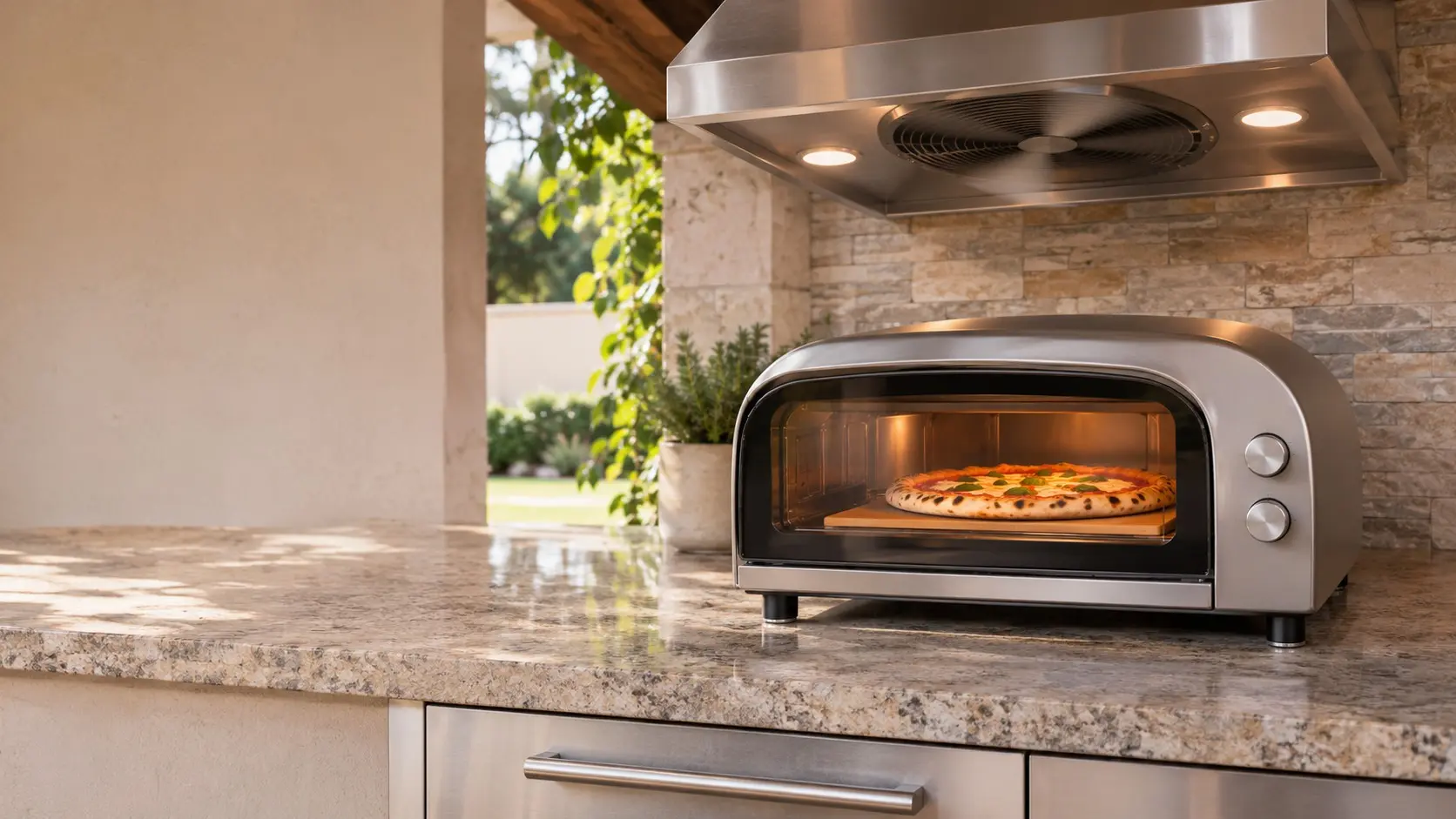
Electric countertop models made and labeled for indoor use, and nothing that burns wood, charcoal or gas unless it is built into the house with a proper chimney or vent. Fuel-burning outdoor ovens produce carbon monoxide, and indoors it has nowhere to go.
The CDC explains that carbon monoxide is found in fumes produced any time fuel is burned, and that it can build up indoors and poison people. That is the reason an outdoor wood, charcoal or portable gas oven is never a winter substitute, even in a garage with the door open.
Check the label and the manual
Look at the manual and the rating plate for the words indoor use, or the opposite. A model sold for outdoors says so, and its manual will warn against indoor use. If you cannot tell, treat it as outdoor-only and keep it outside.
- Electric countertop oven marked for indoor use: yes
- Outdoor gas oven, propane or natural gas: no
- Wood-fired or charcoal oven that is not built in with a flue: no
- A built-in oven with its own chimney, installed by a professional: only as designed
Source: CDC — About carbon monoxide — carbon monoxide comes from burning fuel, can build up indoors, and detectors belong near every sleeping area
What must the counter and the outlet take?
The counter must tolerate heat, and the outlet must handle the oven's power without strain. Electric pizza ovens draw a lot of current to reach baking heat, and they sit on a surface that gets hot from below and behind.
A heat-proof surface
Many manuals call for a stable, level, heat-resistant surface, and for feet that keep the oven's base off the counter. A laminate counter or a cutting board can scorch, and a thin glass cooktop cover is not a surface. Natural stone and metal usually tolerate it better, but read the manual.
Plug it straight into the wall
Use a wall outlet that is not carrying other heavy loads, and avoid power strips and extension cords. A high-wattage appliance on a thin cord or a shared strip can overheat the cord. If the plug or cord feels hot, or the outlet is discolored, stop using it and have an electrician check the outlet and circuit. Wiring and new outlets are never an owner's job.
Keep other appliances off the circuit
If the oven trips the breaker when a toaster or kettle is on, the circuit is carrying too much. Run the oven by itself, and ask an electrician about a separate circuit if it keeps happening.

Where does the smoke go?
Into the room, unless you move it out. A pizza oven runs hot, and flour dust, oil, cheese and dripped toppings burn and smoke on the floor and walls of the cavity.
Ventilate while it runs
The EPA says using a stove hood with a fan vented to the outdoors greatly reduces exposure to pollutants during cooking. If your kitchen has one, run it whenever the oven is on and leave it running for 10 to 20 minutes after, as the EPA's cooking guidance suggests. Without such a hood, the EPA suggests opening windows and using exhaust fans. Never disable or cover a smoke alarm to stop it sounding; reduce the smoke instead.
Keep it clean to keep it smokeless
Brush loose flour and crumbs from the floor after each use, and wipe the cavity once cool. A greasy floor smokes the next time it heats. The cleaning and safety inspection service covers a deep clean, and the guide to venting a pizza oven explains the airflow in more detail. If smoke fills the room, the smoke in the room page and the guide on a chimney fire or smoke in the room say what to do.
Source: EPA — Strategies for improving indoor air quality while cooking — run a range hood vented outdoors whenever cooking and 10 to 20 minutes after; without one, open windows and use exhaust fans; EPA — Sources of combustion products — a stove hood with a fan vented to the outdoors greatly reduces exposure to cooking pollutants
How much space does an electric model need around it?
Open air on every side, as the manual states. The case of an electric oven gets very hot, and so does the air that leaves its vents. Pushed against a wall, under a cabinet or next to a curtain, it can scorch a surface or start a fire.
What to leave clear
- Space at the back and sides, as the manual gives it
- Open air above, with no hanging cabinet or shelf close over it
- A clear counter in front so a hot pizza has a landing place
- No paper, towels or curtains within reach of the heat
Under a cabinet
Many manuals do not allow use under a low cabinet, because heat rising from the oven's top can damage it. Slide the oven forward onto open counter space, or choose a spot with no cabinet above.
Table: Setup check for an electric indoor oven
| Check | What you want | Watch for |
|---|---|---|
| Label | Marked for indoor use | Outdoor-only models |
| Counter | Level, heat-proof | Laminate, glass or cutting boards |
| Outlet | Wall outlet, not shared | Strips, cords, warm plugs |
| Space | Open on all sides | Cabinet above, wall at the back |
What should you do on the first run?
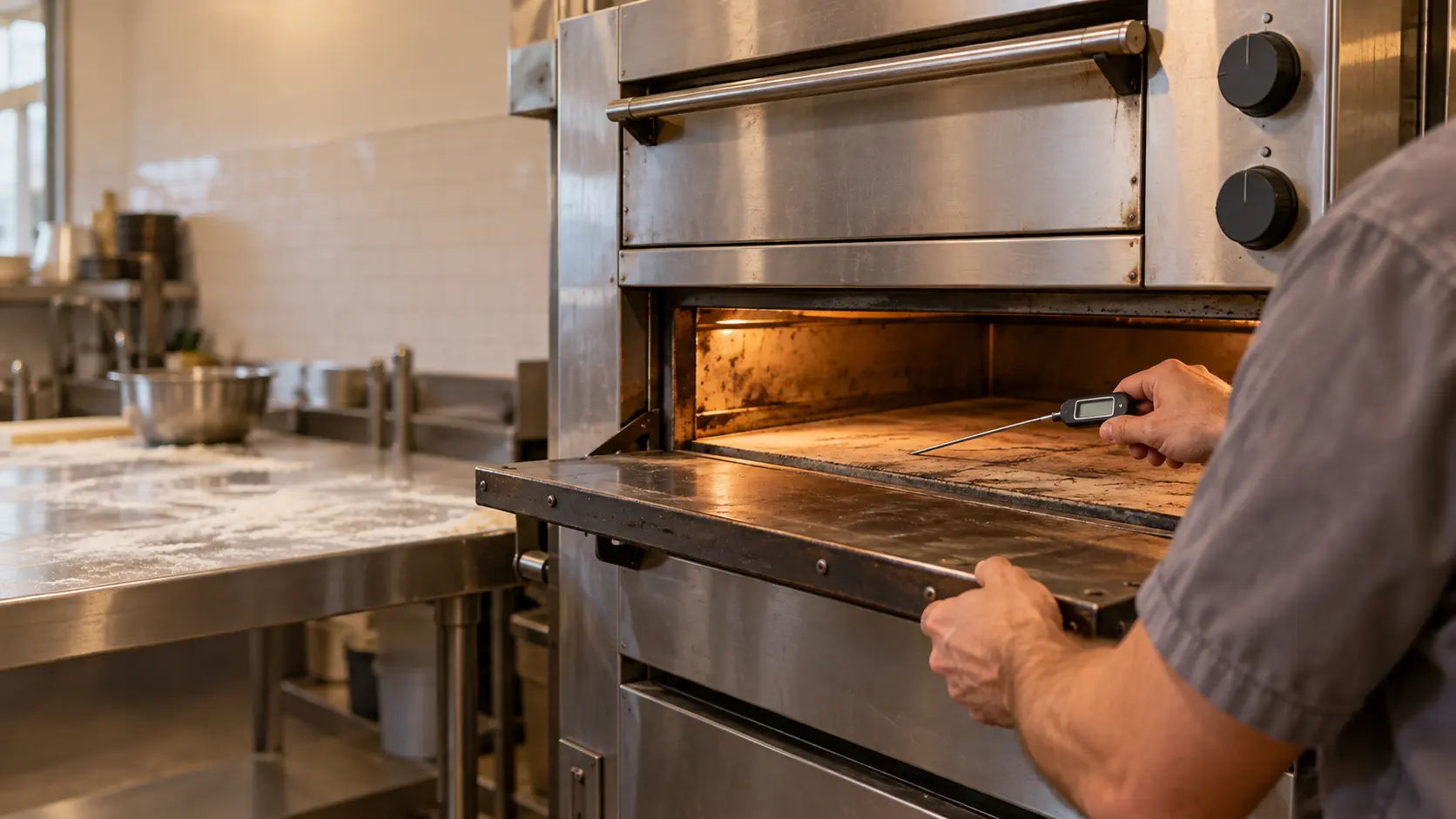
Run it empty first and let it heat to full temperature in a ventilated kitchen, because new ovens often give off a smell and a little smoke. The curing a new pizza oven guide explains the principle for stone-floored ovens, and your manual describes the first heating for your model.
If an electric oven's temperature seems wrong, or the controls do not respond, the thermostat and control repair service covers it, and a diagnostic visit is the starting point when you cannot tell which part has failed.

